
Get the badge in
How men make belonging visible
Republished as originally written. References to events reflect the original publication date.

When Stone Island originally appeared in 1982, the embroidered compass badge was fixed onto the garments even if its position wasn’t. The badges seemed to wander around the front of the garment, appearing on a chest pocket, a hem edge or on either arm. But gradually over the next few years they began to become fixed on the left arm. In doing so, what originally might have been seen as just a piece of fashion branding, began to change its meaning.
Whether intentional or not, its final placement on the upper left sleeve aligned with the location of formation badges within the military. These small, embroidered badges enable instant recognition of the larger military group to which a soldier belongs.
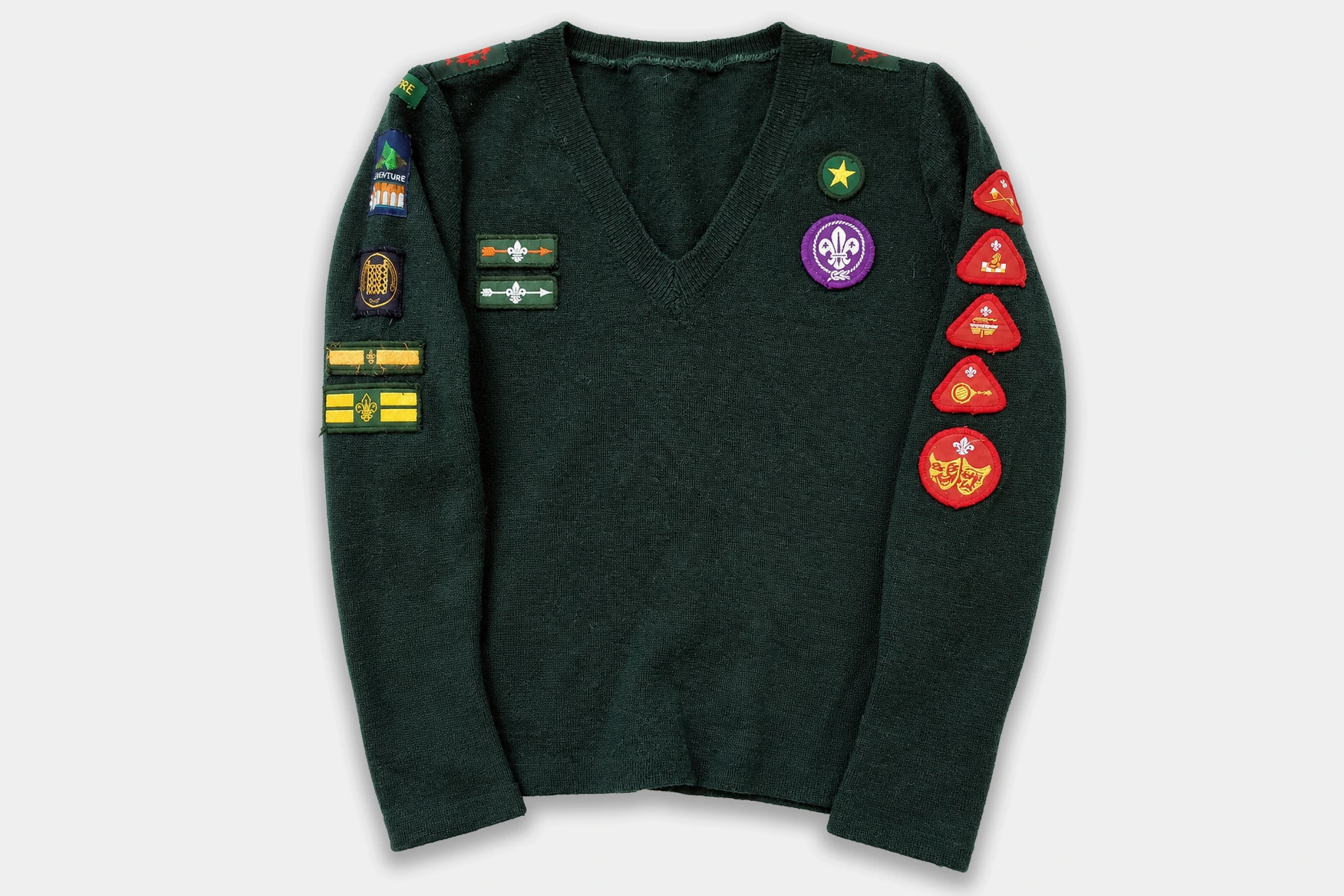
But years before a man has worn a Stone Island jacket or a military uniform, they may already have sported insignia on their left arm in the form of proficiency badges within Scouting.
I was reminded of this similarity during a recent conversation with a friend who had himself seen the connection between the badges dutifully sewn onto his Cub Scout jumper as a child and the Stone Island coats he later wore on the terraces.
Like him, I was also in the Cubs as a child and remember the importance of the various proficiency badges that could be earned as part of membership. I first began earning those small pieces of cloth in 1977, as I started developing skills as an Explorer, Bookreader, First Aider, Artist, Home Help and Map Reader. Each activity had a corresponding badge, awarded only after the required level of competence had been demonstrated. I vividly remember having to demonstrate the sign language I had learnt over the past week by communicating with another Cub as proof that I had acquired the skill. The mechanism was simple; you learnt something, demonstrated your prowess, and were then entitled to display the evidence on your uniform. Over the next couple of years I gradually started covering my Cub jumper with small triangular badges that were visible evidence of my participation, competence, and achievement within the organisation’s system.
If that was an earlier example of how patches and badges signified meaning within youth institutions aimed at young boys and teenagers, what followed was a shift away from those structures towards more informal communities and subcultures with their own ways of deciding who belonged. The Westminster Menswear Archive holds two examples that show how knowledge, competence and allegiance can also be evidenced through the use of embroidered badges. The beaten up leather jacket is covered with various badges, patches and pins, but it is the black circular cloth patch on the upper left sleeve that denotes official membership of the 59 Club.
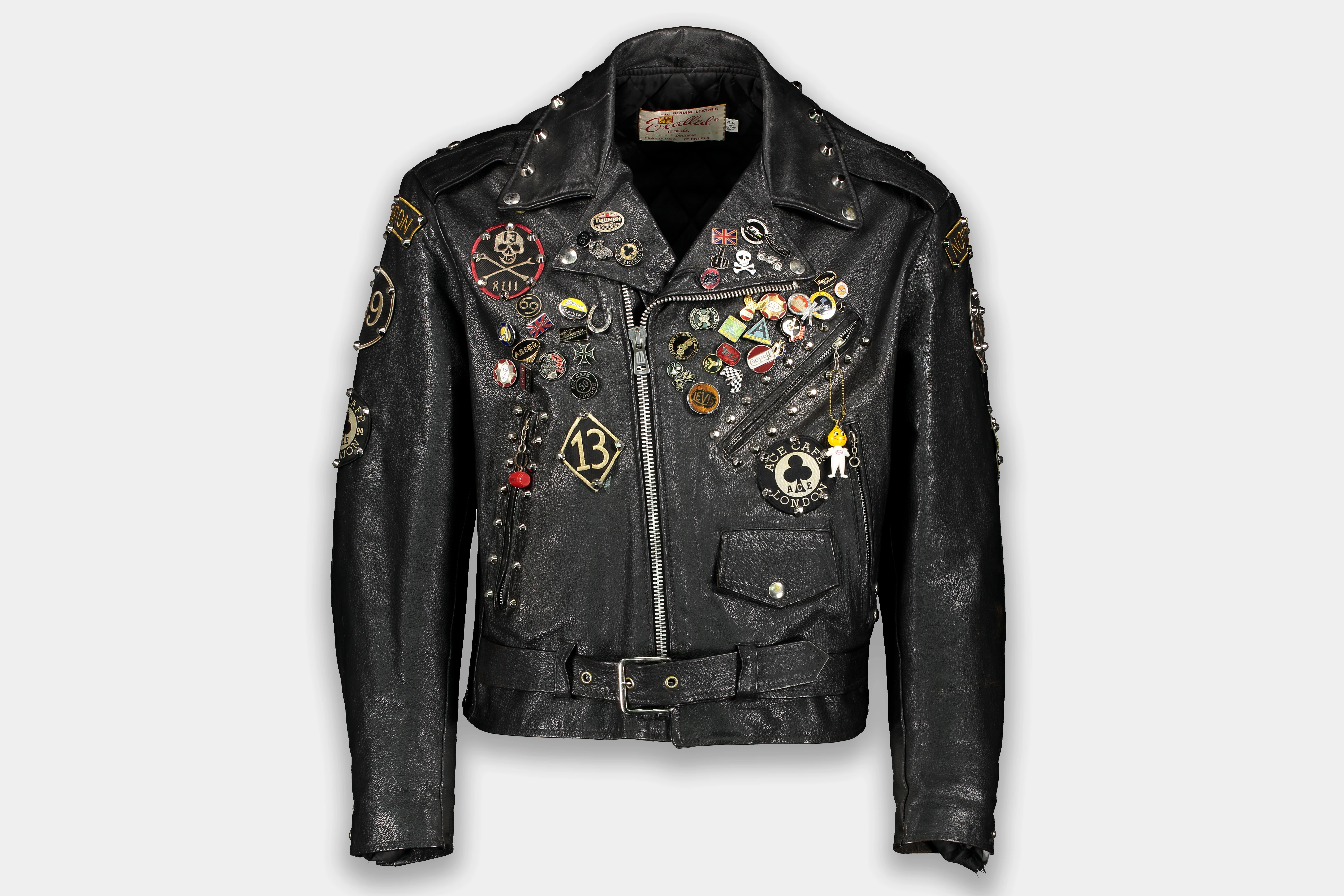
Founded by the Reverend John Oates at St Mary of Eton church in London’s East End in 1959, the club is still active today, and the iconic ‘59’ patches are only available to registered members who have paid their annual subs. In the past, members have been thrown out for selling the patches to non-members. The patches covering the green MA-1 jacket operate differently. Here they do not record membership but participation. The patches on this jacket were designed by Paddy Smith, who began selling them to fellow scooterists at the 1981 National Rally in Great Yarmouth. By 1983, he was producing patches for each of the nine annual scooter rallies across the country. They were sold only at the specific weekenders that they celebrate; if you didn’t attend then you couldn’t buy them afterwards. They therefore quickly became a way to identify fellow rally-goers, serving as mementos of participation, travel and belonging.

Both the rocker’s leather jacket and the scooterist’s MA-1 use cloth badges sewn to their surfaces as visual evidence of membership or participation even when nobody formally requires them to.
They also enable men to wear highly decorative garments with multiple examples of embroidery without seeming less masculine. Instead the badges can be read as systems of information that accumulate onto the garments to convey experience, status and identity. Decoration becomes evidence.
Whether in formal institutions such as the Scouts, or less formal subcultures such as rockers and scooterists, all placed conditions on who could legitimately wear their badges. In each case, entitlement came before the badge. Stone Island reverses that sequence. The compass badge comes with something you buy.
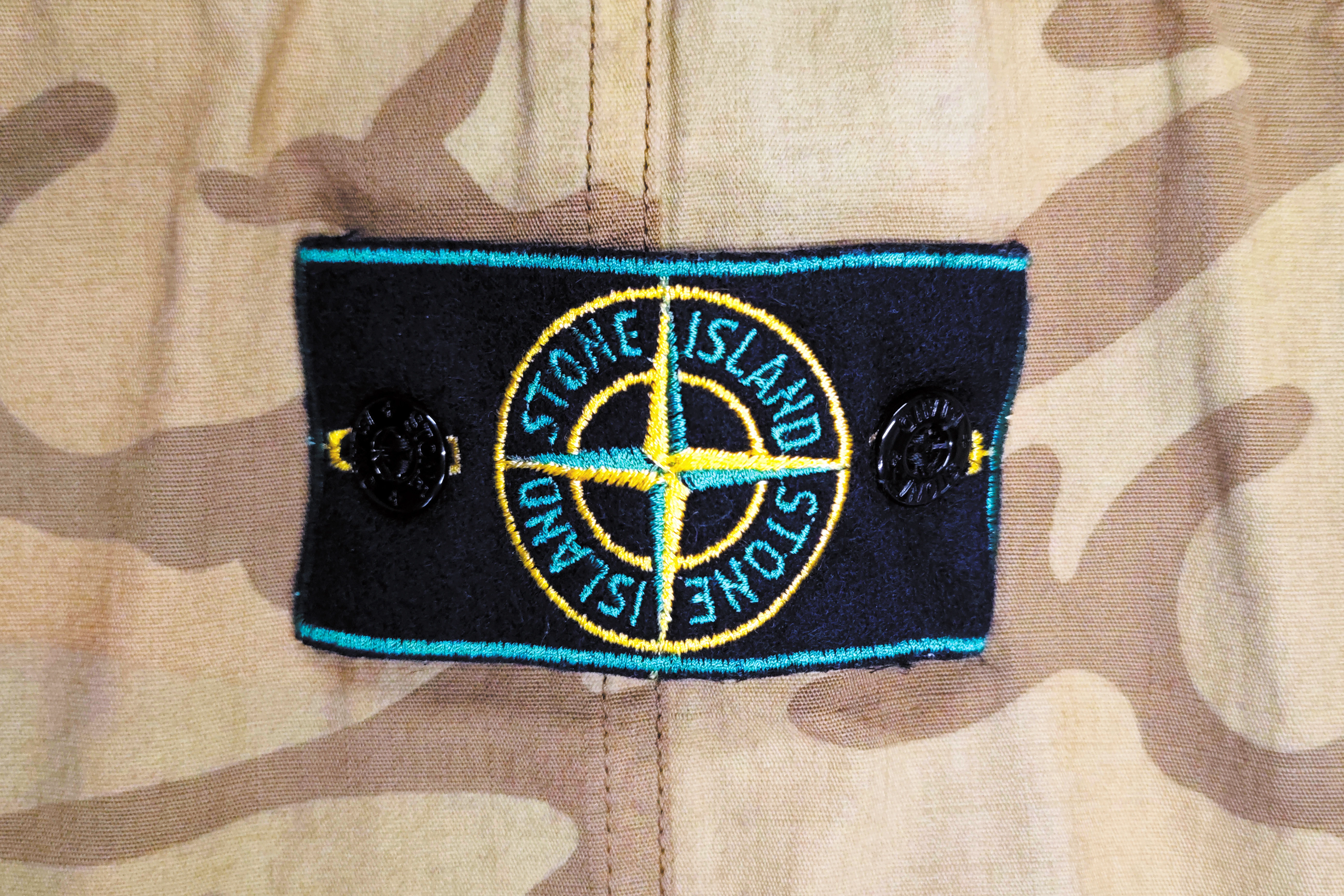
While forty years ago the badge primarily identified the garment as Stone Island, the casual culture that has developed around the brand over the last four decades means that it can also function as a sign of the wearer’s legitimacy within that community.
The badge identifies the brand, but it cannot by itself establish whether the wearer belongs. Owning the badge is not enough; recognition and approval from others matter. Those on social media “getting the badge in”, deliberately ensuring that the compass is visible in a photograph, are asking to be read, and in doing so risk being judged over whether they really belong.
My friend saw another stage in his progression.
He is also a Freemason. Within that institution how men dress is also used as a means of recognition and belonging. His apron, collar, and jewels allow other Freemasons to recognise his office, rank and place within the lodge.
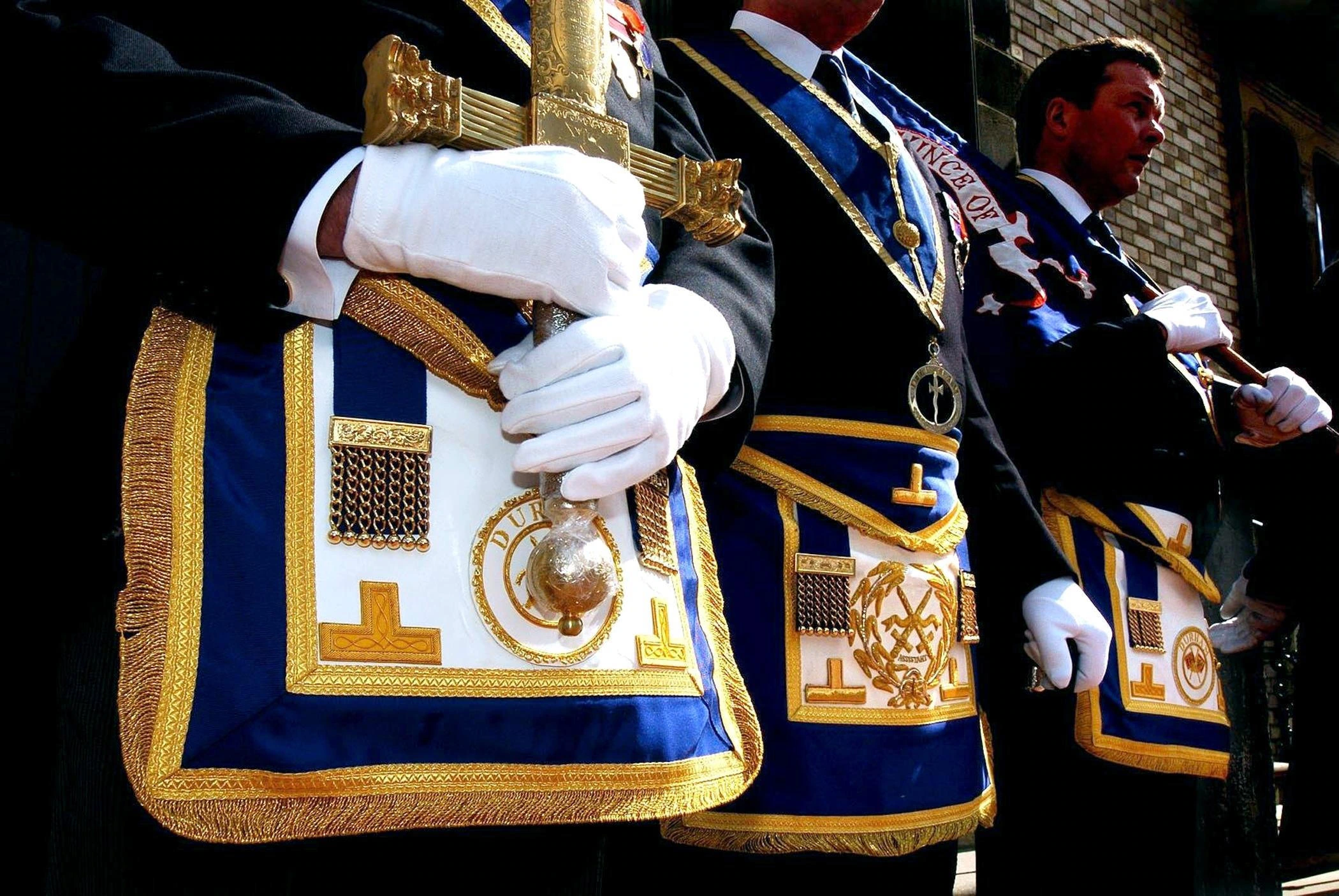
By the time he reached Freemasonry, the badge itself had disappeared, but what it did had not.
From the scout hall to the football terraces to the Masonic lodge, what he wore had repeatedly given other men something by which to recognise that he belonged. It was only looking back that he had seen the connection.
In that sense, he had been “getting the badge in” all his life.