Exploring, documenting and rethinking menswear across culture, industry and history.
I work with brands, publishers and cultural institutions to give publications a distinctive argument, shape exhibitions and inform decisions about archives and brand history. I draw on 30 years in menswear, from working with Alexander McQueen to directing the Westminster Menswear Archive.
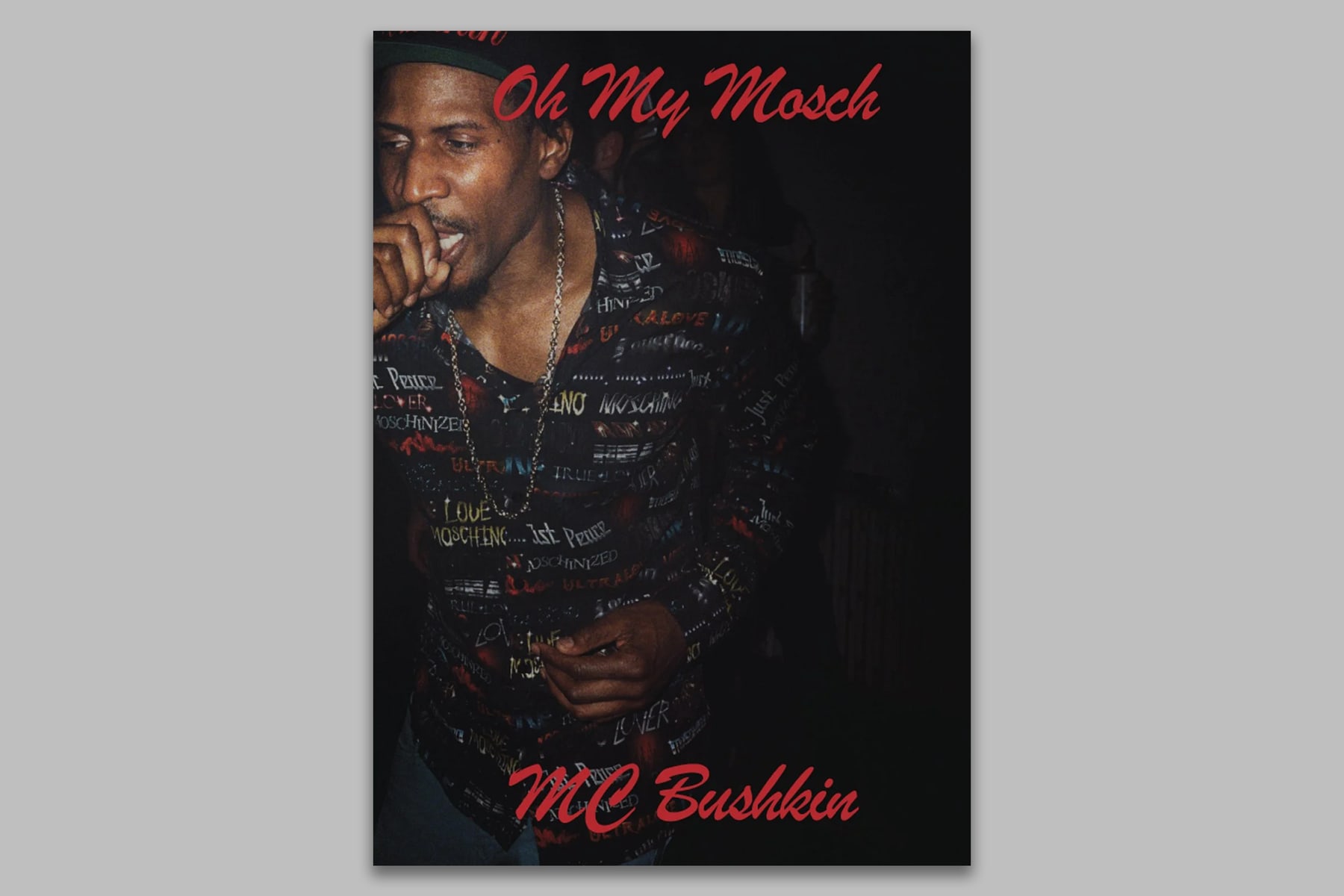
I write bylined essays and book contributions, and develop editorial programmes for brands, retailers and publishers. For Oh My Mosch, Ewen Spencer’s book with MC Bushkin, I wrote The Archive Upstairs, examining how designer clothes became part of jungle and UK garage, and what is lost when garments are preserved without the people and culture that gave them meaning.
I have also written for C.P. Company, Fred Perry, Ten Men, Admiral, Paninaro and The Observer.
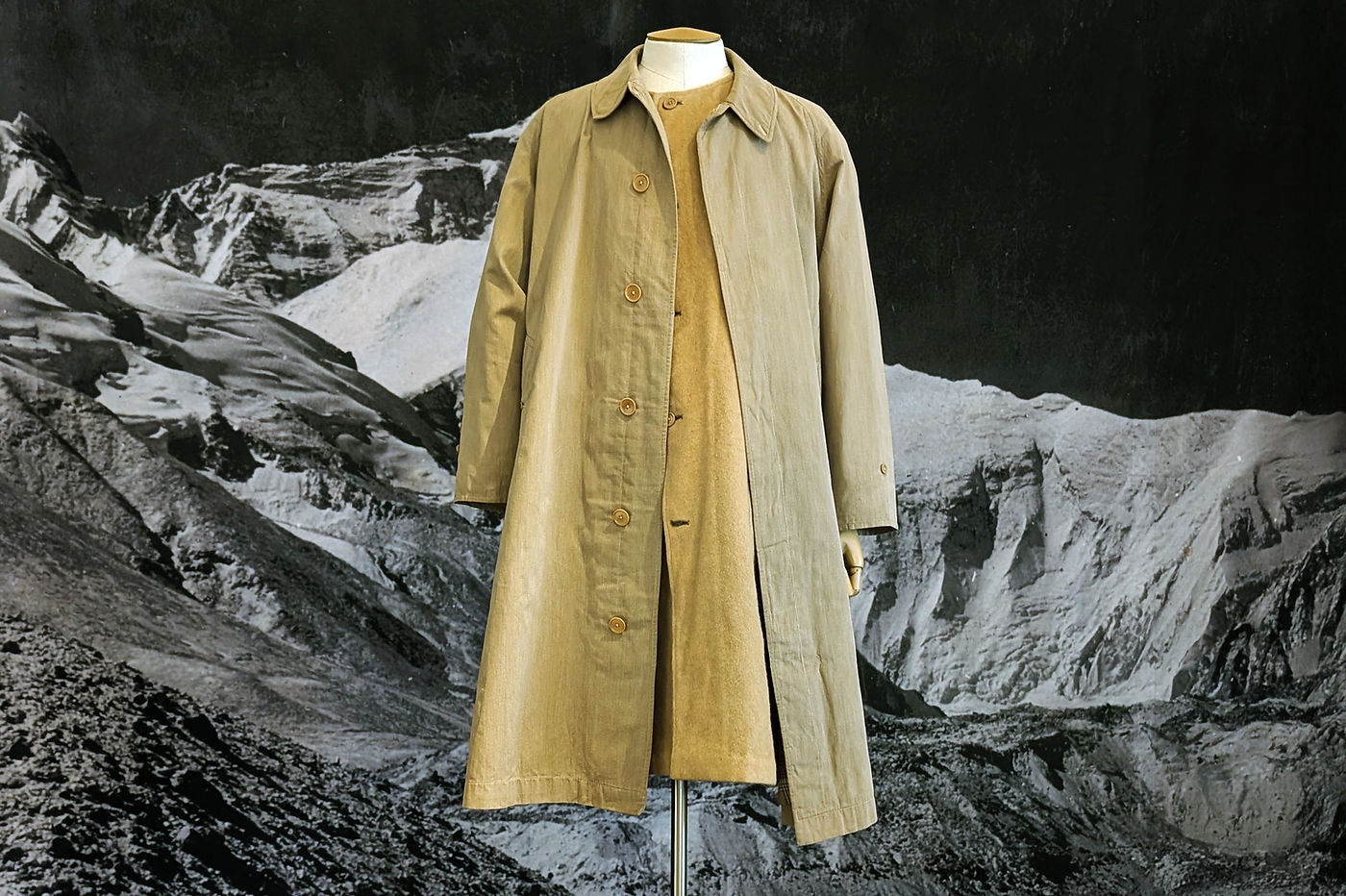
I help shape what an exhibition says and bring together the objects needed to support it. For Pioneers of the Material World at the British Textile Biennial, I helped develop a narrative connecting Burnley’s textile history with outdoor clothing, sportswear and streetwear, and arranged loans through my relationships with brands. I was the Biennial’s Associate Curator from 2019 to 2025.
I also advised on the curatorial strategy for Vogue’s Inventing the Runway at Lightroom.
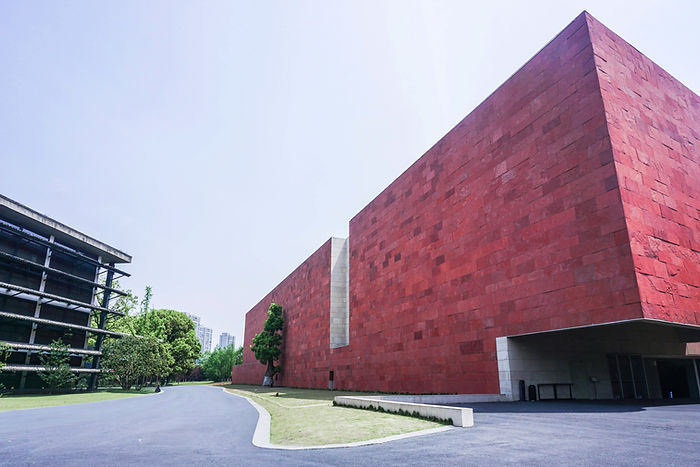
I advise on menswear archives and brand history, establishing what a collection holds, why it matters and how it could be used. The China Design Museum commissioned me to assess the Massimo Osti collection donated by David Chu. My report identified priorities for documentation, preservation and research, giving the museum a specialist basis for decisions about its care and future use.
My research contributions also cover Alexander McQueen’s history as a designer, brand and company.
I came to fashion through making clothes. In the 1990s, I worked with Alexander McQueen before showing my own collections at London Fashion Week. I still start with the garment: how it is made, who wears it and what happens to it afterwards.
I am now Professor of Menswear Systems at the University of Westminster and Director of the Westminster Menswear Archive, which I founded in 2016. The Archive brings designer fashion into the same conversation as workwear, uniforms, sportswear and the clothes people wear every day.
With Dr Danielle Sprecher, I have co-curated Invisible Men and Umbro 100: Sportswear x Fashion, and co-authored Inside the Westminster Menswear Archive. That research, collecting and curatorial work forms part of my role at the University.
Alongside my university work, I write and consult independently for brands, publishers and cultural institutions. From 2019 to 2025, I was also Associate Curator at the British Textile Biennial. My weekly essays on Menswear Systems follow the questions that clothes leave us with: what gets noticed, what gets preserved and who decides what matters. Those questions also inform the research and advice I bring to a commission.
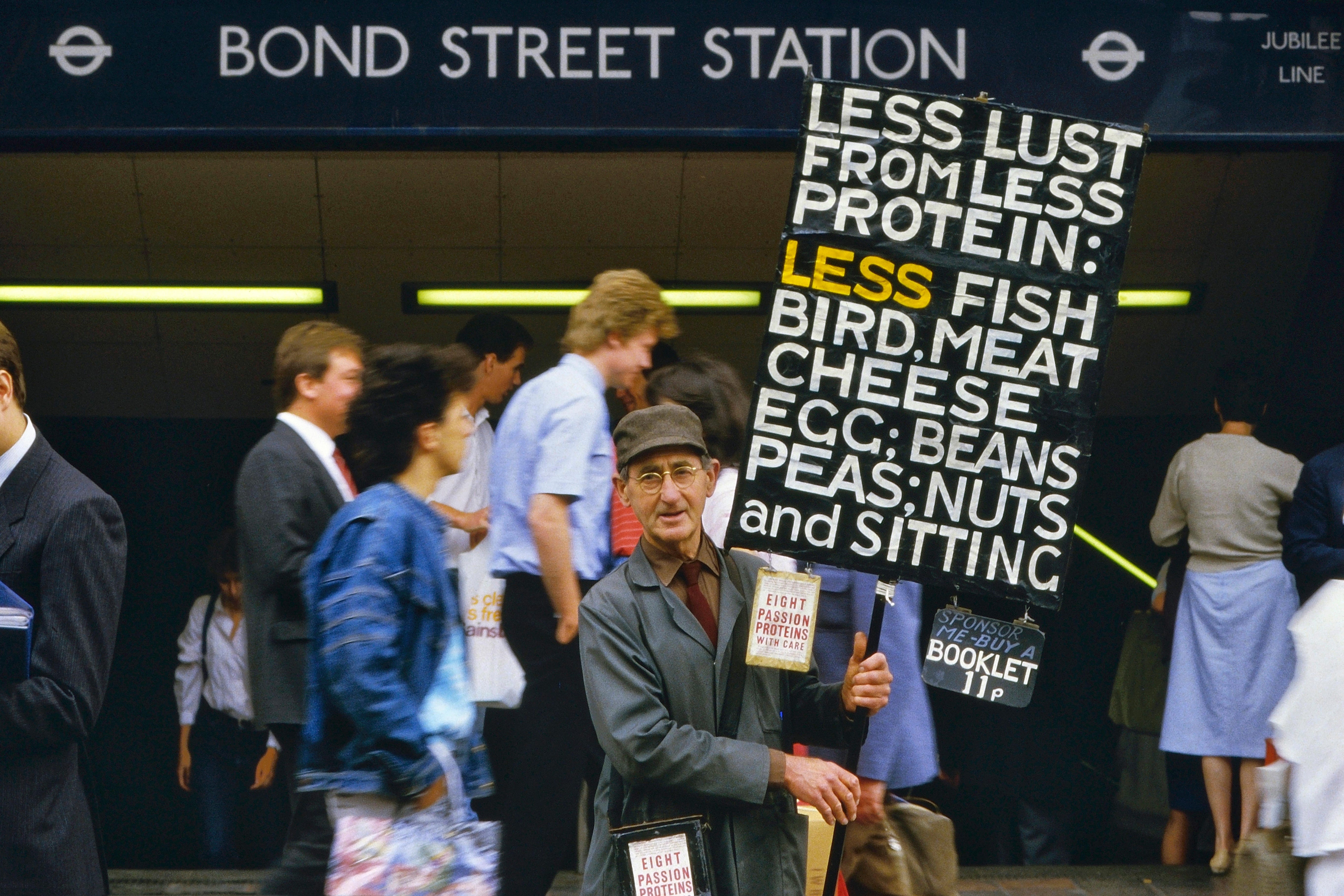
Stanley Green is asking for 11p. Outside Bond Street Station, he holds a wooden pole aloft in his left hand. On a slightly worn black sign hanging from it, ‘SPONSOR ME-BUY A BOOKLET 11p’ is written in muted blue and white paint. Beside it hangs a copy of the booklet itself. The sign above them begins ‘LESS LUST FROM LESS PROTEIN’. Green is wearing a knee-length slate-blue work coat with deep plum trousers. A muted brown shirt is set off with a dark burgundy tie. He wears a greyish-brown peaked hat and round wire-rimmed glasses. Across his chest sits a thick leather strap that holds a large box against his right hip. Inside it contains copies of his self-published booklet, Eight Passion Proteins With Care. Green, an almost daily presence on Oxford Street from 1969 until his death in 1993, argued that people who sat too much stored up excess protein and that this surplus in turn fuelled sexual desire. His advice was to eat less protein and to spend less time sitting down. He suggested that retirement could lead to heightened desire and trouble in a marriage.
“I give myself problems.” Speaking at Pockets in Bath last Thursday, Paul Harvey was describing an approach to design that had shaped his work over the last three decades. Designers are generally understood as problem-solvers, responding to the demands of materials, manufacturing and the body. Harvey’s approach was different. Rather than waiting for problems to arise, he deliberately created them, imposing constraints that made designing and manufacturing considerably more difficult than they needed to be. The previous month, at a panel discussion at Central Saint Martins with Carlo Rivetti and Aitor Throup, Harvey described one of his fundamental rules: “No decoration.” Effectively it meant that anything created for the brand needed to focus on having a functional or constructional justification rather than being applied simply for visual effect. Harvey’s approach echoes that of Adolf Loos, the Austrian architect and architectural theorist whose highly influential essay, Ornament and Crime, published in 1913, argued against ornamentation, believing it led to a waste of labour and materials. He helped lay the foundations of architectural modernism.
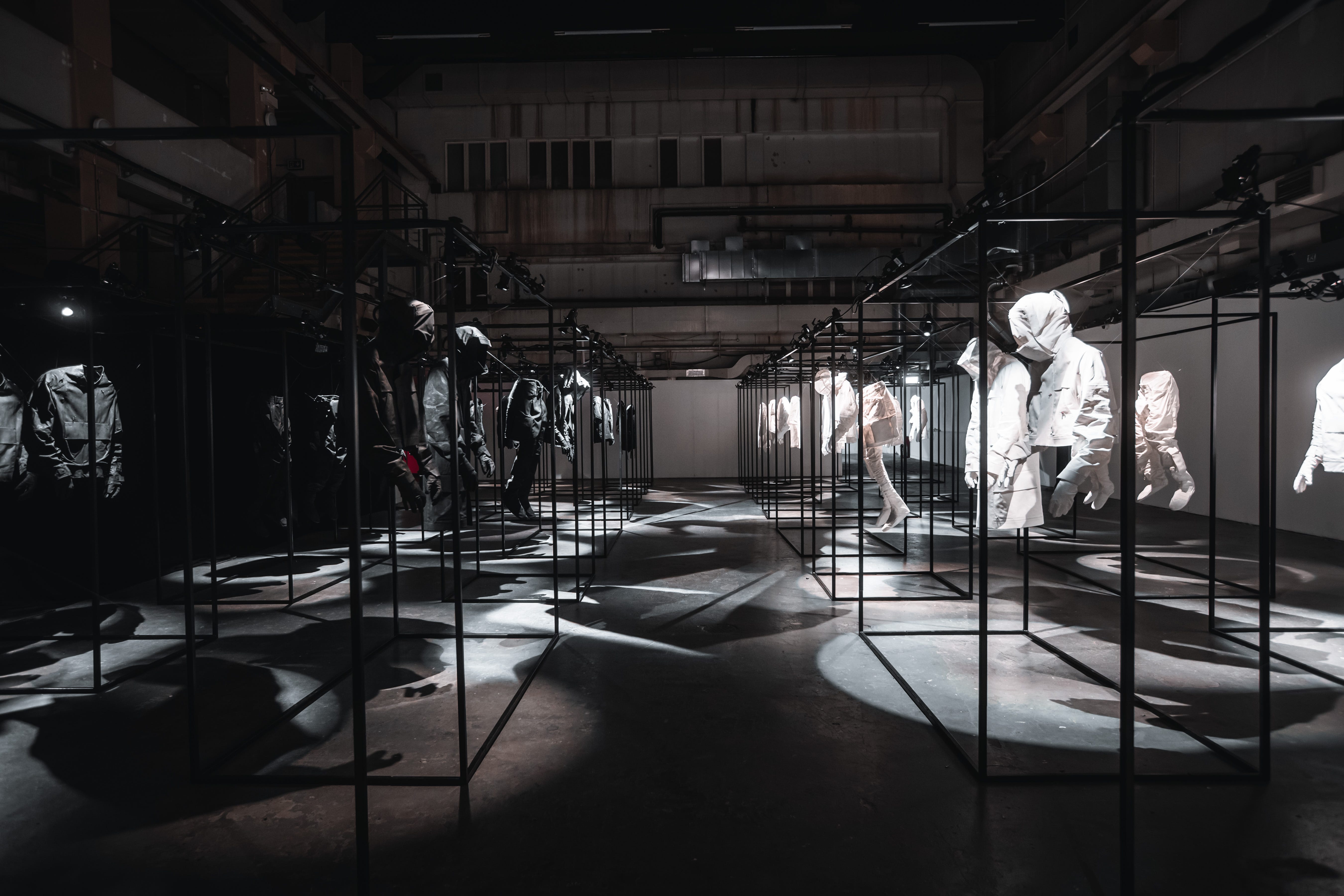
A short invitation to visit Aitor Throup’s new exhibition ULTRA VEIL which is being presented by the Westminster Menswear Archive at Ambika P3, London for the next week. I only saw the work for the first time two days ago and am still proccessing what I think before I begin writing about it. Since the exhibition is open for just ten days, I wanted to share it now so you have the chance to see it while I’m forming my own response. Last year’s exhibition From the Moor, staged in Burnley, as part of the British Textile Biennial, looked back at Aitor’s work. ULTRA VEIL looks forward, presenting his first new body of conceptual fashion work in ten years. Across more than 100 objects, including drawings, sculptures, prototypes and garments, the exhibition explores the design language Throup has spent twenty years developing and refining. Aitor Throup: ULTRA VEIL 30 October–8 November 2026 Open daily, 11am–7pm Free entry
When I moved to London in the 1980s, I often saw Stanley Green on Oxford Street. The long work coat, the shirt and tie, the peaked cap. He looked like a man going about his business, which was exactly what he was doing.
He wrote the booklet, printed it at home and sold it himself. If you wanted to buy what he was advertising, you bought it from the man holding the sign.
This week’s essay, Times of the Signs, goes from Green’s 11p booklet to a Christmas cracker on the catwalk at London Fashion Week.
Read it through the link in my bio.