
Nigel Cabourn’s Other Everest
How the designer made history active through garments, research and use
Republished as originally written. References to events reflect the original publication date.
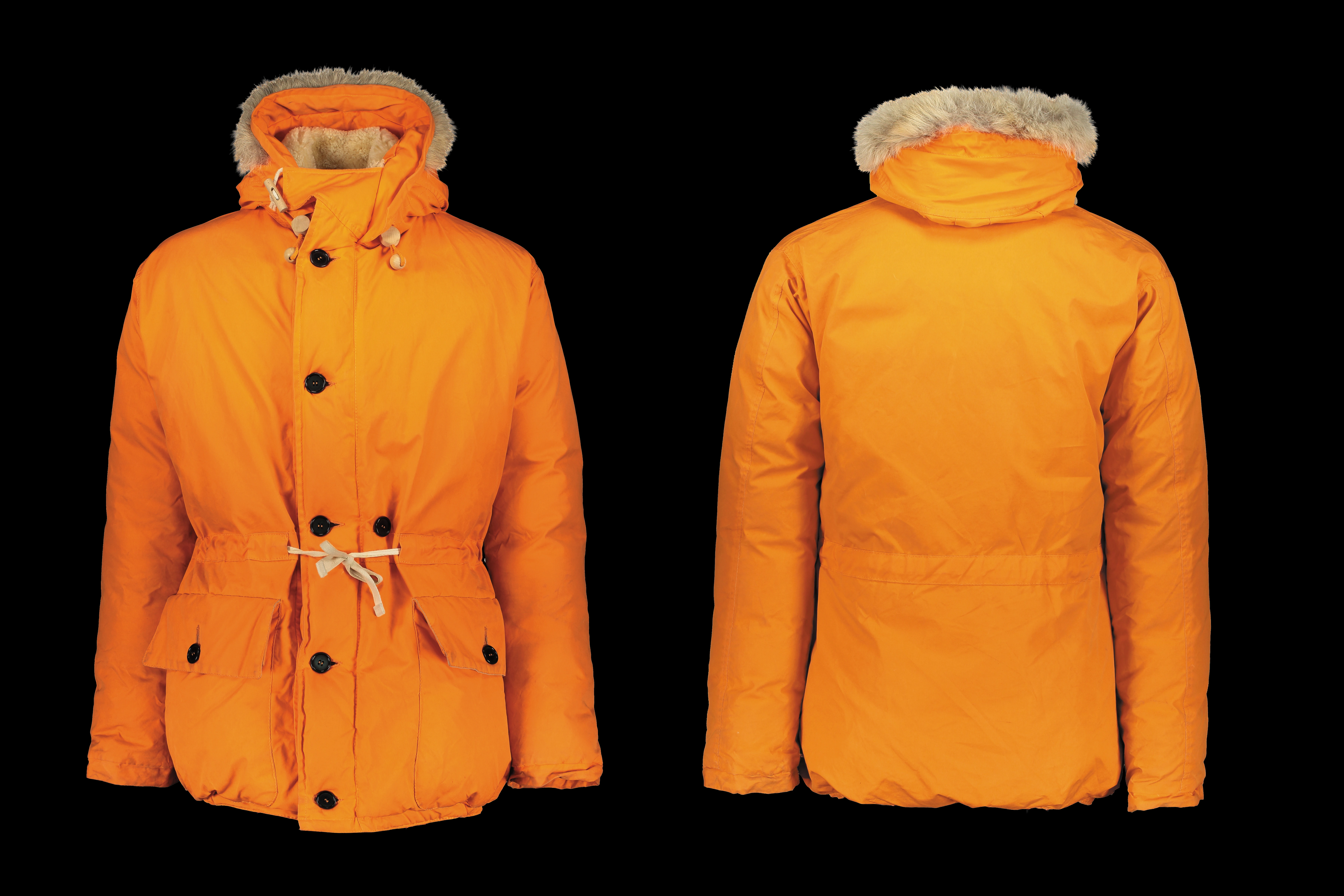
When we included Nigel Cabourn’s Everest Parka in our book, Inside the Westminster Menswear Archive, the story seemed straightforward enough. Here was Cabourn’s interpretation of the jacket worn by Edmund Hillary during the 1953 Everest expedition. Like much of his work, it appeared to sit comfortably within military references, expedition clothing, and history reworked as menswear.
The garment itself seemed to support that reading. Its six-panel snorkel hood, wire support, sheepskin lining, fur trim, elasticated cuffs, down-feather padding, waist drawstring and neck tab all pointed towards one problem: how to keep a body operational in extreme cold. It functioned as a system of protection.
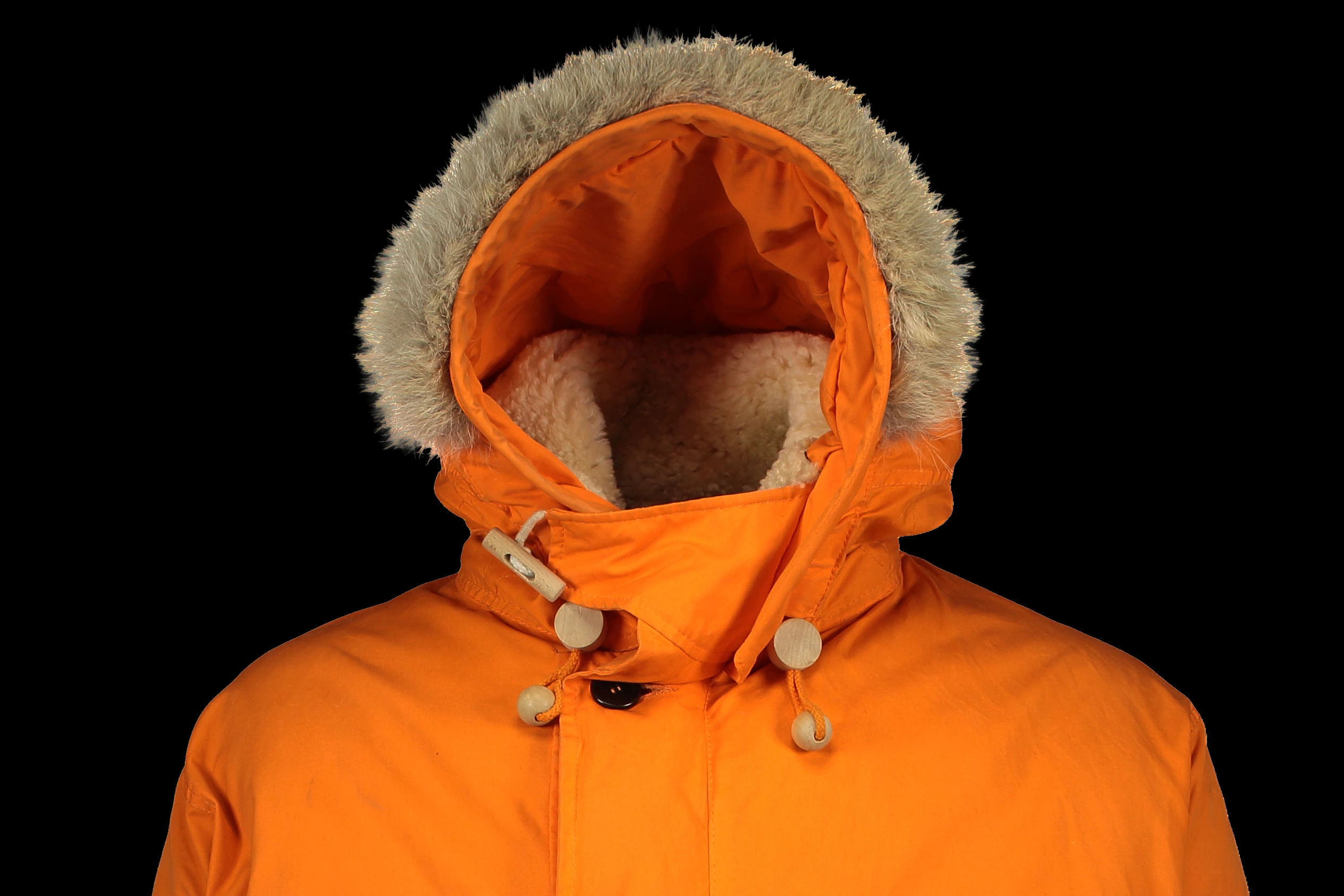
Only afterwards did I come across Cabourn’s own account of the garment. In an interview with Vestoj, he described his process as “Cabournising” historical clothing: working from images, garments, fabrics, colours, textures, fit and details. He also made clear that he often began not with a single object, but with a character. In this case, that character was Hillary.
Cabourn recalled travelling to a museum in Christchurch, New Zealand, to see what he described as Hillary’s Everest parka, only to note that it was “actually the Antarctica parka”. He then added: “I’ve just rolled it all into one.”
For historians, that raises a useful question. If the parka was not a straightforward reproduction of Hillary’s Everest jacket, then what kind of object was it?
The more I thought about that question, the more useful it became. That complexity did not undermine the jacket. It revealed Cabourn’s method. The garment appears to be rooted in Antarctic survival clothing, but Cabourn made it operate within an Everest narrative. Everest, Antarctica, Hillary, survival clothing, expedition imagery and cold-weather protection could all coexist within the same garment because historical precision was not the only point.
The Everest that mattered was not only the mountain Hillary climbed, but the one Cabourn constructed from garments, photographs, materials and expedition narratives. His other Everest was not based on one single expedition, but on a synthesis of several histories of survival.
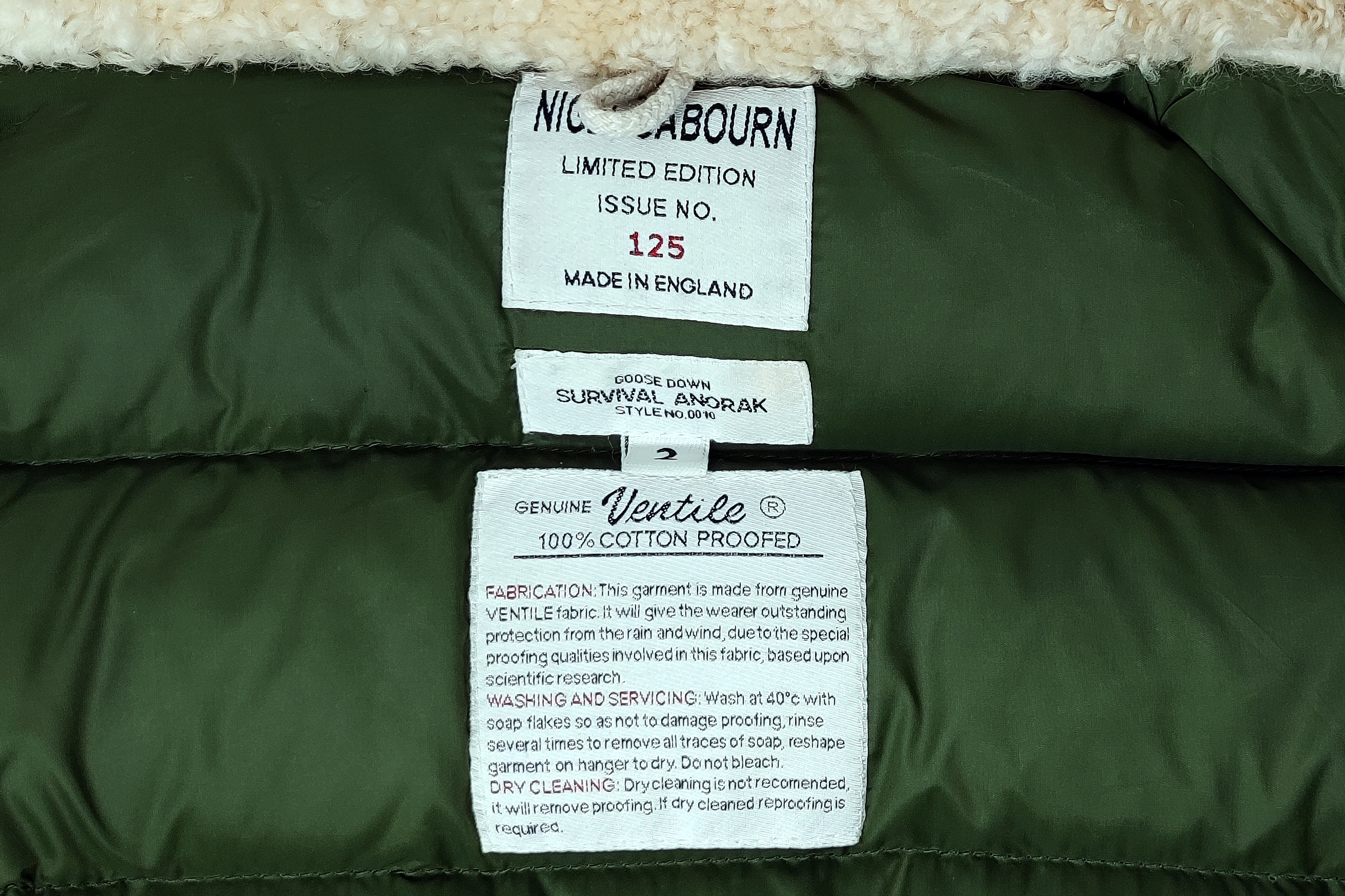
The original Ascent of Cabourn book makes that synthesis clear. Although the collection was framed around Hillary’s Everest achievement, its visual material also draws on Antarctic expedition imagery. One spread shows Hillary in front of an aircraft marked Antarctic, while the garment page identifies the orange parka as “Goosedown Survival Anorak”. The garment therefore sits between two related histories: Hillary as Everest figure, and Hillary as Antarctic explorer. What matters is how those histories were made to work together within a single garment.
Seen that way, the rest of his work comes into sharper focus. The Everest Parka was the clearest expression of a method. Cabourn did not treat history as a fixed source to be preserved intact, but as material that could be worked through, recombined, adapted and returned to use.
The book also reveals how Cabourn worked with specialist British manufacturers. Rab Carrington produced the down-filled survival garments. The collection was not just inspired by expedition clothing but built through the same logic that had produced it in the first place. Cabourn’s achievement was the reactivation of the skills, systems and material knowledge that made that history possible.
The same method is visible in two other Cabourn garments held in the Westminster Menswear Archive: a 2012 Cameraman Jacket and a 2013 Taped Ventile Aircraft Jacket. Both move beyond quotation or reproduction. They show Cabourn treating historical garments as systems to be reworked, tested and kept in use.
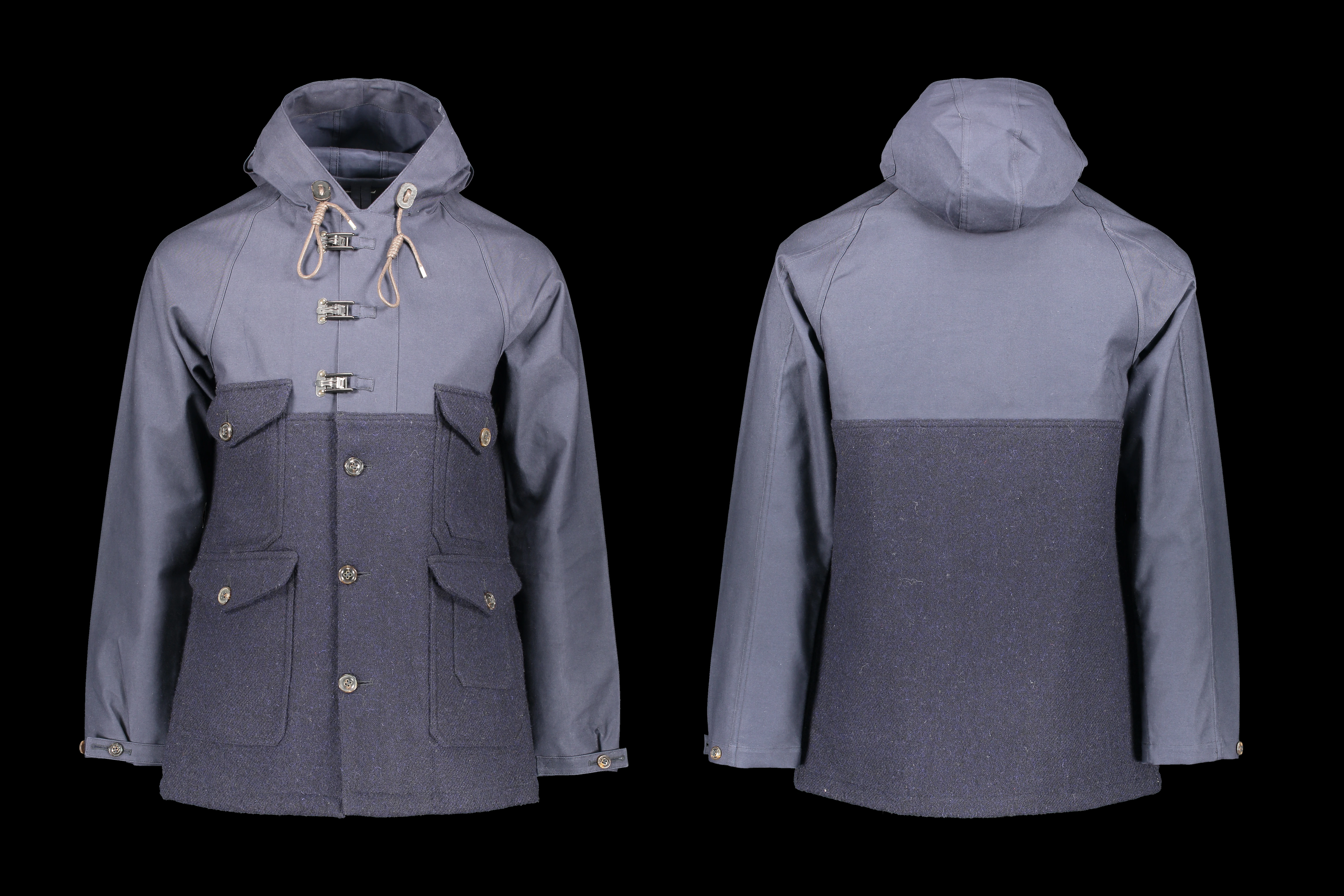
The Cameraman Jacket shows that method operating over time. Introduced in 2003 as part of the Ascent of Cabourn collection, it became one of Cabourn’s signature designs, but there is no single definitive Cameraman Jacket. Its key elements remain recognisable: Ventile, Harris Tweed, metal clips and the split between weather protection and country cloth. Since then, it has appeared in multiple versions, with changes in fabric, colour, construction and format, showing how Cabourn treated the design as something to be continually tested rather than simply repeated.
A heritage designer might treat an archival source as something to stabilise. Cabourn treated it as something to keep active. The Cameraman is not a fixed object, but a recurring form: expedition clothing reworked through country cloth.
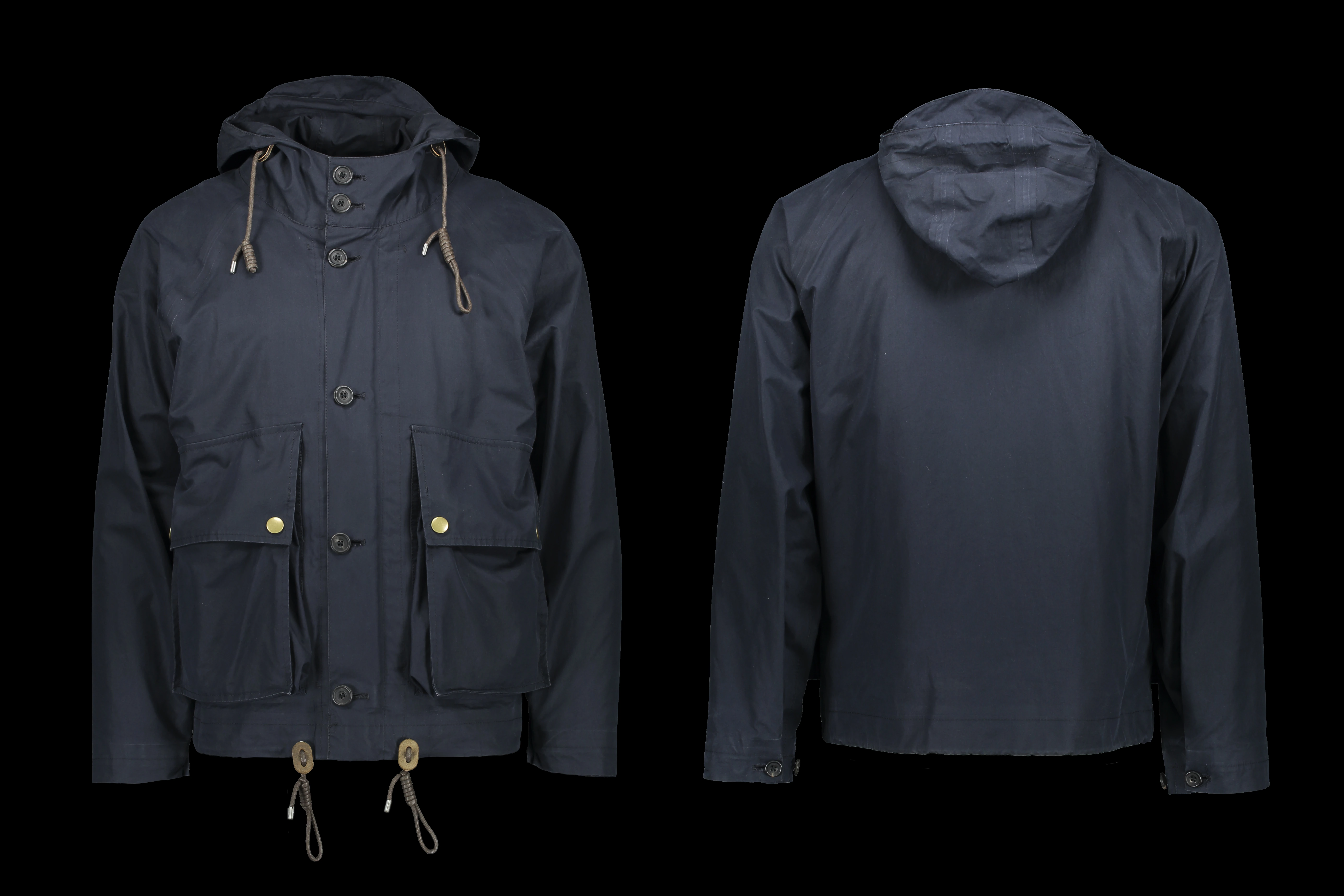
The 2013 Taped Ventile Aircraft Jacket pushes this further. Our example combines a taped Ventile shell with a detachable Harris Tweed liner. It draws on military flight clothing, but it is just as concerned with contemporary performance: taped seams, weather resistance, ventilation, modular layering, warmth and movement. The historical reference is present, but it is only the starting point. What matters is not simply where the idea came from, but how Cabourn made it function.
Looking at these three garments together, Cabourn’s achievement was to make history active again through synthesis. For Cabourn, history was a source of solutions, materials and systems. He collected garments not because they were old, but because they contained knowledge: how a pocket was constructed, why a hood was shaped in a particular way, what problem a fabric was solving, and what might happen if one functional detail was combined with another.
That is why so many designers responded to his passing. Cabourn did not simply leave behind a body of work. He left behind a method, and he shared it. He taught, trained, listened and made time for those who wanted to understand clothing from the inside out.
That method continues through them. Each time a designer returns to an existing garment to understand fabric, construction and function, Cabourn’s work remains active. That is the real measure of his legacy: not nostalgia, but use.