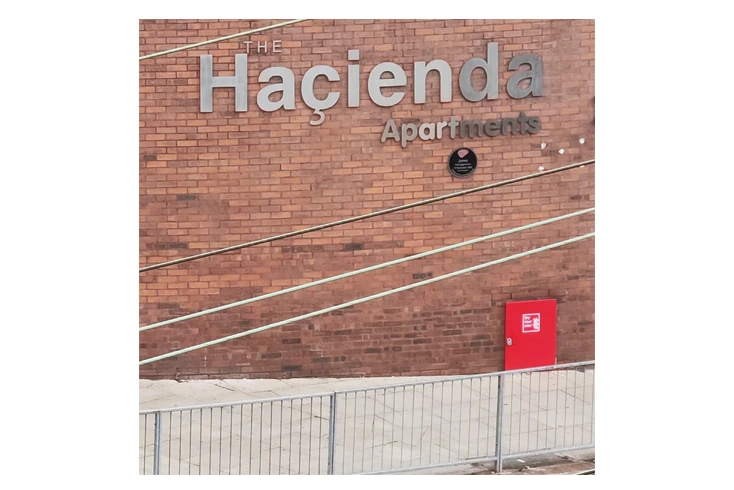
The Haçienda Watch: Rituals of Remembering
Republished as originally written. References to events reflect the original publication date.
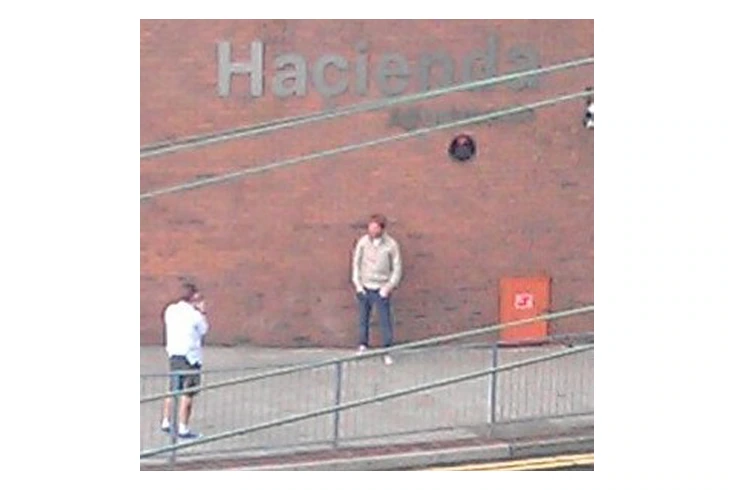
For the last thirteen years, I’ve been watching people photograph themselves outside the Haçienda Apartments in Manchester. Through the curtains of my window opposite, I’ve quietly captured the moment that they pose beneath the sign, an unseen witness to something that mostly goes unnoticed.
At first, I thought it was simple nostalgia; people returning to capture a memory. But over time, as the gestures repeated, I realised it was something else: ritual.
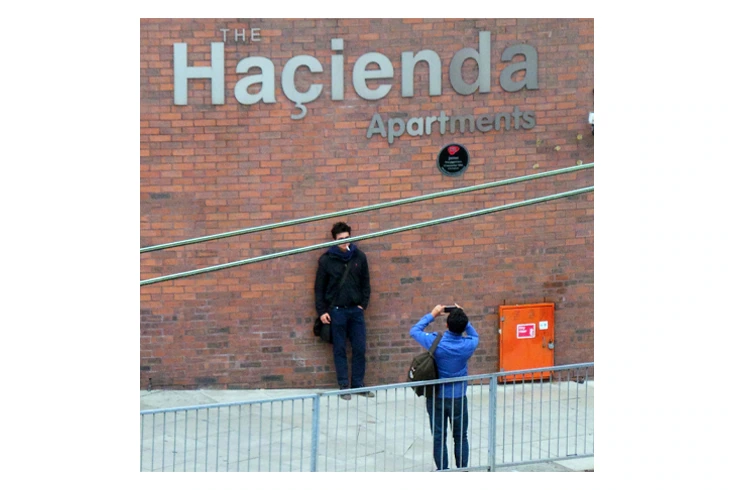
Each visit follows the same choreography. Someone hands over a phone, steps back, and frames the shot. The subject stands still for a moment, half-smile, hands in pockets, facing the past. Sometimes they lift a leg and lean against the wall. Sometimes they pause, nodding in recognition, then move on. The act lasts only seconds, but it happens every week, every season, regardless of the weather.
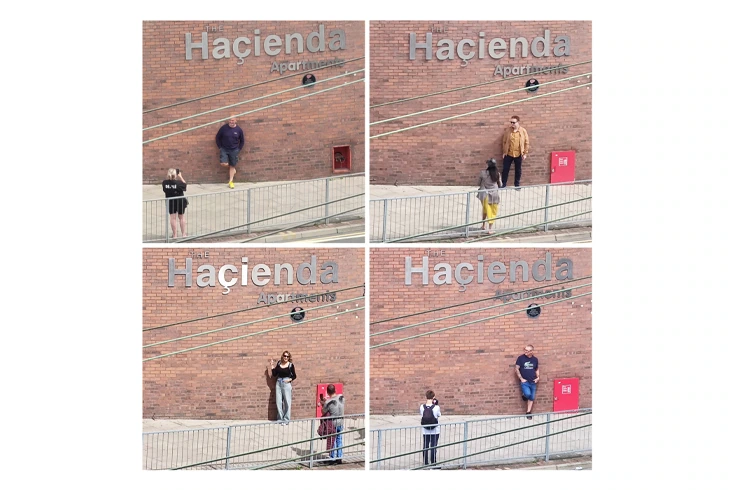
From my side of the street, I photograph them. I don’t know who they are, and they don’t know I’m there. Over thirteen years, I’ve taken more than two thousand photographs. The images are almost identical, and that’s what makes them compelling. The act of repetition has turned memory into ritual.
The Haçienda closed in 1997. The apartments that replaced it kept the name but not the meaning. The club’s legend belongs to a time before smartphones, when being seen required someone else’s camera. The irony is that this spot, now a private block of luxury flats, has today become one of the most photographed sites in Manchester. It’s where people go to prove they were once connected to something larger.
The wall has become a kind of shrine, the act of posing now closer to devotion than documentation. It’s an echo of what once brought the club down, the gaze that turned euphoria into evidence, when being seen became the problem.
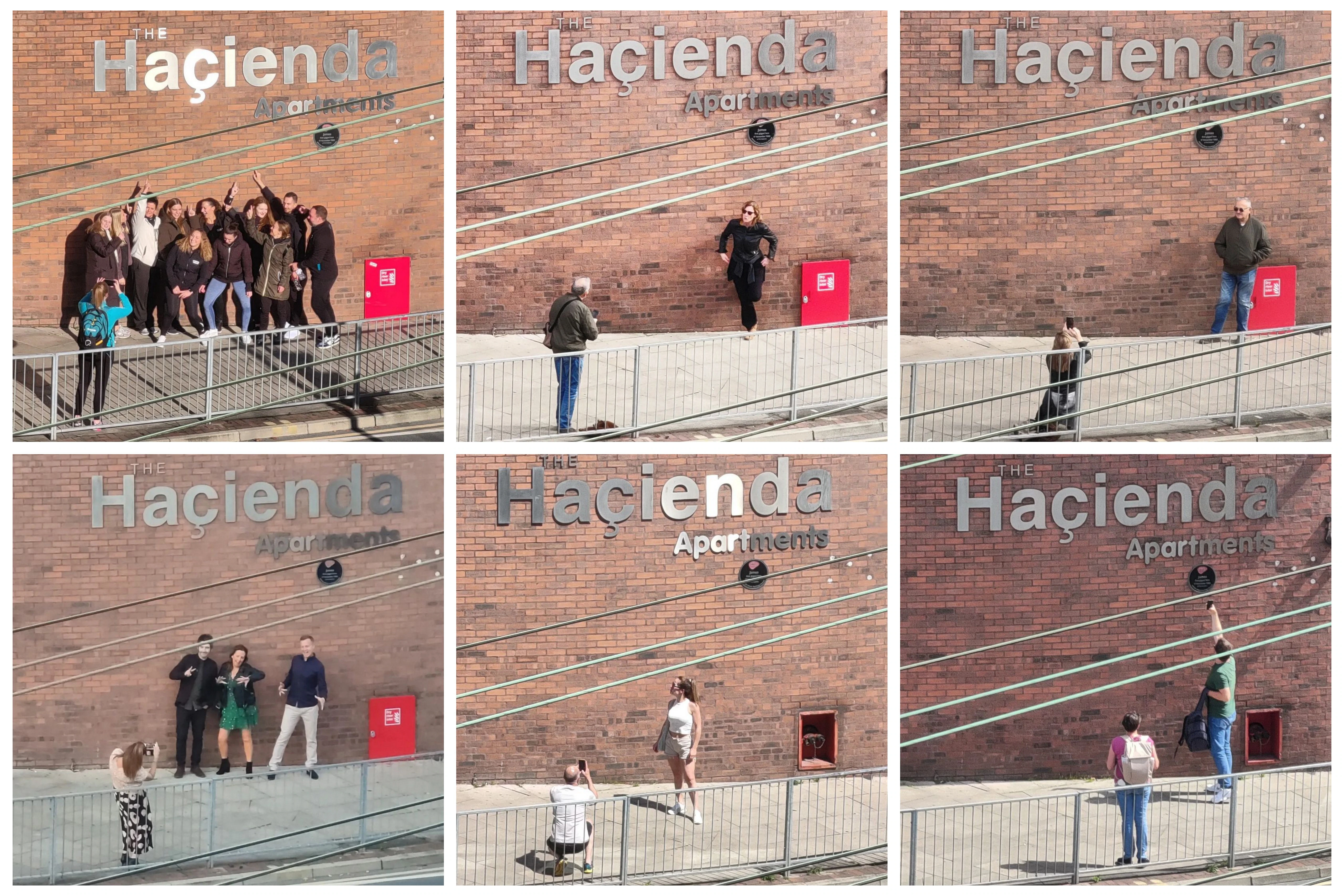
When I set up my own camera in 2012, I was stepping into that history, knowingly or not. The gaze shifted from surveillance to observation, but the mechanism stayed the same. Both acts, theirs and mine, are performances of memory. They pose to remember; I photograph to show how remembering looks.
The Haçienda took its name from a line in a Situationist text: “The Haçienda must be built.” It was a call to create spaces of freedom and play, to imagine another way of living. Standing here now, watching these small acts of return, I sometimes think it still is being built, just in another form.
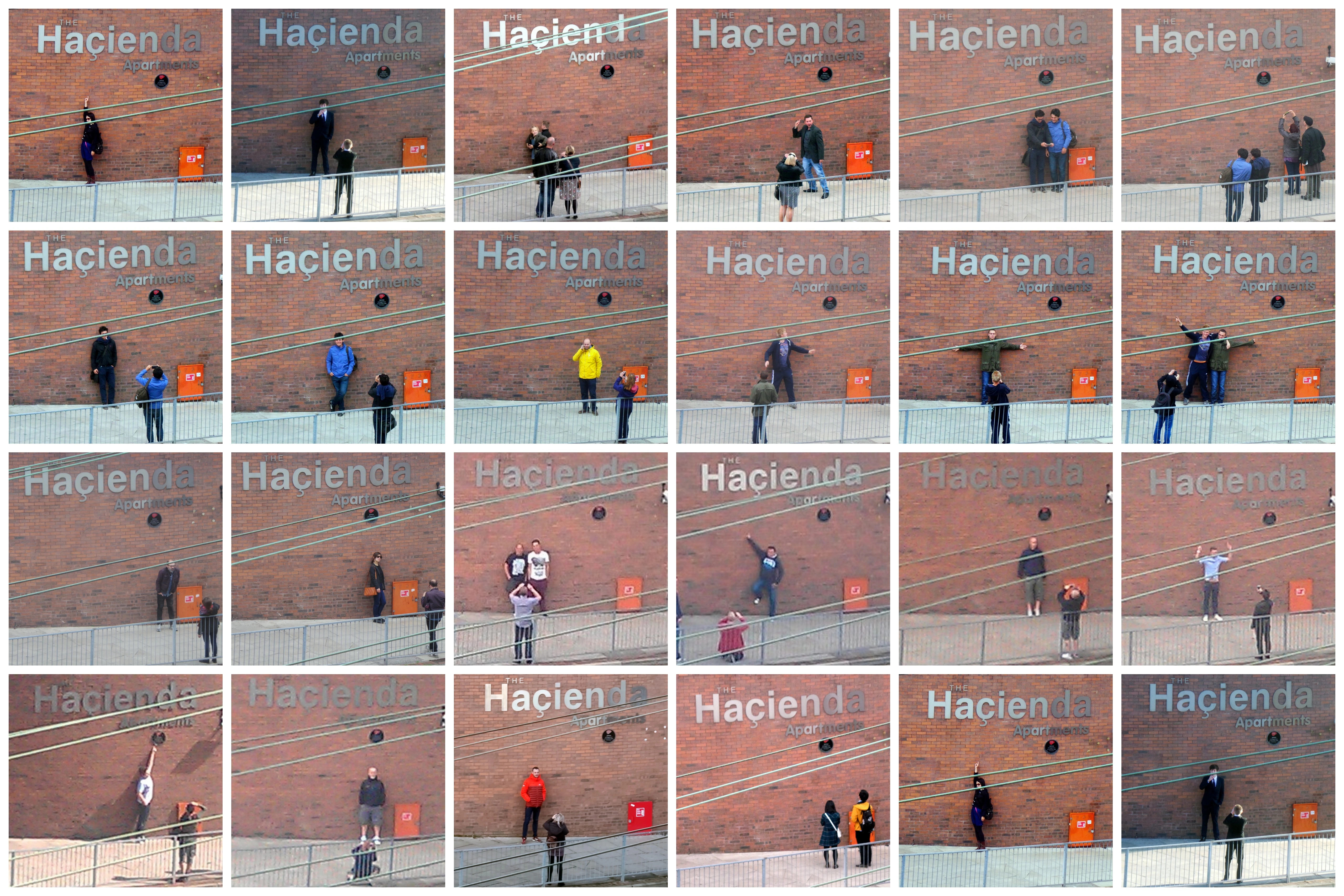
The club was meant to offer liberation through sound and movement. That dream didn’t last, but its echo did. The same space now holds a quieter kind of freedom: the right to remember on your own terms, to stand in public without irony, to say this mattered even if you weren’t there when it did.
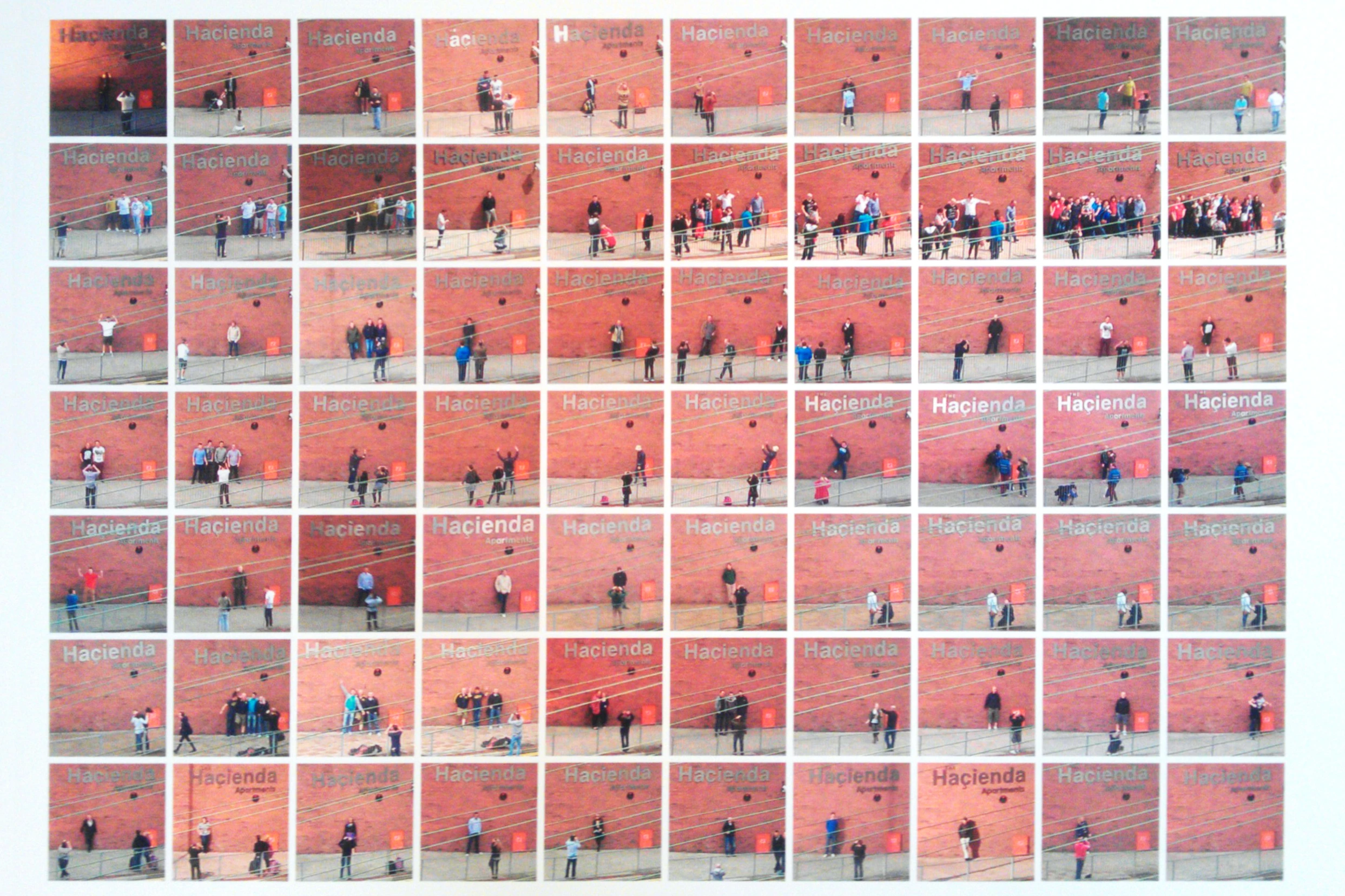
Over time, the faces changed. At first, people my age came, those who had been there, alone or in pairs. Later came the next generation: tourists, students, stag parties. Each one performing their version of the Hacienda’s myth.
There’s been endless debate about who owns that myth, who profits from it, who exploits it, and who should stop talking about it altogether. I’ve stayed clear of that. My work isn’t commentary; it’s witness, an attempt to see what happens when history keeps showing up uninvited.
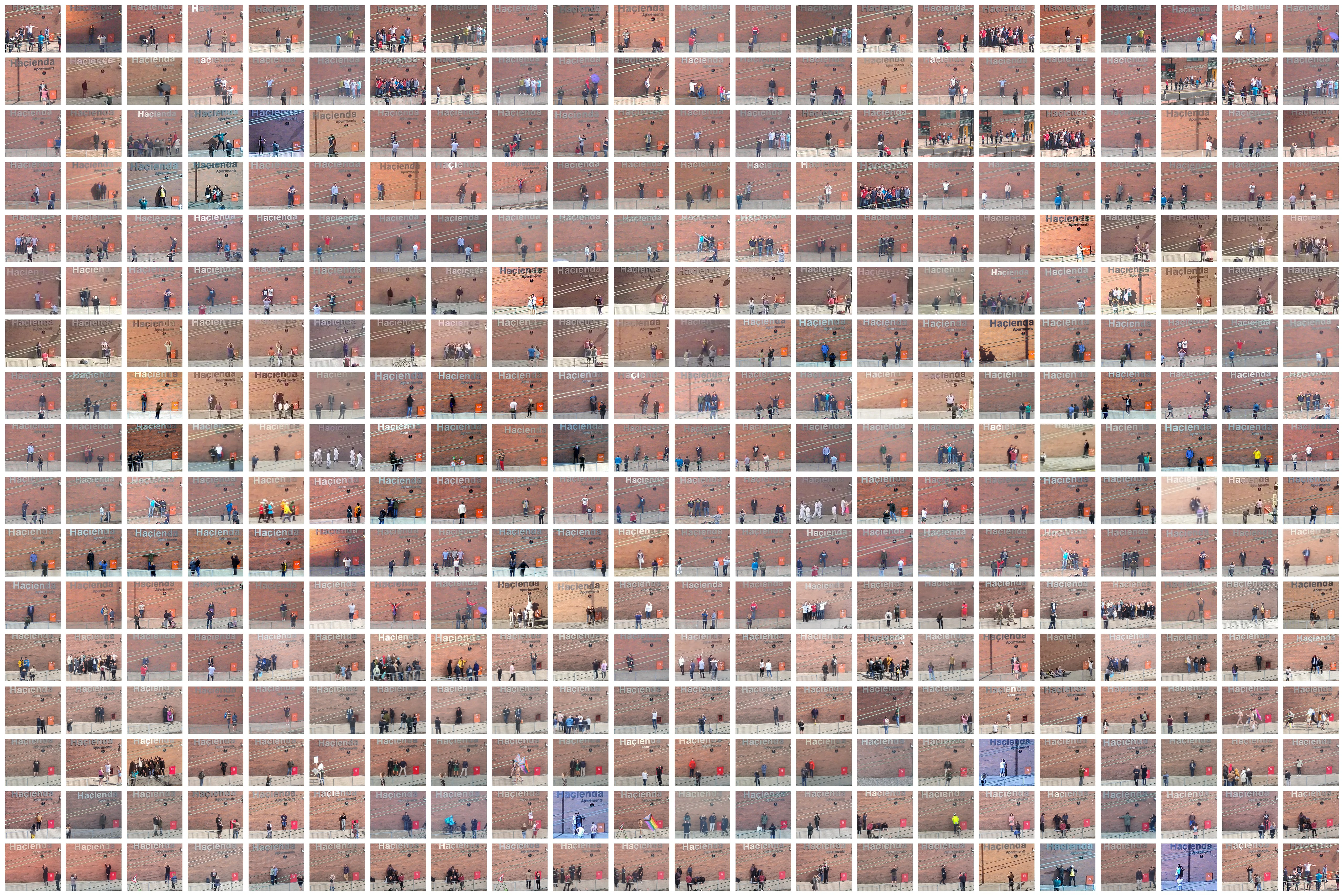
When I began, I thought I was recording other people’s nostalgia. Thirteen years later, I see that I was always part of it. In my own ritual, standing at the window with my camera ready, I mirrored theirs. Both of us were drawn back by something we can’t quite let go of.
The Haçienda was a club built on utopian energy, but what replaced it is ordinary: red brick, silver signage, private entry. Still, they come. They stand where the door once was, raise their phones, and take pictures not of what remains but of what refuses to disappear.
And so do I.
Every pilgrimage needs a witness.