
The Menswear Nobody Saw
How menswear disappears from fashion history
Republished as originally written. References to events reflect the original publication date.
After a decade as director of the Westminster Menswear Archive, I find it difficult to enter any fashion exhibition without asking where the menswear is. Last week I visited V&A Dundee’s Catwalk: The Art of the Fashion Show which aims to trace 125 years of notable runway moments. Yet its earliest complete menswear look is from just seven years ago.
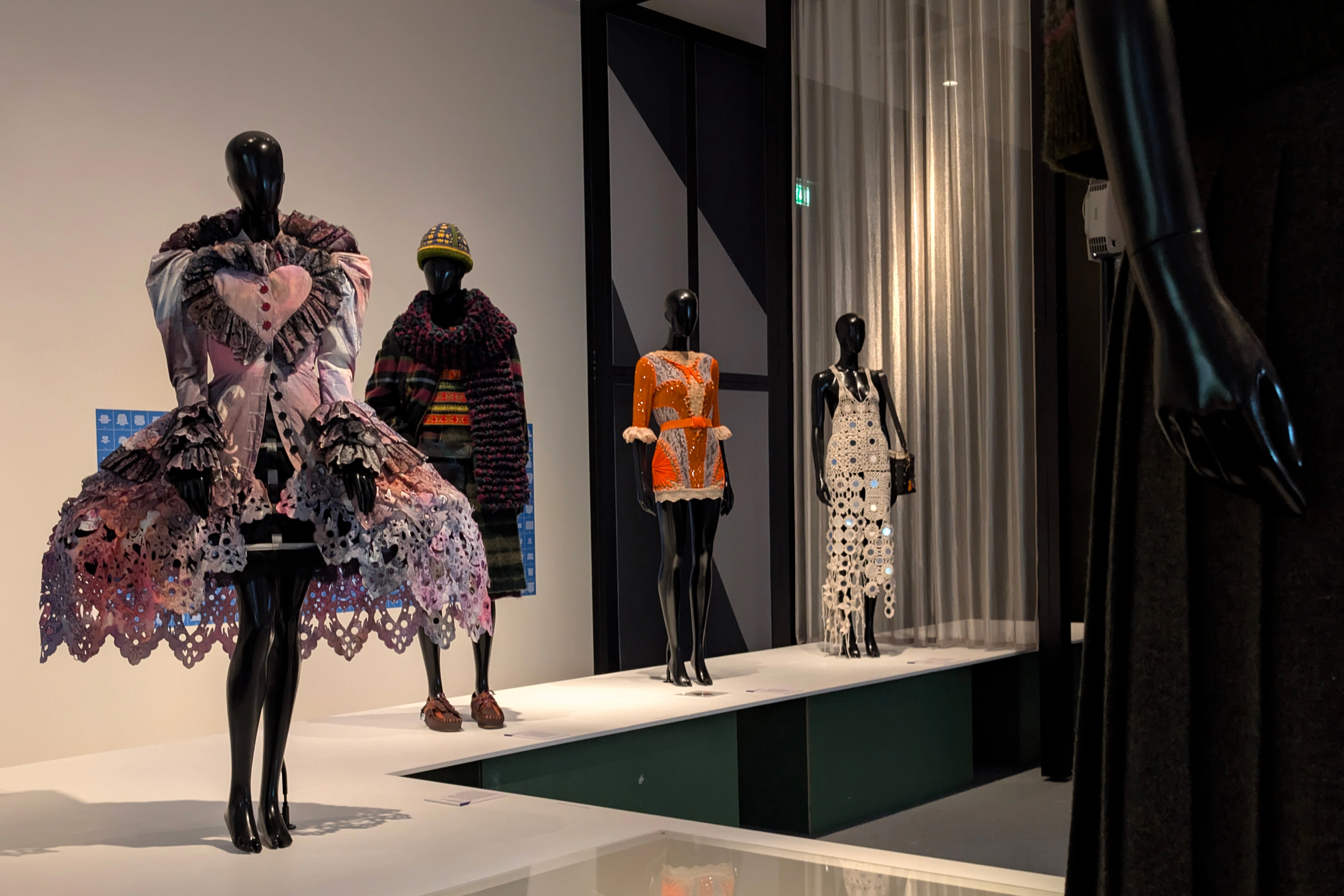
Of the 31 complete runway outfits on display, only three are menswear. Menswear is present elsewhere, notably in scale models of recent Prada menswear sets, but its history is represented more through staging than through garments.
The imbalance is striking, but the exhibition did not create it. Like all exhibitions, it inherits a version of fashion history already filtered through what earlier systems have chosen to notice, record and preserve. By the time menswear is absent from display, it may already have disappeared several times.
What happens when menswear is present on the runway, overlooked in criticism, diminished in the digital archive and finally absent from the museum?
Alexander McQueen’s Autumn/Winter 1998 collection Joan shows how that disappearance happens. It is remembered through its women. The ring of fire and severe tailoring have made Joan easy to remember as another McQueen collection about dangerous, wounded and defiant women.
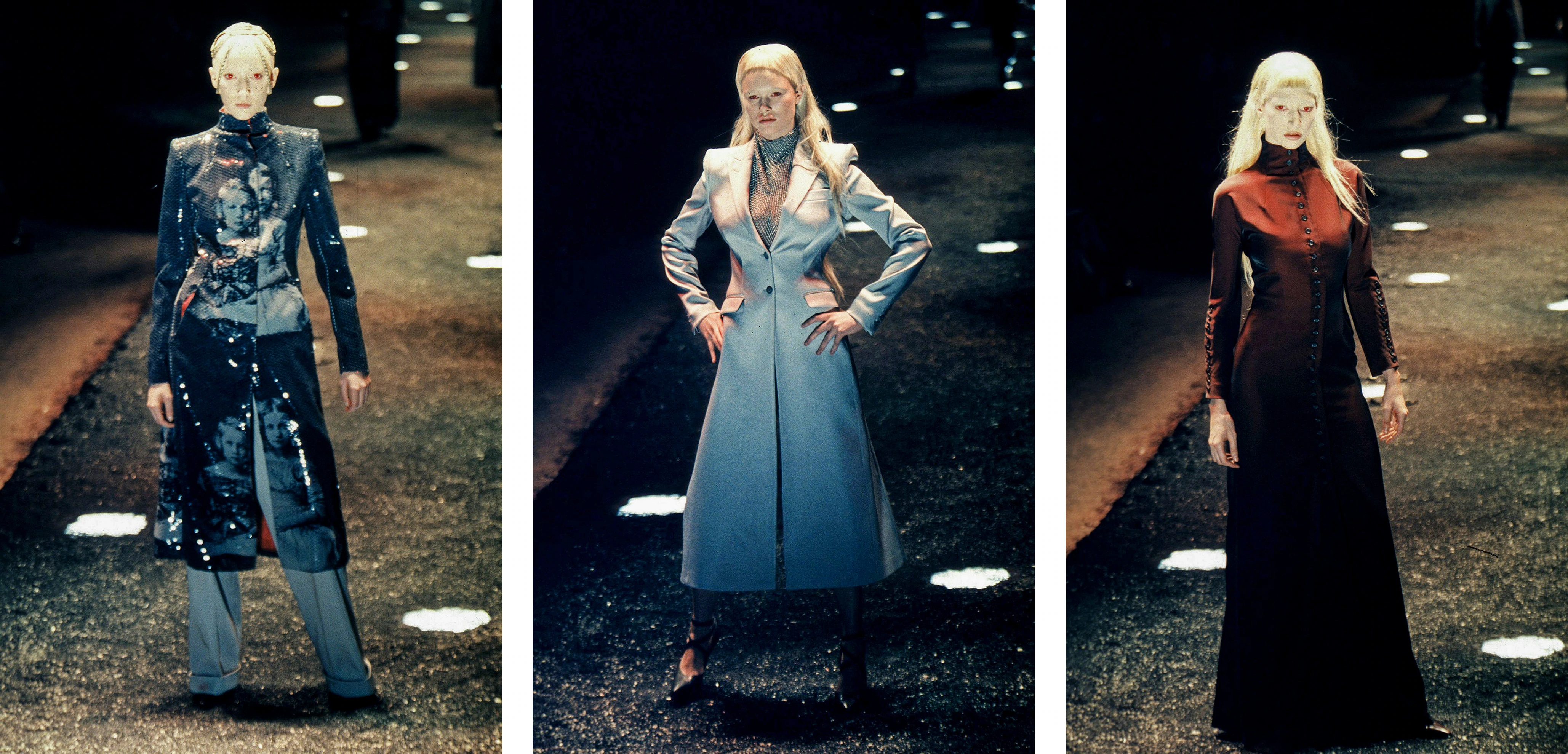
Yet 22 of the 91 looks in Joan were menswear. As with his previous four runway shows, menswear and womenswear was presented together as one complete narrative. For Joan, the same materials, tailoring, and photographic prints were used across both the men’s and womenswear. McQueen used his expertise in cutting to produce suits, robes, and dresses to change and question gender norms.
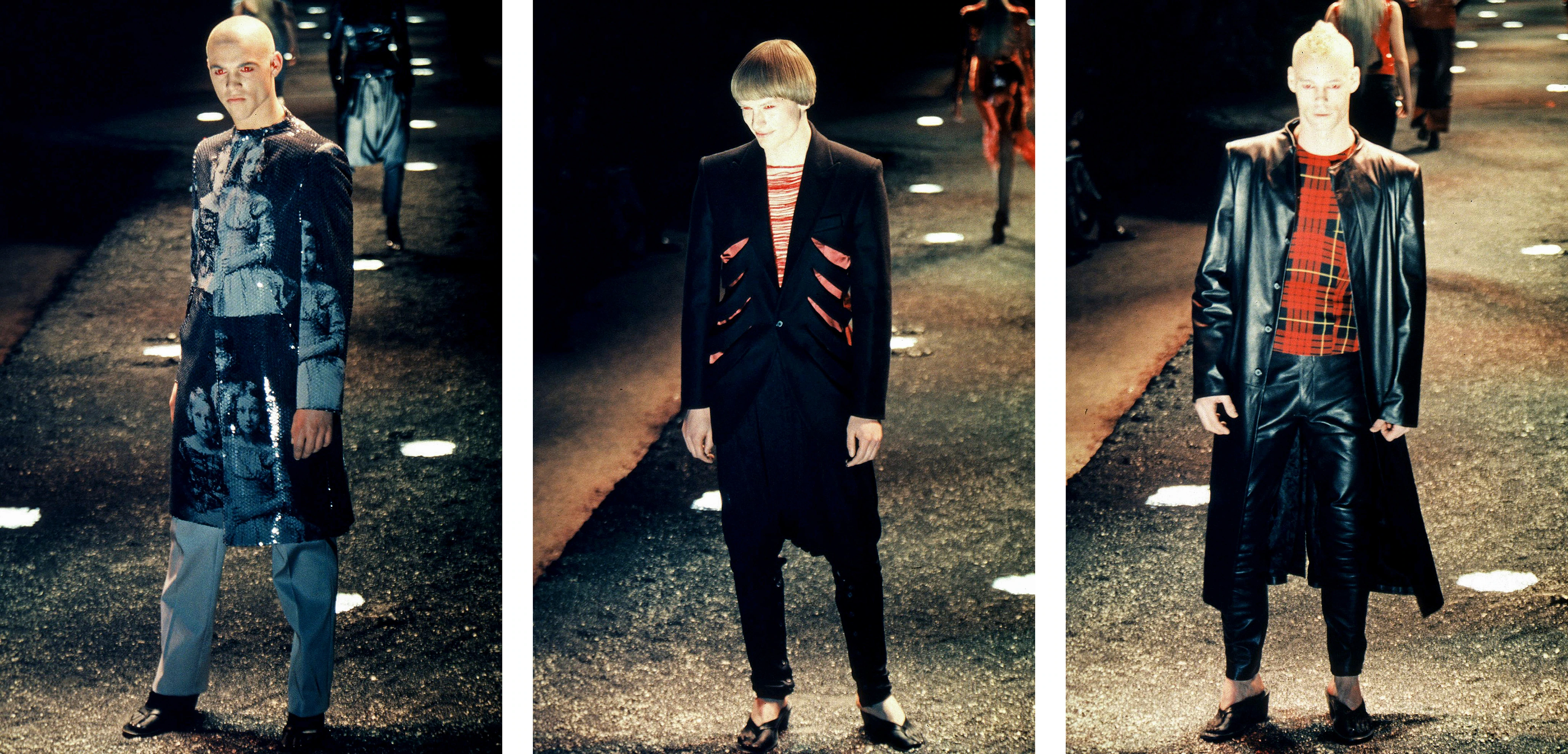
This instability extended beyond the garments into the casting, styling, and make-up. Both male and female models sported shaved heads, severe monk-like haircuts and very pale, almost featureless faces. The collection didn’t just move garment types across male and female bodies, but purposely made those bodies look equally unstable too.
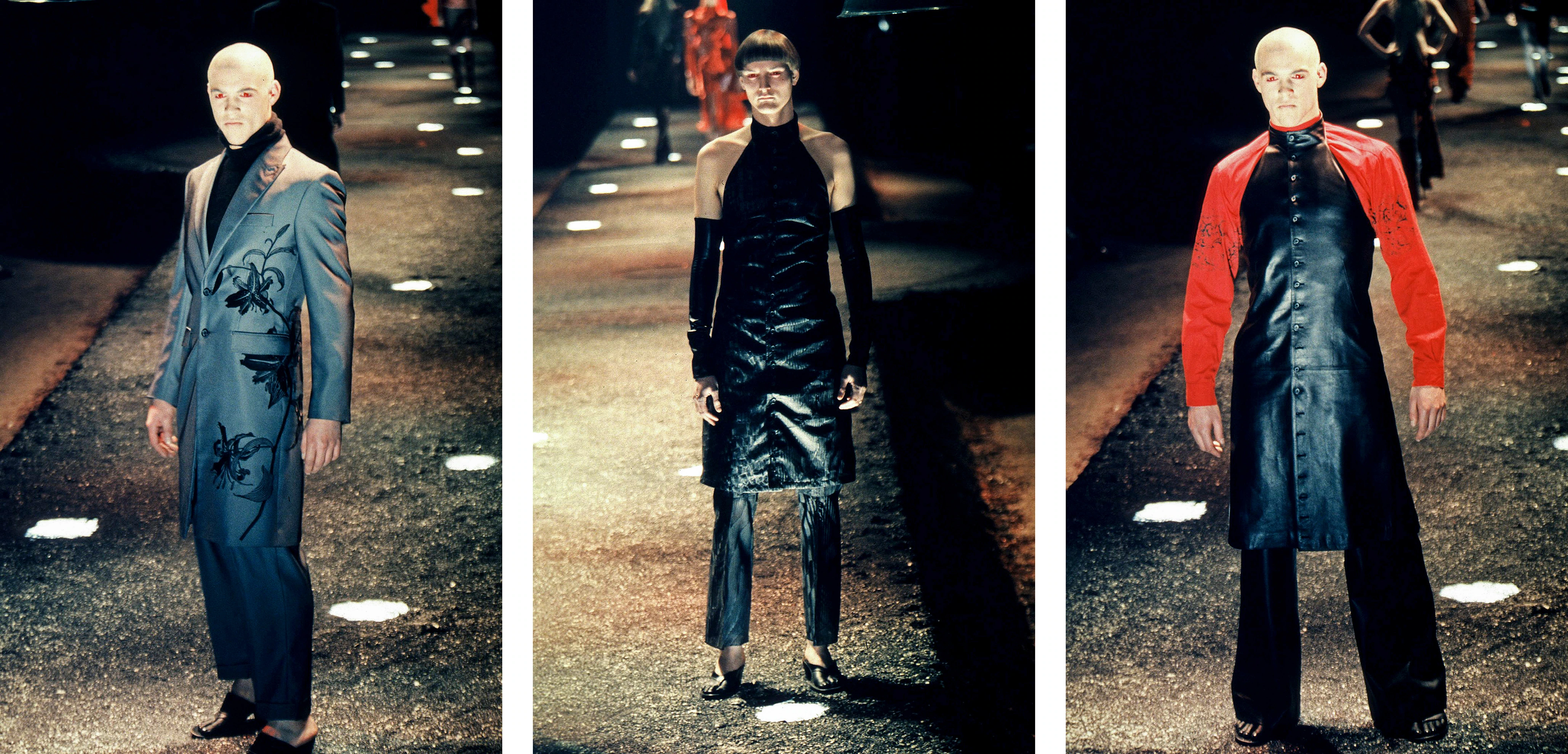
The Westminster Menswear Archive holds twelve garments from the collection, including lace vestments, skirted trousers and several examples of tailoring. Seen together away from the runway they reveal a severity to McQueen’s cutting that moves from conventional menswear, ecclesiastical silhouettes and more ambiguous and feminine forms.
One example is a calf-length sleeveless halterneck tailored garment in grey wool. Fastening down the centre front with a multitude of buttons it recalls a Roman cassock. It is decorated with an asymmetrical flocked damask pattern of fleurs-de-lis, a long-standing emblem of the French monarchy. The garment oscillates between cassock, vestment and evening dress, revealing how unstable garment categories can become once removed from the institutions that give them meaning.
Without the menswear, Joan can be read primarily as the story of a persecuted woman whose masculine dress is treated as transgressive. Joan of Arc’s return to male dress helped the court establish that she had relapsed, while the robes and ornament worn by the men that sat in judgment of her passed as legitimate expressions of office. Their garments were read as masculine not because of the material or make, but because the Church’s authority made them appear natural and masculine. Joan’s clothing was the means by which her ‘deviance’ was made visible; in contrast the dress of her prosecutors became invisible through the authority they represented.
Once the menswear is restored, McQueen’s more nuanced approach to destabilising gender becomes clearer. As garments, materials, prints and silhouettes move back and forth between male and female bodies, the collection suggests that clothes are not inherently feminine or masculine. Instead their gender and legitimacy are produced or undermined by power. Joan therefore is not simply about a woman punished for wearing masculine dress, but about the systems that decide whose dress is deviant and whose is legitimised by authority.
If Joan was in part McQueen reflecting on how power sanctions some forms of dress while condemning others, that process continued beyond the runway. It also shaped how the collection was interpreted, recorded and preserved.
The first disappearance began on the day of the show. While reviews at the time praised the collection for its technical tailoring, theatrical force and depiction of powerful women, almost all made no mention of the menswear that was also shown. Instead the men were made rendered invisible, their clothing and styling absorbed into the show’s broader medieval and clerical atmosphere. That first loss was an absence of critical interpretation.
The next disappearance occurred in the digital archive. When the collection was respectively added to the newly launched Vogue Runway in October 2015, all but one of the women’s looks were represented. However, of the 22 menswear looks that McQueen had originally shown on the runway, only 14 were included. More than a third of the menswear was absent, weakening the collection’s more nuanced examination of gender and power.
As a significant resource for students, researchers, and curators to study collections and a designer’s work, this unacknowledged absence is critical. Anyone viewing Joan on Vogue Runway cannot see the complete collection and is given no indication of how much is missing, or how disproportionately that absence affects the menswear. The version available online therefore doesn’t enable a fuller understanding of the collection, and presents a far more conventionally female reading of the show than the one McQueen originally staged.
Finally, the show’s menswear also disappeared from museum exhibitions. Neither the Metropolitan Museum’s Savage Beauty in 2011 nor the V&A’s expanded version in 2015, included a single menswear outfit from any of McQueen’s collections. This was the third disappearance: the menswear had vanished from the museum account of McQueen’s career.
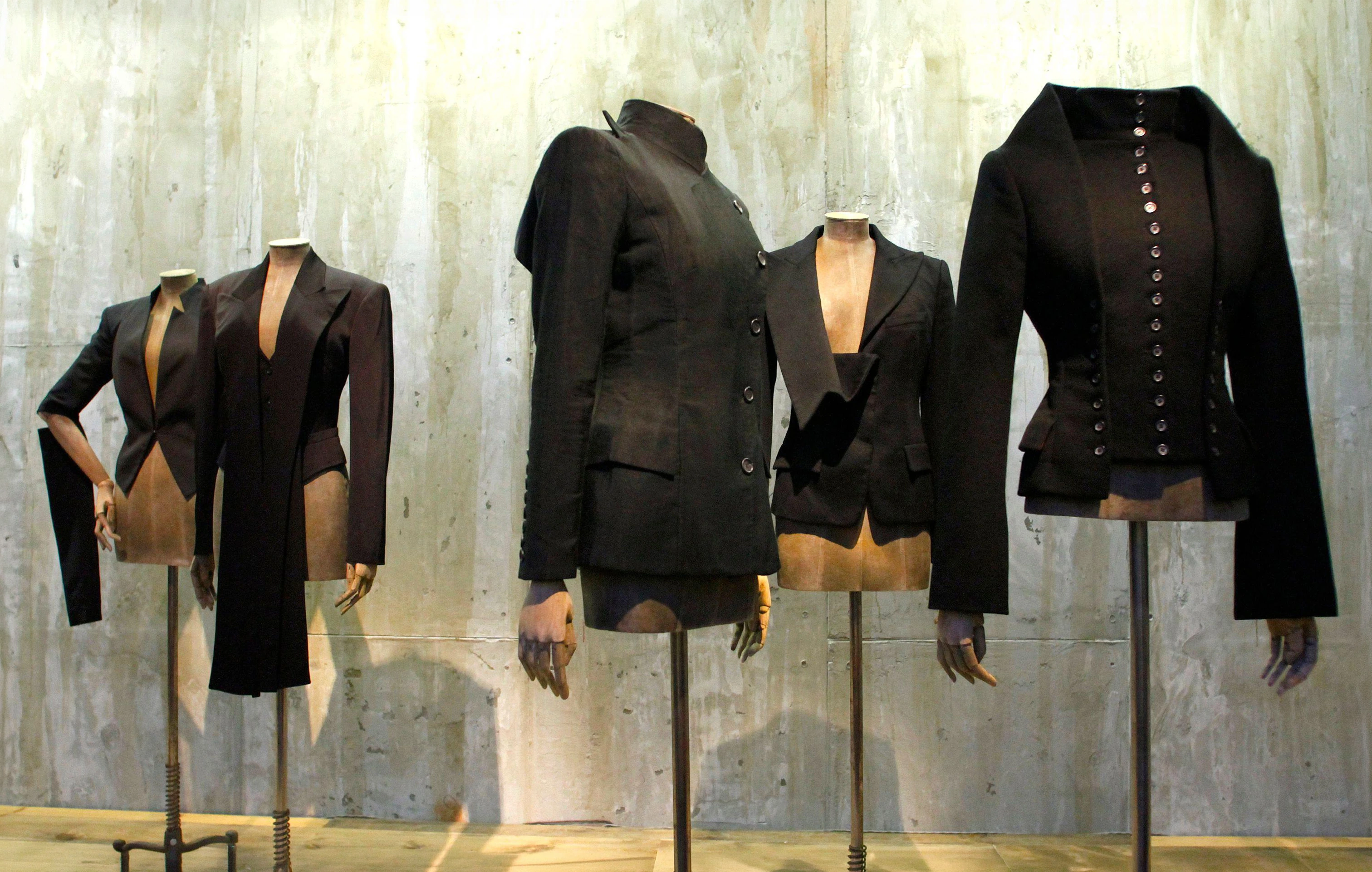
For Joan, 22 menswear looks appeared on the runway, Vogue retained fourteen, and the museums displayed none.
Seen from Dundee, the scarcity of menswear is therefore not simply a matter of display. Curators inherit the objects, images and interpretations that institutional systems choose to preserve. When menswear has been overlooked in reviews, reduced in archives and neglected by museums, its absence can begin to appear historically inevitable.
This process of gradual disappearance does not belong only to the past.
Jonathan Anderson’s debut show for Dior was menswear, presented in June 2025. The collection’s opening outfit placed the house’s foundational Bar jacket on a male body. Cut loose at the waist and worn with vast white cargo shorts whose exaggerated volume blurred the distinction between shorts and skirt, the outfit destabilised Dior’s use of tailoring to discipline the female form.
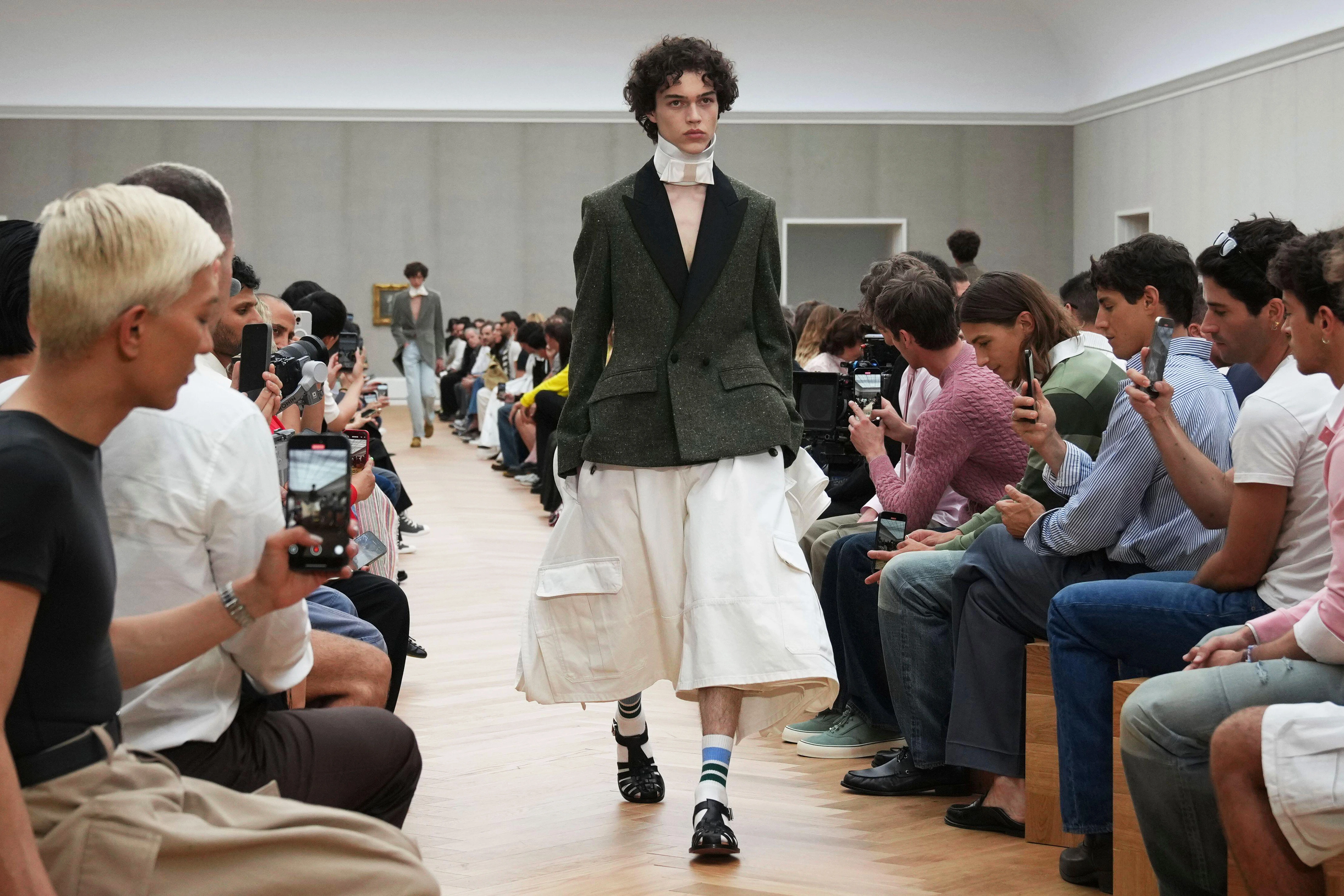
Anderson’s tenure at Dior will one day be condensed into exhibitions, books and retrospectives. The Bar jacket will remain.
What is less certain is whether fashion history will remember that it was through menswear that he first reframed its meaning.