
The Unreadable Man
How menswear makes men easier to recognise and harder to know
Republished as originally written. References to events reflect the original publication date.
What do you see when you look at this self-portrait of Andy Warhol? The fright wig, the almost fluorescent camouflage pattern across the face, the disembodied head emerging from a black void, the pale mask-like skin, the unreadable expression.
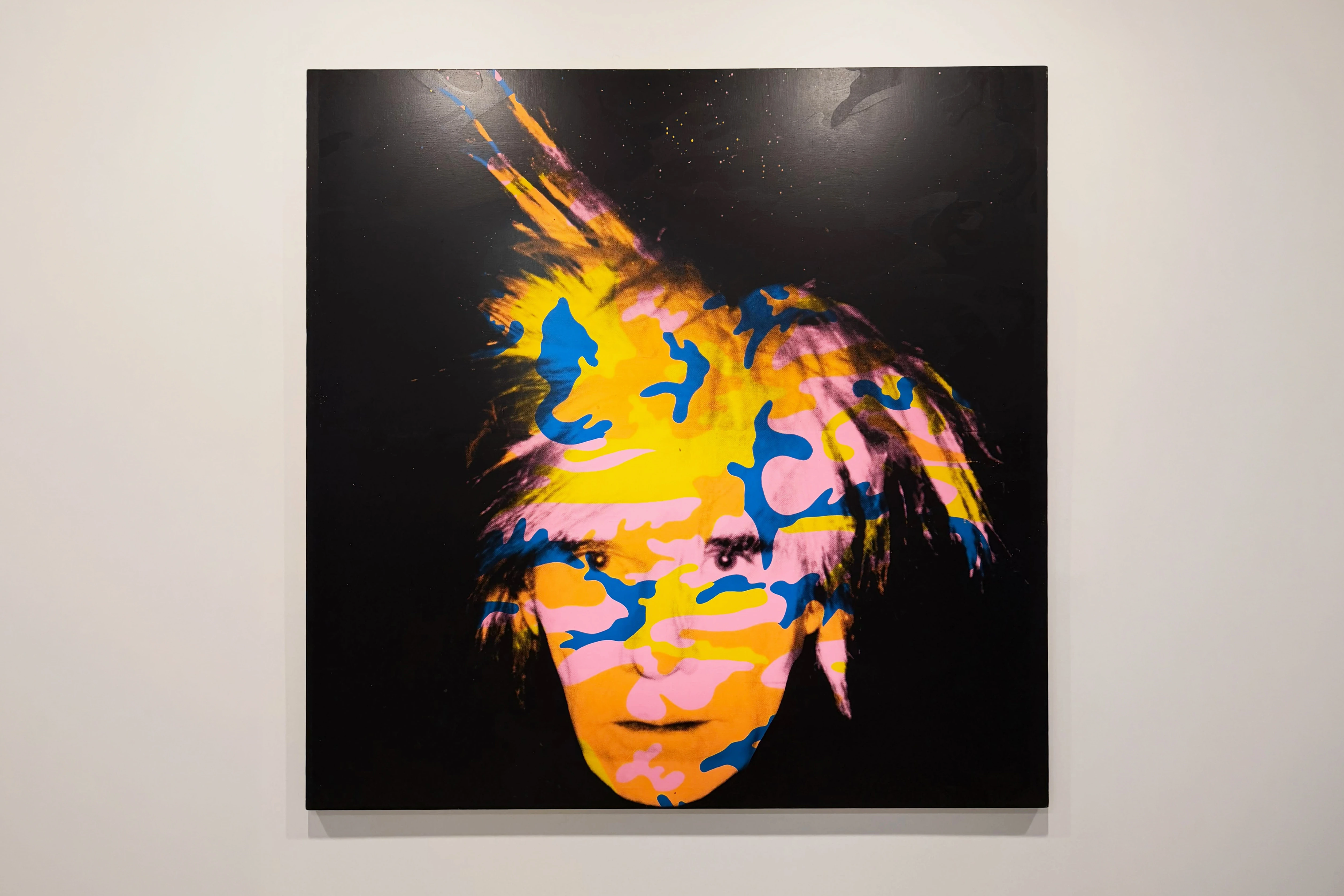
Despite the camouflage across his face we recognise Warhol immediately. Camouflage ought to suppress visibility, yet the colour makes him almost impossible to miss.
But do you see Andy Warhol?
Because recognising Warhol was always easier than knowing him.
A self-portrait is historically meant to be revealing. We think of Rembrandt’s self-scrutiny that captured his status but also his vulnerability as he grew old. Or Vincent van Gogh whose paintings of himself are often read as capturing his psychological struggle, whether that interpretation is always justified.
Yet Warhol gives us the opposite. The more recognisable his face becomes, the less certain we are that we know anything about the man behind it.
By the 1980s, Warhol’s appearance had become almost a uniform. The near-identical silver fright wigs, dark sunglasses, black turtlenecks and tuxedo jackets worn with jeans were worn so consistently that Warhol himself became a visual cipher.
Like most uniforms its various elements function so that once brought together they make the body instantly readable, yet in doing so also make the person behind the uniform far less visible.
By 1986, his public image had become so familiar and so widely reproduced that it had begun to function almost as a mask. Warhol had returned to his own image repeatedly since the 1960s, but in his final self-portrait series several versions were overlaid with camouflage.
Warhol’s camouflage did not remain on the canvas. A year later, Stephen Sprouse used the prints in his Autumn/Winter 1987 and Spring/Summer 1988 collections. Camouflage had clearly become fashion, but that did not make the pattern any easier to read.
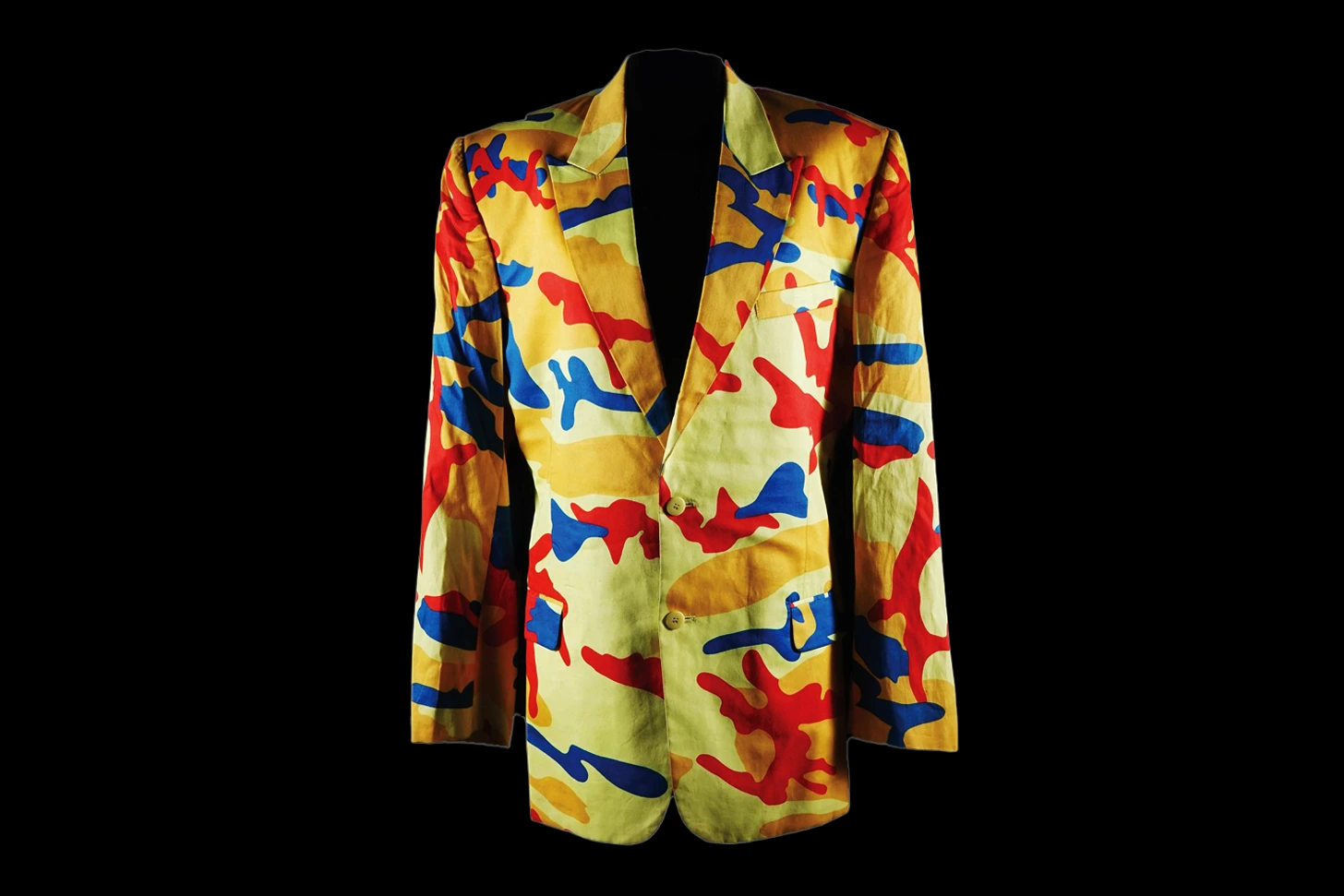
These last portraits have often been read as memento mori. The disembodied head, black ground and pale, mask-like face give them something of the appearance of a death mask. Anthony d’Offay, who commissioned the series, made precisely that comparison when describing one of Warhol’s source photographs.
Yet the portrait’s use of fluorescent camouflage doesn’t make Warhol harder to see, instead it makes his already iconic face far more conspicuous, yet simultaneously making him much harder to read.
We tend to think that the original purpose of military camouflage was simply to make something disappear, but that was only part of its function. The 1921 Manual of Field Works put it succinctly: “Deception, not concealment is the object of camouflage.”
For example, a ghillie suit worn by a sniper does not make the wearer invisible. Instead, it disrupts how the observer registers what they see. The man is read as foliage, his outline merging into the landscape.
The point is that camouflage has never really been a technology of invisibility, but rather a mechanism used to control how a man is interpreted.
Hi-vis appears to do the opposite, yet it too provides instructions for how the body should be read. During military training the contradiction can become literal: camouflage and hi-vis can be worn on the same body, one disrupting recognition while the other makes a particular role immediately legible.
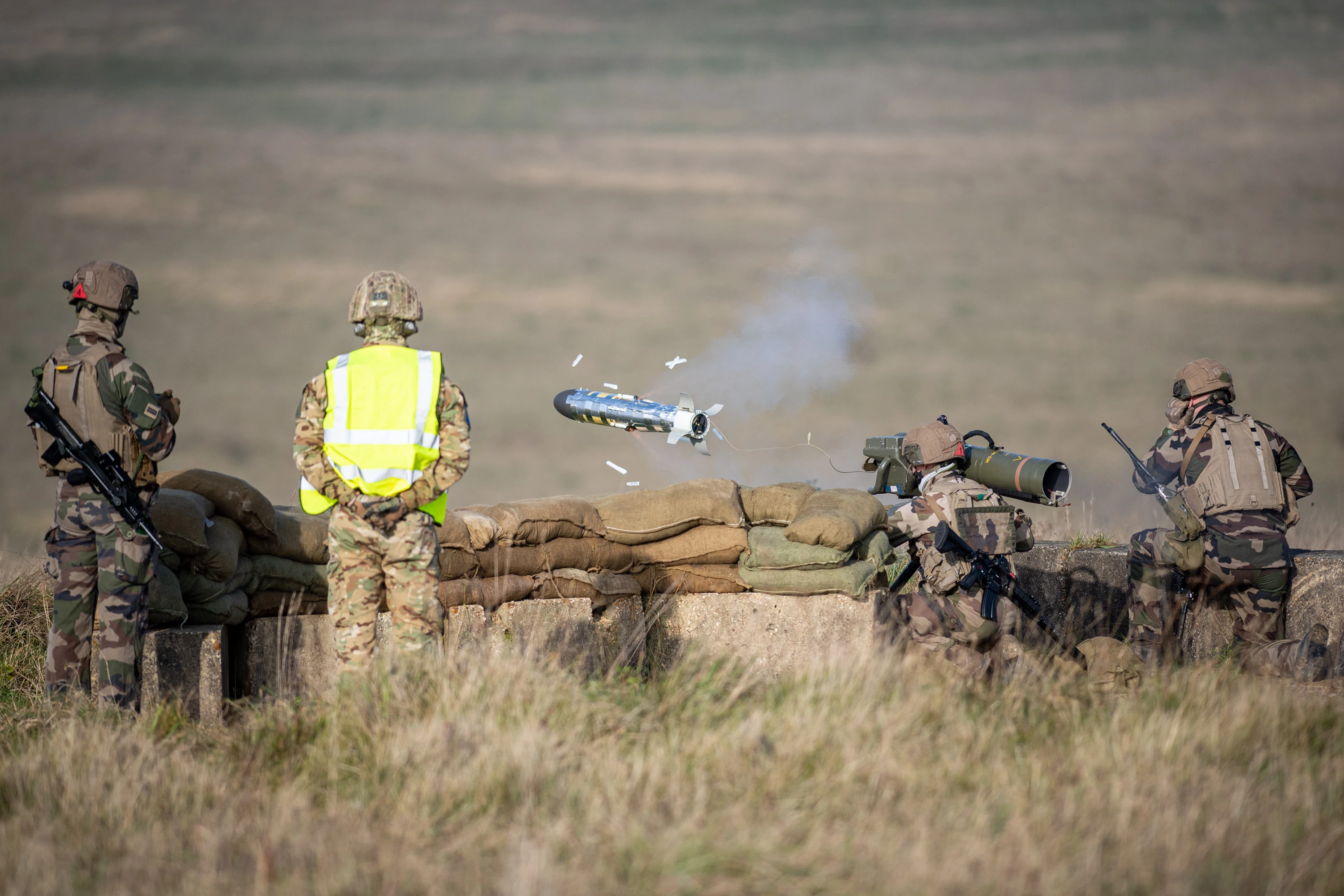
In both cases they become instructions for how the body should be read. The person wearing camouflage is read as the environment, while the person wearing hi-vis is read through their role. Unlike camouflage, hi-vis makes the wearer highly visible, but so immediately legible that we assume there is nothing more to see.
It is this approach that connects it so clearly to how most menswear functions as visual shorthand. Think of the suit, the football shirt, the military jacket, the police uniform, the fluorescent vest, or the Stone Island badge. All allow complicated individuals to become rapidly recognisable types. Businessman, supporter, soldier, policeman, worker, or football casual.
It is a function that can often be incredibly useful. Uniforms depend on us being able to understand them instantaneously, as does occupational dress and even subcultures such as mods, skinheads or punks.
Yet this visual efficiency also creates its own problem. Once we have successfully classified someone, we can stop looking for the person. We mistake recognition for understanding.
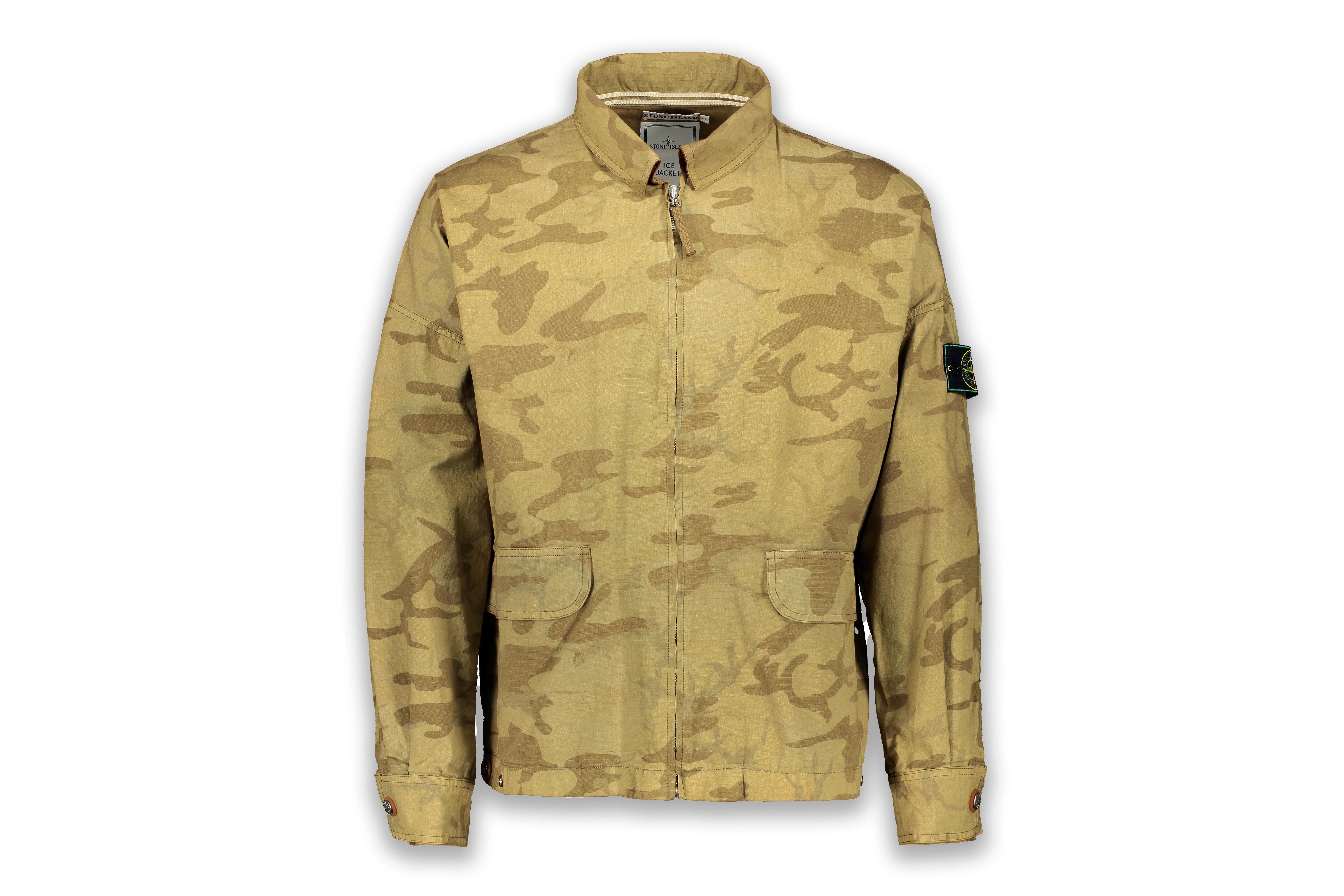
Stone Island’s Camouflage Ice Jacket produced in 1990 makes this tension unusually real. Its surface is printed with a camouflage pattern using a thermosensitive ink that means it gradually disappears as the ambient temperature rises. While the removable compass badge on the sleeve offers a different system of recognition. One changes in response to the wearer’s environment; the other can be attached or removed by the wearer. Together they make the garment’s identity unusually unstable.
Warhol spent much of his career doing something remarkably similar. In an interview published in 1966 he was quoted as saying: “If you want to know all about Andy Warhol, just look at the surface of my paintings and films and me, and there I am.”
Returning to Warhol’s self-portraits from 1986 we know that their surface is camouflage, but underneath it is the public image he had spent decades constructing. The fluorescent paint doesn’t hide him. If anything, it makes Warhol easier to recognise. Yet the more confidently we think we recognise him from the image we are presented with, the less certain it becomes that we actually know the man behind it.
Warhol can be viewed as an extreme example of something that menswear does incredibly well; it can make a man easier to place without making him easier to know. In that respect, menswear can function like camouflage, not by concealing the man from view, but by deceiving us into thinking we already know what we are looking at.
The unreadable man is therefore not the one that nobody sees, but the one we think we have already understood.