
This Used to Be the Future
Hussein Chalayan promised a future. Almost nobody turned up.
Republished as originally written. References to events reflect the original publication date.
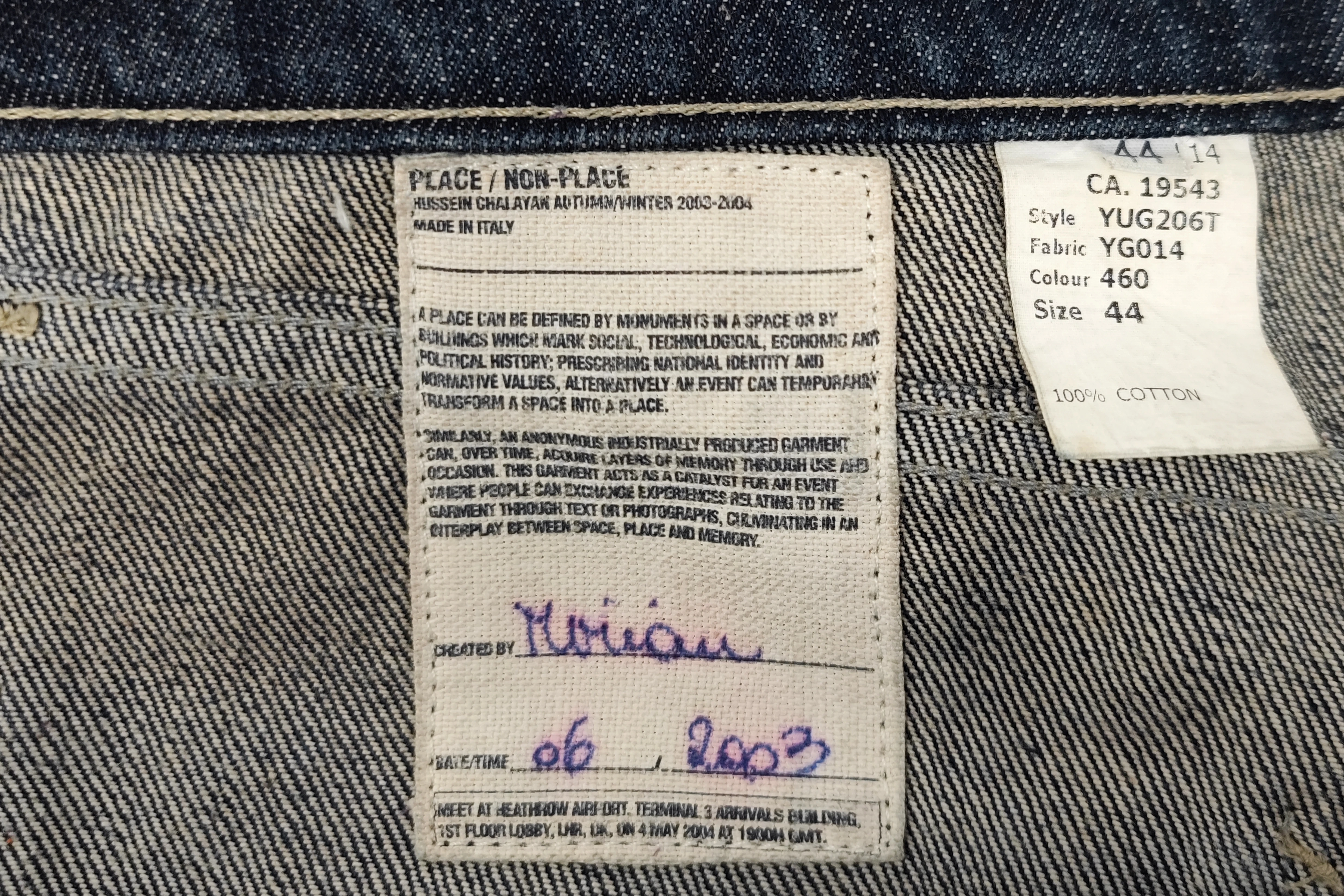
Most garment labels tell you how to wash a garment; the one above told you where to be on 4 May 2004.
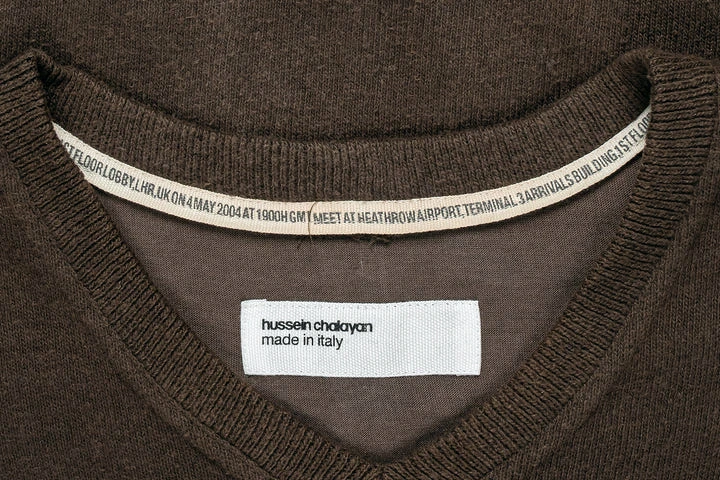
Sewn into a pair of denim jeans, it was not unique. In fact every single garment produced by Hussein Chalayan for his A/W 2003/4 collection featured a large label printed with the following text:
MEET AT HEATHROW AIRPORT, TERMINAL 3 ARRIVALS BUILDING, 1ST FLOOR LOBBY, LHR, UK, ON 4 MAY 2004 AT 19:00 GMT.
Chalayan’s menswear was launched almost a decade after his eponymous brand had debuted at London Fashion Week. His womenswear collections had become known for being intelligent and conceptually rich, yet they were still presented within fashion’s economy of runway spectacle; a coffee table transformed into a skirt, a fibreglass Aeroplane Dress opened by remote control. Both realised fashion’s promise of transformation immediately on the runway, rather than in some distant, imagined future.
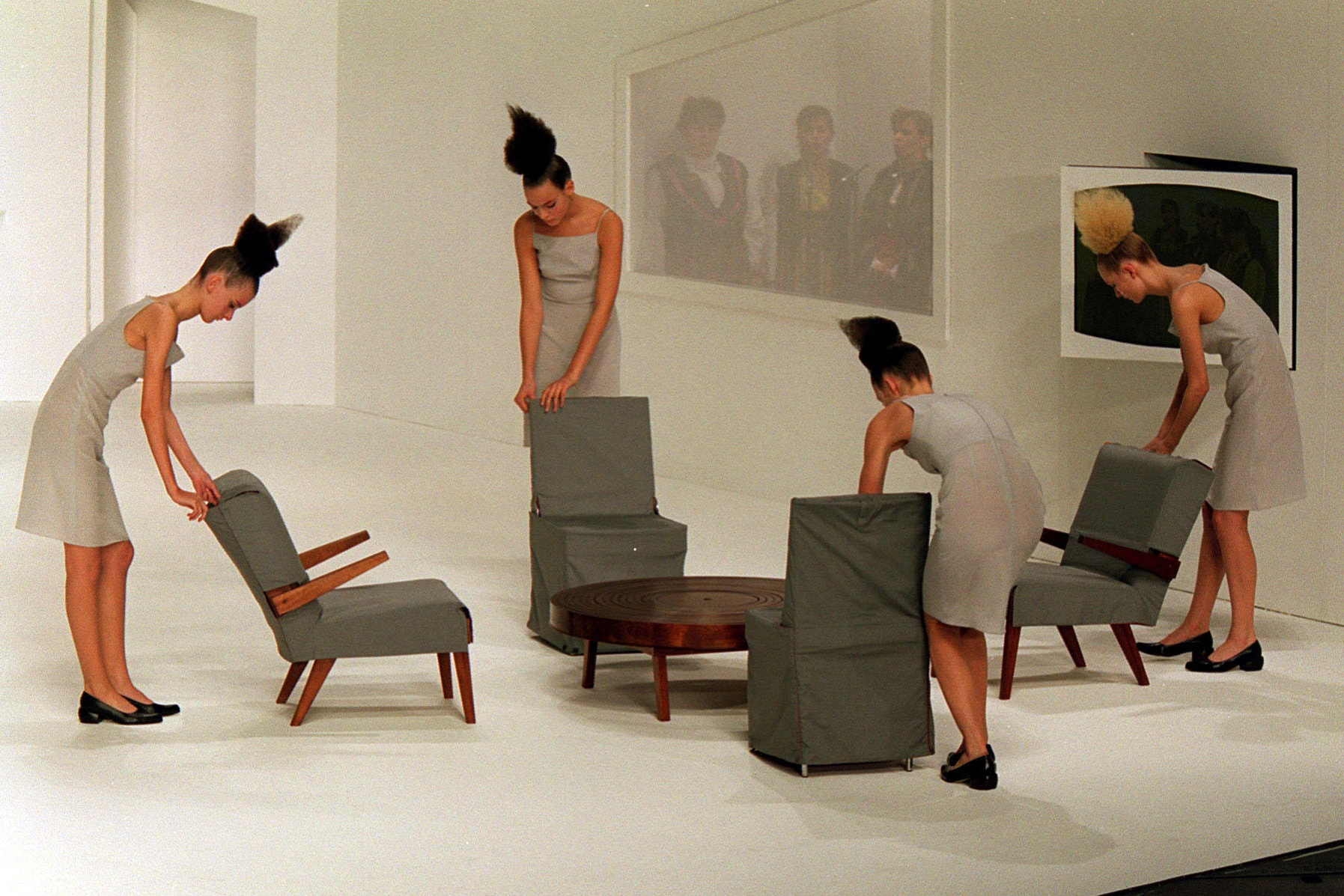
In contrast, Chalayan’s menswear shunned the runway and it's desire for instant spectacle. Instead it’s conceptual richness was engaged not with the surface, but with the systems of fashion.
Each garment within his A/W 2003/4 collection carried three different forms of time. The first was fashion time. Fashion normally organises time through the imposition of seasonal categories: Autumn/Winter, Spring/Summer, Pre-Fall or Resort. These garments arrive in stores months before the season they claim to belong to, as if appearing from the future.
The second was production time. Every garment carried a handwritten date recording when it had actually come into existence. For the denim jeans that was 06, 2003. It fixed each garment to a documented past before it had even reached its initial owner.
The third was prescribed time. Printed on the label was another date, 4 May 2004, almost eleven months after its recorded date of manufacture. Before the garment had even been sold, it already carried evidence of its past and instructions for its future.
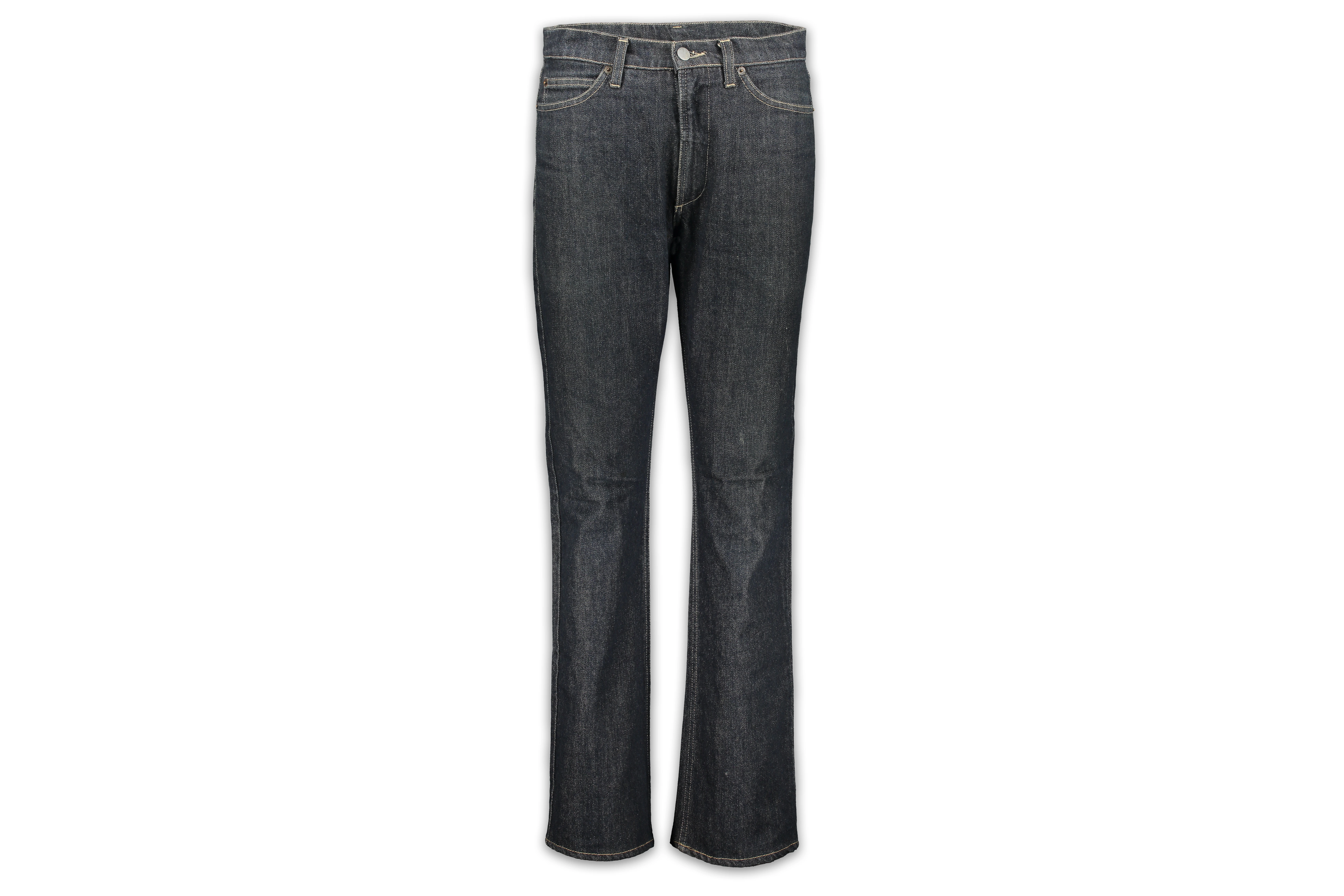
When asked about the collection’s inspiration, Chalayan stated, ‘I designed the collection with loads of inner compartments’, saying, ‘I wanted the clothes to have loads of pockets in them so that you could collect your memories and take them with you … I wanted the wearers to turn up at Heathrow and talk about the lives that the objects in their pockets represent. Garments acquire meaning through use and the more memories they contain the richer life they have.’
The collection can be viewed as a continuation of previous themes explored by Chalayan, including notions of migration, nomadism, displacement and nationality. However, it also reflected on the anticipatory and ephemeral nature of both fashion and travel, which encourage us to envision a future in which our present selves are transformed as a result of changes in our attire or location. As such, travel is as much about the place we have journeyed from as it is the destination. Similarly, how we refashion ourselves through clothing reveals as much about the selves we choose to leave behind.
Titled Place/Non-Place, the collection took inspiration from the French anthropologist Marc Augé’s book Non-Places: Introduction to an Anthropology of Supermodernity, which was released in 1995. In it, Augé argued that modern life increasingly takes place in spaces designed for circulation, consumption and transit. Spaces such as airports, which we pass through rather than inhabit.
The collection therefore not only proposed that it should be worn within such a non-place but also specifically the Arrivals hall lobby. In doing so it denied fashion’s promise of departing for somewhere better or different. Instead of Arrivals being the location after the completion of a journey, it became the destination. No flight, show, party or obvious reward. Instead of spectacle, Chalayan had planned a future for these garments defined by extreme ordinariness. A non-event in a non-place.
Fashion normally converts anticipation into desire by giving us something to look forward to. Chalayan withheld it. His customers knew precisely where and when to go, but not what would happen when they got there.
When 4 May 2004 finally arrived, two members of the designer’s team waited in the Terminal 3 arrivals lobby. When it got to 7pm, a single individual appeared wearing a black jacket from the collection. His name was Peter Orlov.
Chalayan’s team photographed him and asked him to complete a questionnaire. In response to why he had turned up, Peter wrote:
“Curiosity. What would the event involve?”
Asked about his most important memory, he recalled:
“Difficult to say. Seeing my ex boyfriend for the first time after splitting up, a good night out clubbing, books I’ve read. It’s hard to rate these in any way and I guess it would be a bit pointless to try…”
In the eleven months or so since the garment had been made, signed and sold, it had already accumulated multiple layers of meaning and memory through ordinary use.
Thirteen years later, the jacket appeared for sale at Kerry Taylor Auctions, accompanied by the photograph of Peter at Terminal 3 and his completed questionnaire. What had begun as a new garment carrying instructions for its future was now being sold with evidence of its past.
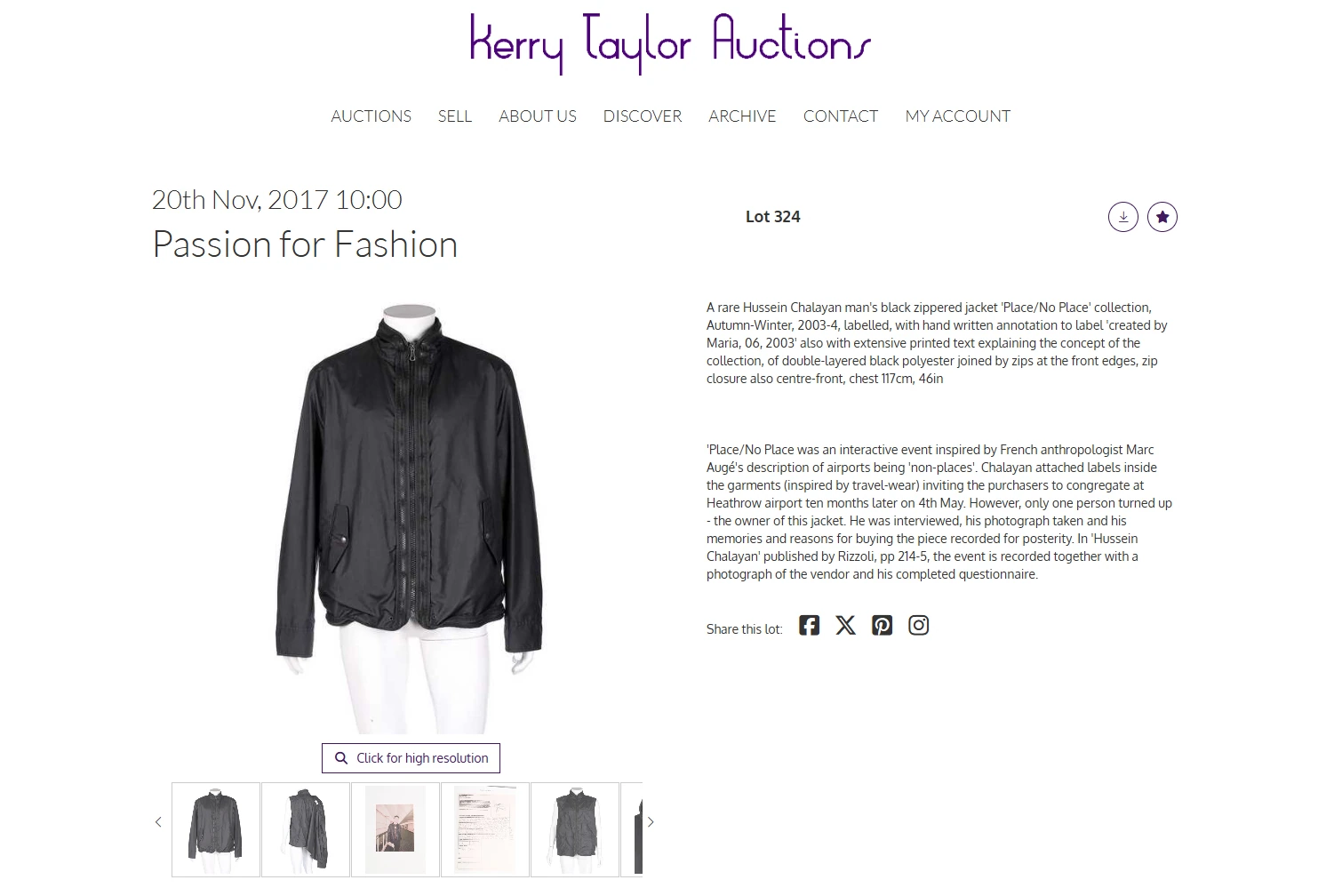
For months the garment’s label had pointed Peter towards a future at Heathrow. When he finally arrived, he did so alone. Yet the jacket he brought with him already carried almost a year of his life within it.