
Through the Membrane
How culture moved through Gore-Tex.
Republished as originally written. References to events reflect the original publication date.
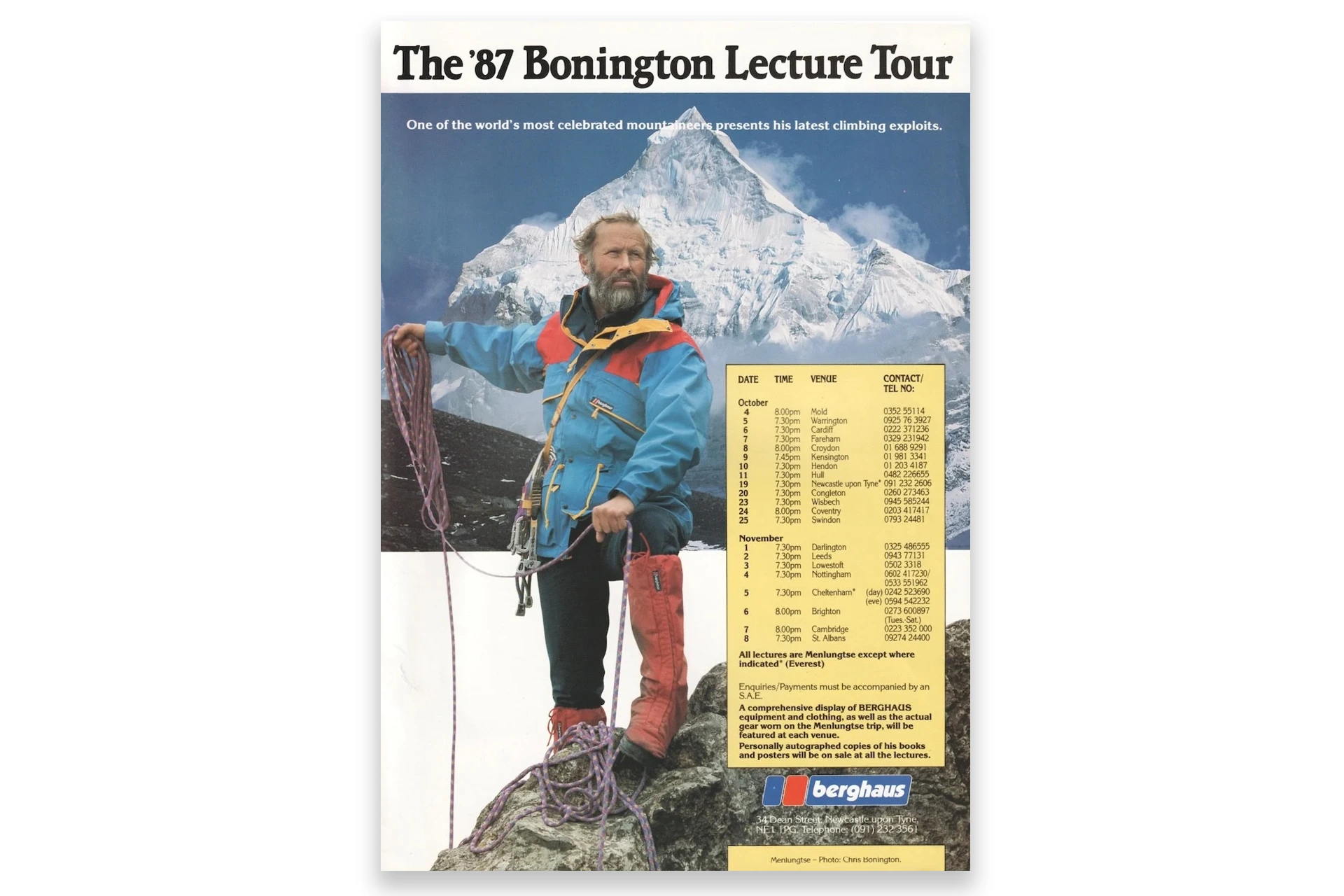
In 1987, British mountaineer Chris Bonington went on tour wearing a Berghaus Trango.
Before Liam and Noel, before Shaun and Bez, a British mountaineer was already taking to the stage in what would become one of the coolest jackets in British outdoor wear.
The Trango had been developed in the mid-eighties with input from British climber Brian Hall, In 1986 the jacket was tested on K2, before being released to the public later that year as part of Berghaus’s Extrem range.
By the following year, when Chris Bonington wore it on the poster for his ’87 Lecture Tour, the Trango had come to represent modern technical competence in severe conditions. What the jacket did was carry the authority of the mountain onto the stage.
Central to its design was the use of a Gore-Tex membrane that kept external moisture out while allowing perspiration to escape. The danger at high altitude wasn’t just from the external weather, but also from physical exertion causing a climber to sweat, with that moisture then rapidly cooling and chilling the wearer.
Technically, Gore-Tex allowed moisture vapour to pass through its membrane. What nobody could design was the other thing that eventually passed through it: coolness.
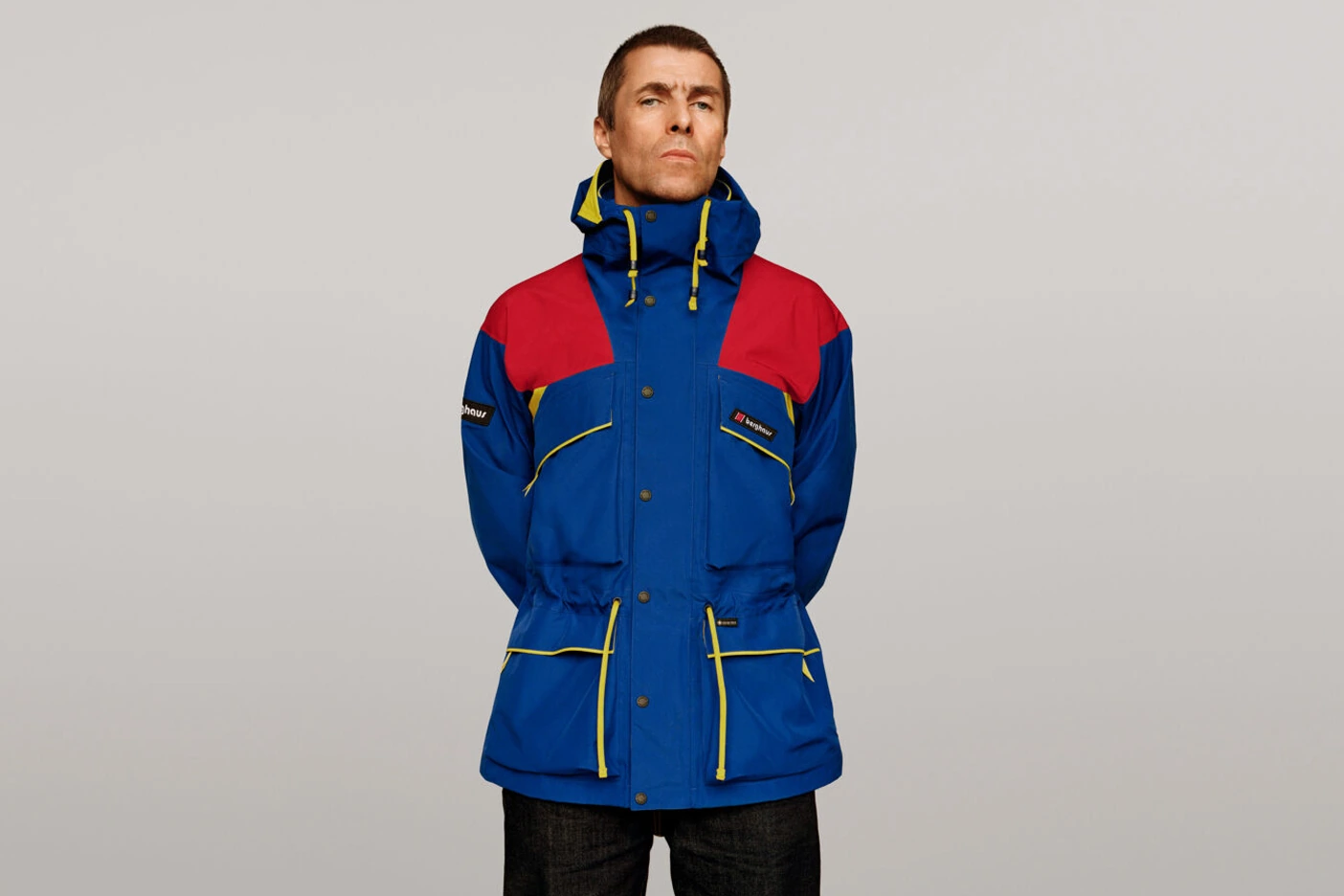
And that was happening even before it was adopted by Mancunians and Scousers as part of illegal raves, terrace wear and street style.
At last week’s London panel marking fifty years of Gore-Tex, what was clear was how much of that history had accumulated outside the environments for which it was originally designed. This wasn’t simply a stylistic appropriation; its functionality remained integral to its adoption off the mountain as much as on it.
In the rain or in a queue; on the terraces or on the move; at raves or at festivals. Those wearers weren’t adopting the look of mountaineering gear and stripping away its function. Function was central to its appeal. Those other users found different uses for the same protection. Function can be designed, but its use isn’t always entirely controllable. Culture emerges from what happens next.
That repositioning was already visible when Bonington took the authority of the mountain onto the stage in 1987. By 1991, it was beginning to feed back into design. According to a Berghaus insider, the Mera Peak was developed with an eye on the emerging streetwear market. There were, after all, only so many people climbing mountains.
As Henry Iddon and Max Leonard note in Mountain Style: British Outdoor Clothing 1953–2000, the Mera Peak’s snap-closing, double-folded hood was impractical in a storm. At £300, it was Berghaus’s most expensive jacket, and performance on the street now mattered alongside performance on the mountain. Use was beginning to feed back into design.
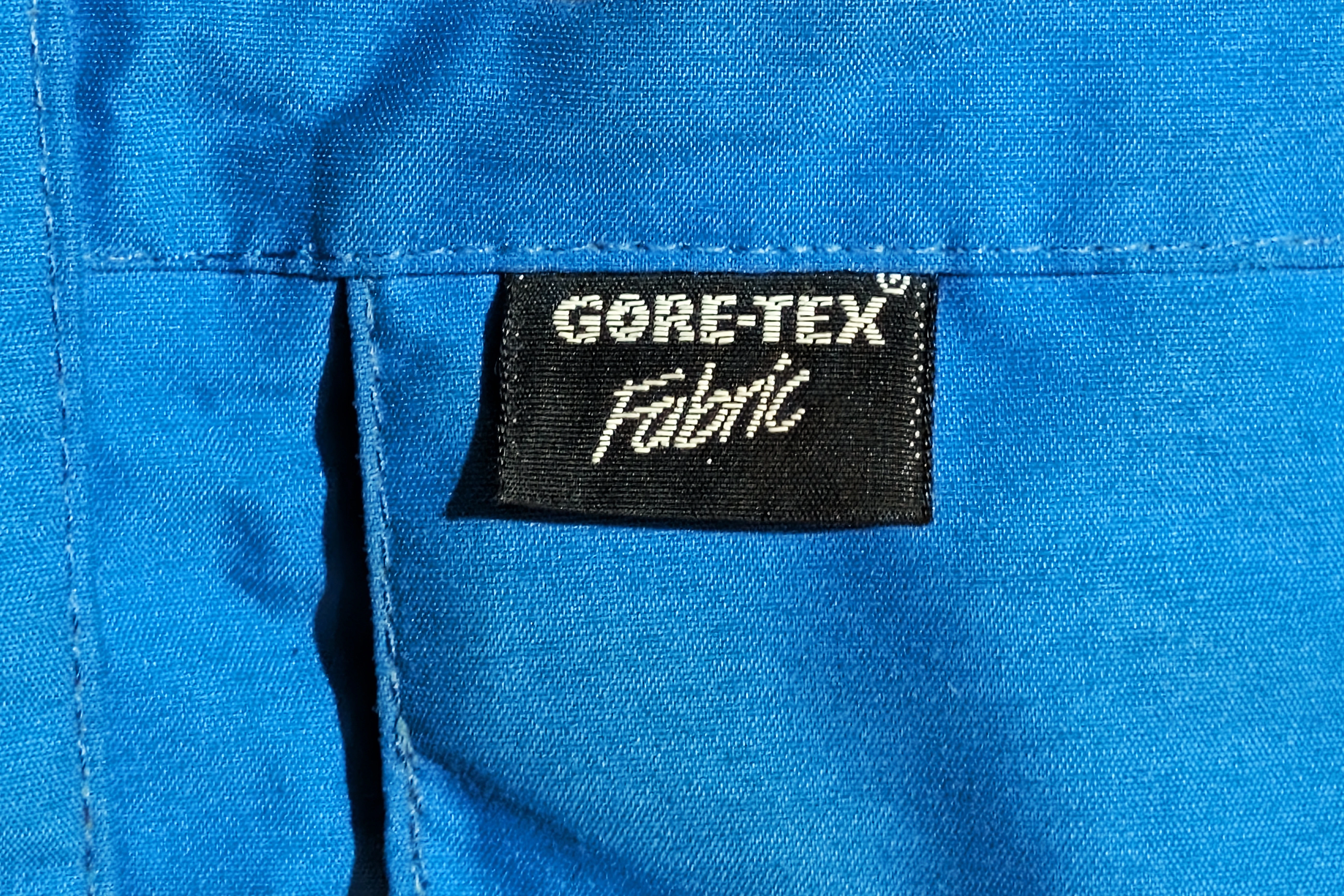
What emerged from these other uses was a form of recognition. A way of reading and signalling expert knowledge in outerwear and performance through different models, technical features, and, central to that, the use of Gore-Tex. As that aesthetic language adapted over the years, a recurring point of recognition was Gore-Tex’s branding itself. It signalled not simply the presence of the membrane, but to the testing and performance standards behind it. It was this branding, on swing tags, labels and external garment tags, that made the otherwise hidden technical layer visible. It became not only assurance of performance but a signal of knowledge and belonging.
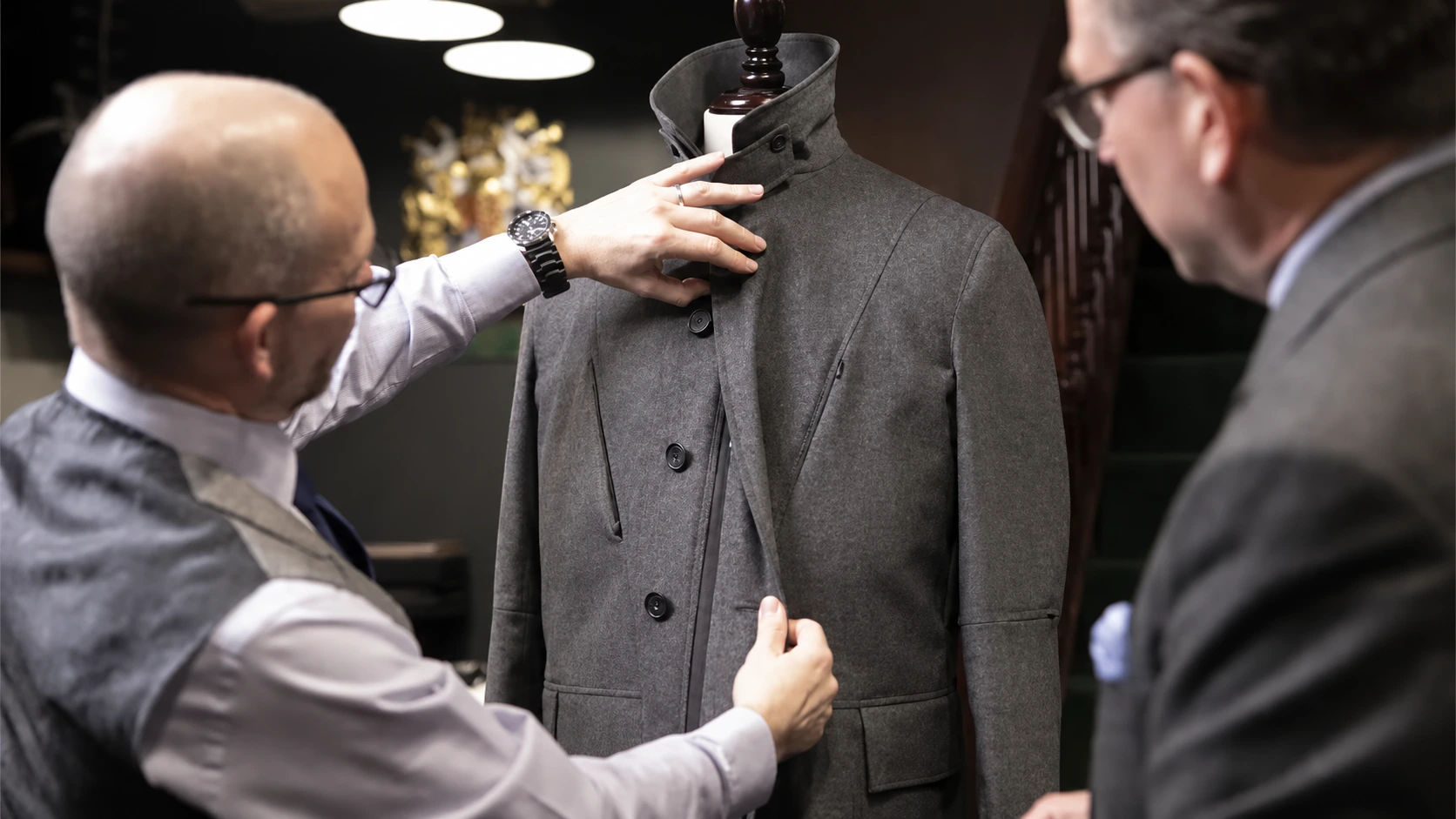
That knowledge could travel into entirely different garment systems too. Henry Poole’s Travel Trench used Gore-Tex Infinium Windstopper while retaining the discretion of Savile Row tailoring. Technical protection had reached the Row, but it did so without requiring the aesthetics of outdoor clothing.
By 2023, that cultural meaning had travelled somewhere else again. Palace’s Going Further Varsity jacket made it impossible to miss.
“GORE-TEX.”
“GUARANTEED TO KEEP YOU DRY.”
The language of technical specification and guarantee had become the garment’s graphic identity.
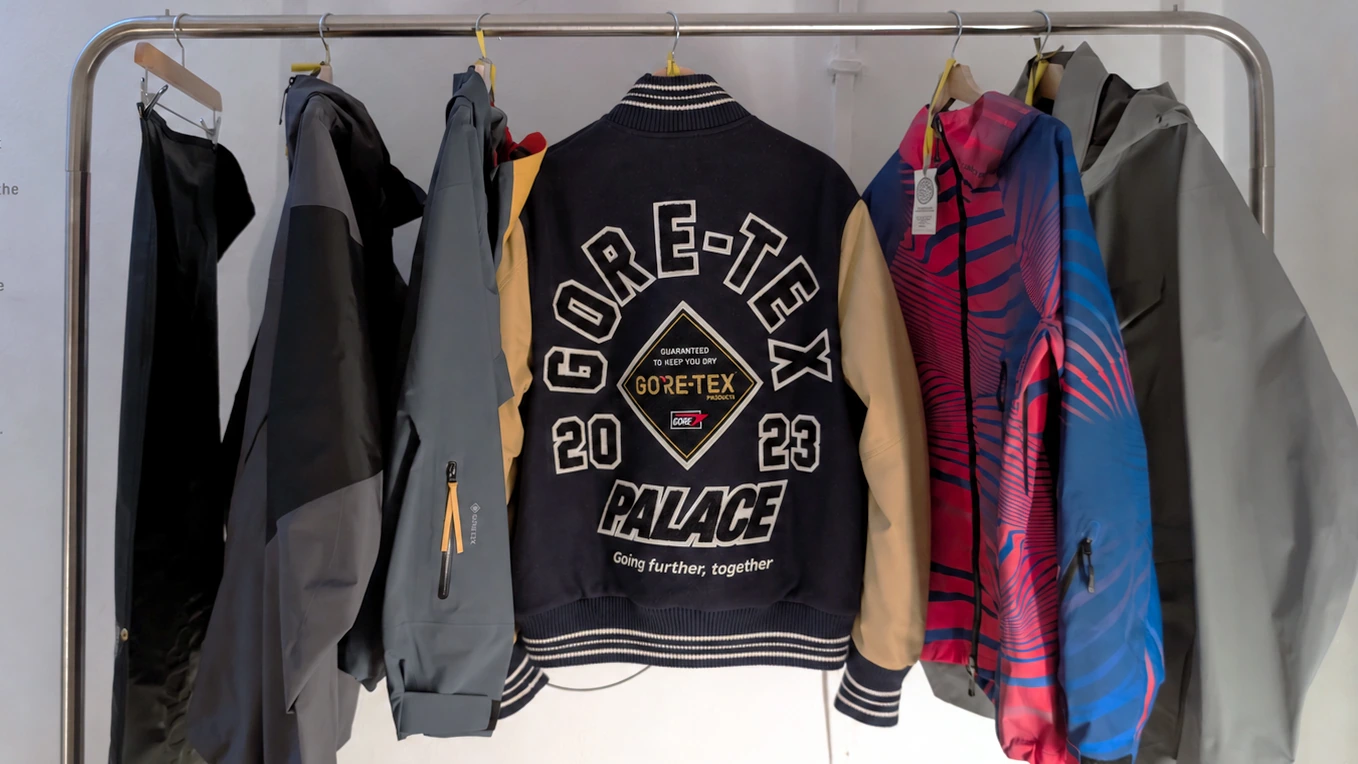
But the form of that identity matters too. Rendered in chenille and appliquéd onto the jacket, the varsity or letterman jacket draws on the letter-sweaters that emerged from Harvard in the late 19th century. They featured a large school initial and were awarded for athletic achievement. They were not simply decorative, but signals of belonging and achievement. Read in that context, Gore-Tex becomes the team, and 2023 the season or graduation year.
The same recontextualisation continued in the language around the garment. By 2023, Gore-Tex had travelled so far beyond technical specification that Palace could recontextualise the name itself, as evidenced by their product page description:
GORE-TEX GOING FURTHER VARSITY NAVY
I got a gore-text from snowy once
A photo with his foot pierced with a peg
Setting up a tent mash up at a festival
Fifty years since it first appeared, what seems so remarkable about Gore-Tex is how a hidden membrane designed to keep water out and let moisture escape could enable so much culture to accumulate around the garments that contain it.
Over those five decades it has come to represent something beyond the technology itself: our relationship with the environments we move through, from the mountain to the dancefloor, from the football terraces to Savile Row.
Gore-Tex could control what passed through the membrane. It could not control where those garments would go, who would wear them, or what they would come to mean.