
What Fashion Left Behind
The things my mum kept when everyone else moved on.
Republished as originally written. References to events reflect the original publication date.
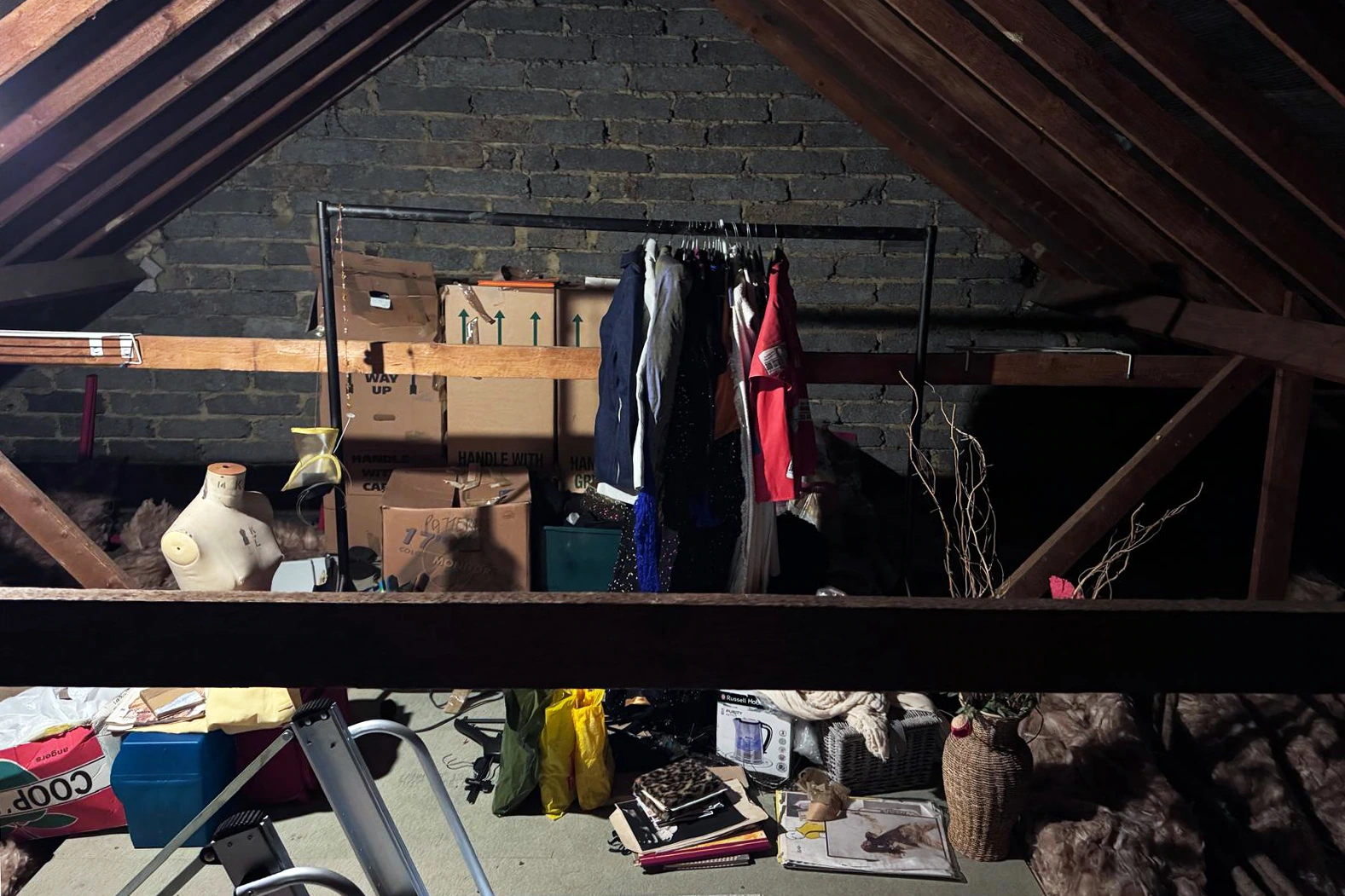
The remains of my fashion career have been stored in my parents’ attic for the last thirty years. Runway garments hanging from the rafters; cardboard boxes full of fashion magazines, press cuttings, show invitations, runway photographs and the detritus of a brief career during London Fashion Week.
My dad is 93, so sooner or later the attic has to be cleared. So I started last week. My mum died in 2019. I knew she’d kept press cuttings from my career, and assumed I’d find duplicates of the ones I already had, perhaps in better condition, or a few I might have missed. I wasn’t expecting to find anything particularly important. What I found wasn’t another version of my own archive. It was hers.
The first things that struck me as odd were copies of Japanese fashion magazines, including Hi Fashion and SPUR. How had a nurse living in Seaford in the 1990s even known these magazines existed, let alone managed to get hold of copies?
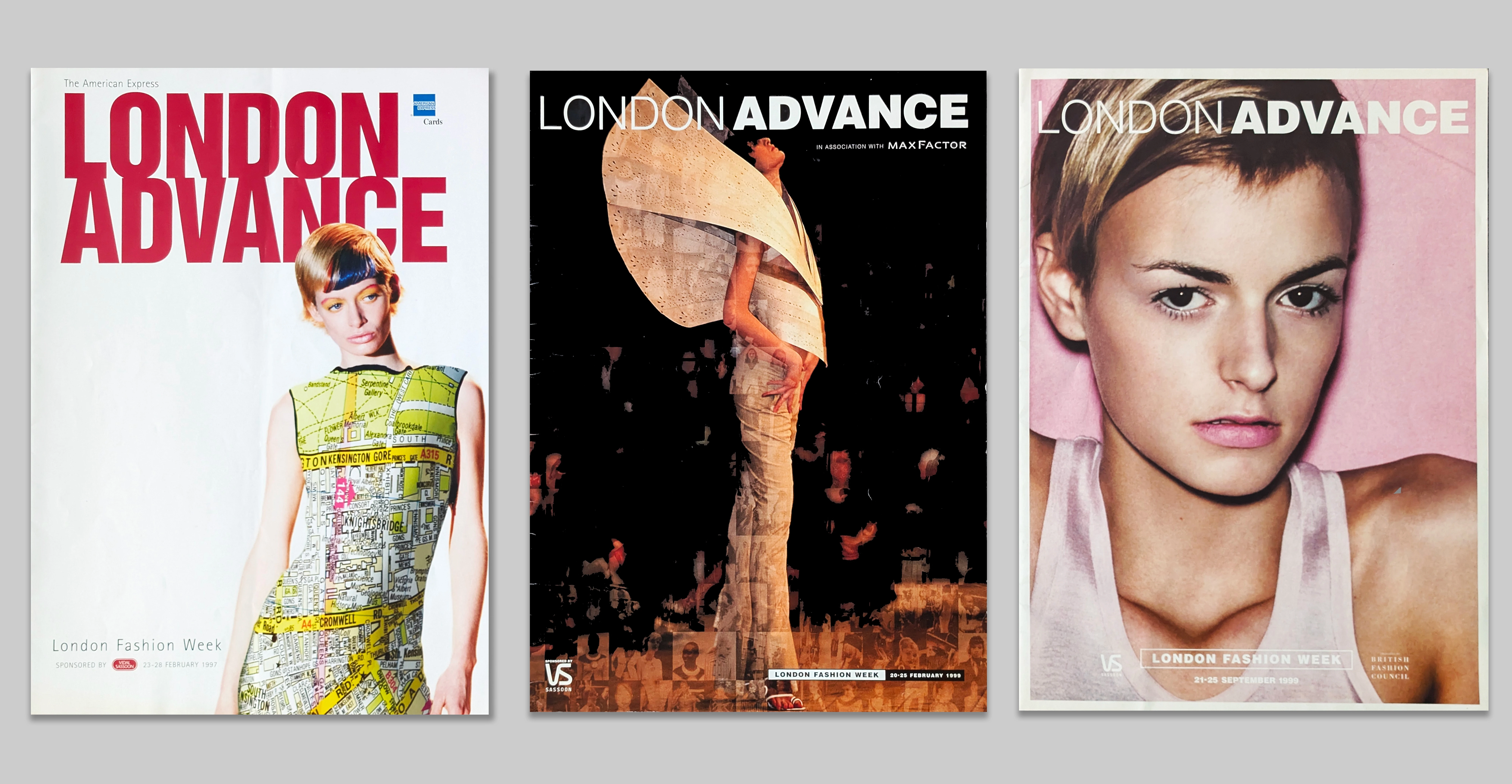
There were also three copies of London Advance, a large-format colour magazine produced for London Fashion Week, something I don’t remember seeing myself back then. A Sotheby’s catalogue still inside its envelope, for an auction of Robbie Williams memorabilia that included an outfit I’d made for his video She’s the One. I hadn’t even known there was an auction.
Pages and pages of London Fashion Week schedules printed from the British Fashion Council’s website. Provisional schedules, confirmed schedules, Spring/Summer and Autumn/Winter schedules. On an A4 sheet she had printed out the schedule for the Spring/Summer 2002 shows. Next to six designers’ names she had very carefully written the word ‘cancelled’.
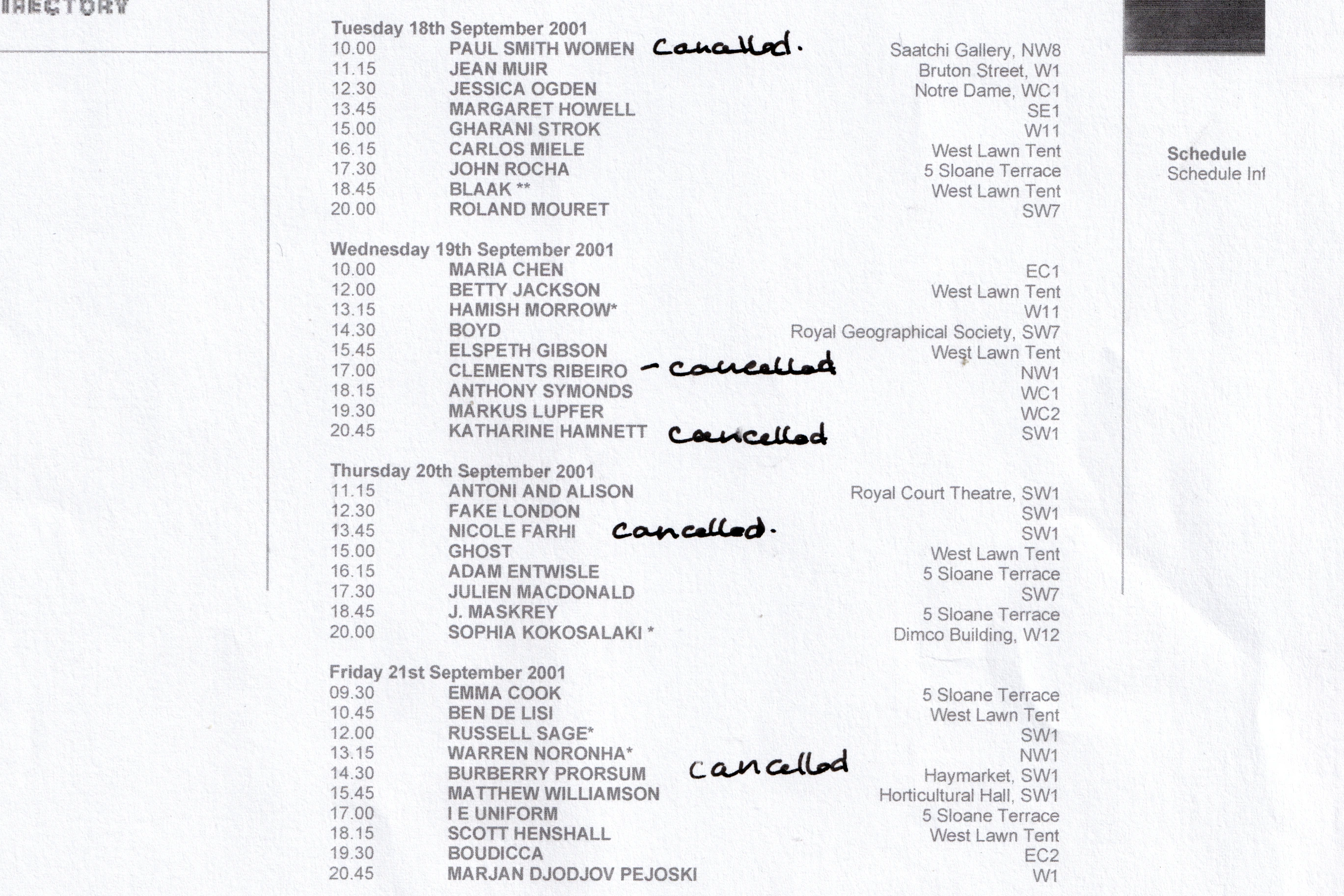
My mum was working shifts as a nurse in a care home, yet somehow found time to print out London Fashion Week schedules and update them by hand.
I’d assumed she was following my career. I hadn’t realised how closely she was following everyone else’s.
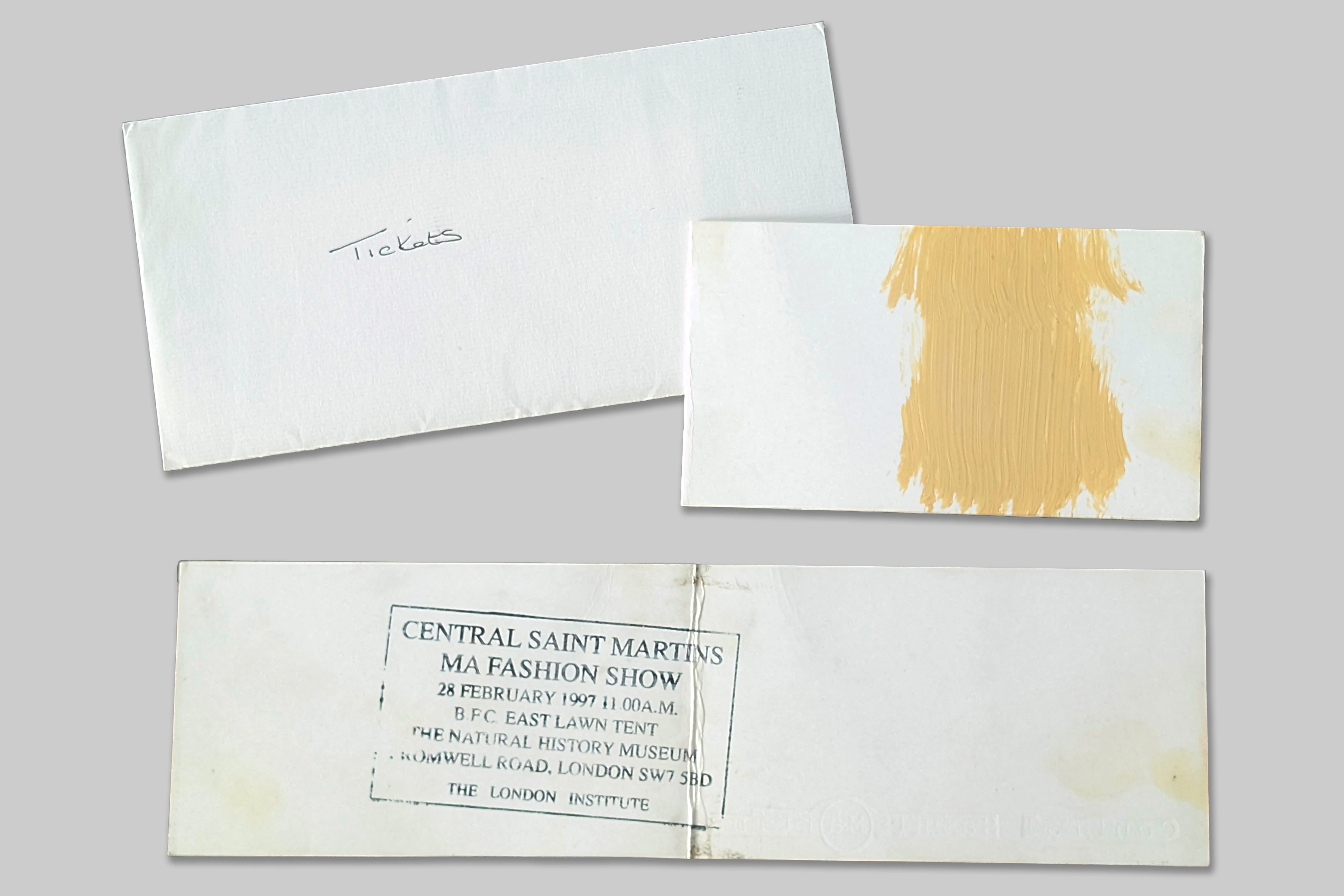
Inside an envelope on which she had written the word ‘Tickets’ were two tickets for my MA show at Central Saint Martins in 1997.
The course director, Louise Wilson, was feared and respected in equal measure, and stories about her had become legend. One example from my own experience was the day after the runway show. I was in the MA studio when she came in, smiled and said, “Do thank your parents for the chocolates they gave me yesterday at the show.”
She smirked, knowing how horrified I would be that my mum had undermined my carefully constructed reputation as British fashion’s new enfant terrible with a box of Thorntons chocolates.
Then last week, as I was going through the paperwork in the attic, I found an envelope addressed to Mr and Mrs Groves.
Inside was a letter from Louise to my parents:
17 March 1997
Dear Mr & Mrs Groves,
Thank you so much for your chocolates. It was a pleasure to meet you after the show and believe it or not it has been fabulous to teach and work with Andrew who has always been so professional in all that he has done whilst he has been at Central Saint Martins.
Hope to see you again and once more thank you for the kind thought.
Yours sincerely,
Louise Wilson
Course Director MA Fashion
Underneath, in thick black pen, she had written “Thank goodness it’s all over!”
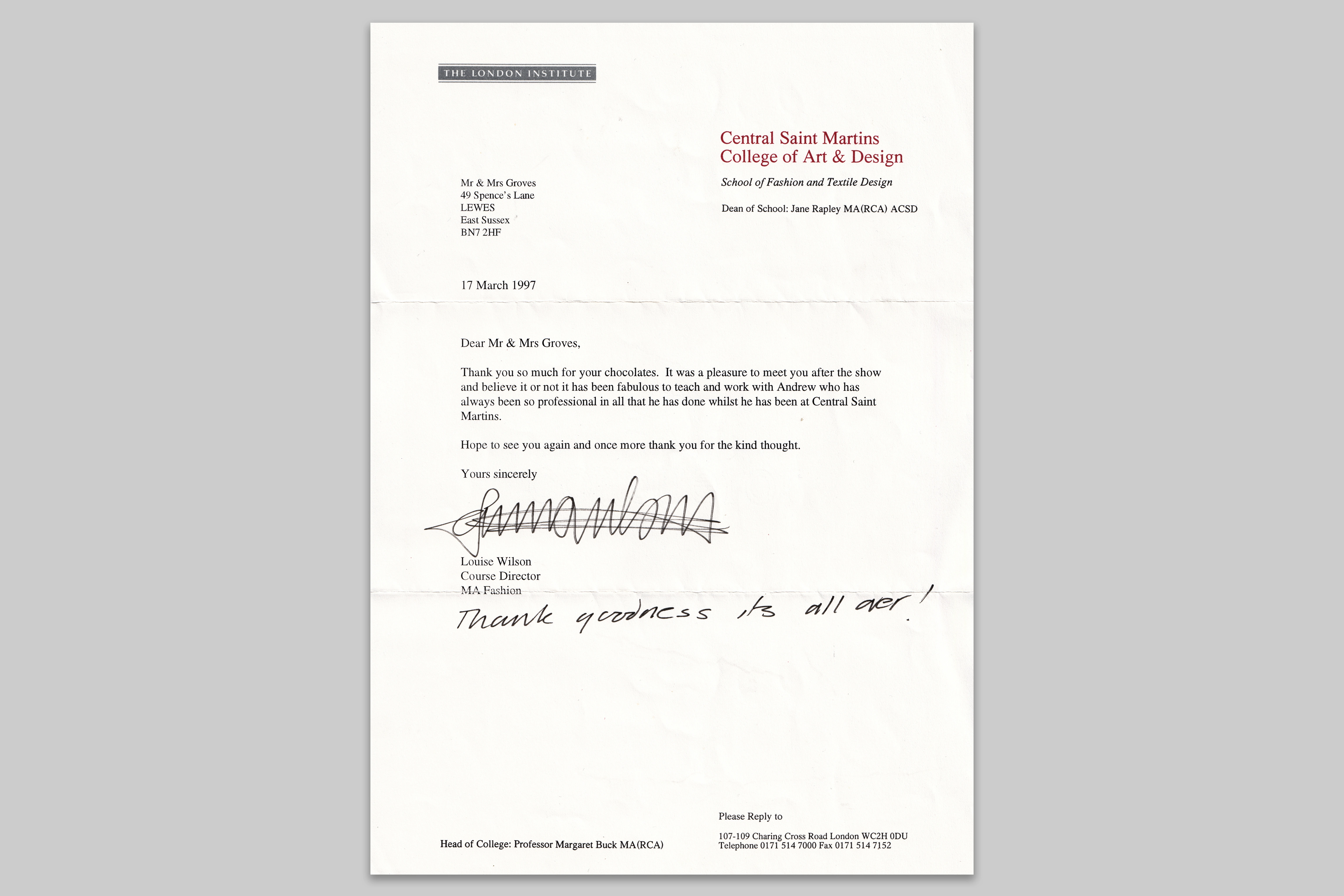
I had never seen the letter before last week. For thirty years I remembered Louise taking pleasure in teasing me, knowing I’d be embarrassed. Reading the letter didn’t contradict what I remembered. But it showed me another side of Louise, one I hadn’t seen at the time. The letter was about me, but I wasn’t part of the conversation.
I’d been seeing everything as evidence of my own life. My shows, my press, my career. But my mum had continued following London Fashion Week beyond my involvement in it. She’d even kept cuttings about the deaths of Isabella Blow and Lee McQueen long after I’d stopped showing.
I had experienced this unsettling feeling before. When several biographies of Alexander McQueen appeared, events that I had thought of as facts because I’d been there were suddenly being told through other people’s memories. Being present, I realised, didn’t mean possessing the whole story.
Now my mum’s papers were having a similar effect on how I understood my own past.
McQueen is dead. Louise is dead. My mum is dead. There are questions about what I’ve found that I can no longer ask them.
At 58, I don’t feel my life slipping away. But I do feel history slipping away.
For the last thirty years I’d avoided the things in the attic. They represented a career that had ended abruptly, and cataloguing myself seemed egotistical. I’d spent the last decade building an archive of other people’s clothing while largely avoiding my own.
Fashion is built around what comes next. Another show, another season, another name on the schedule. It is very good at announcing arrivals and remarkably bad at recording endings.
I keep returning to the London Fashion Week schedule on which my mum had carefully written ‘cancelled’ beside six designers’ names.
There was no final page declaring that my own career was over. I simply stopped appearing on the next schedule.
My mum kept the schedules anyway.