
Who Gets to Look?
How Surveillance Disappeared Into Fashion
Republished as originally written. References to events reflect the original publication date.
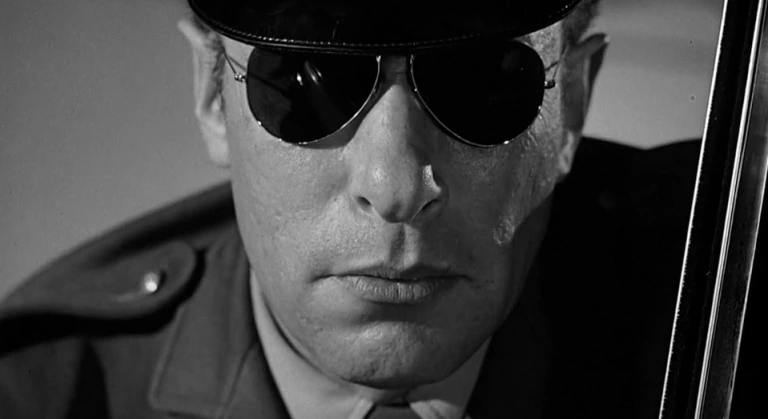
One of the most unnerving scenes in Hitchcock’s film Psycho, a film obsessed with watching, is when Marion Crane is stopped by a highway patrolman. Having fled Phoenix and fallen asleep in her car, she is awoken by him tapping on the window. Hitchcock frames the officer through the car door window, intently watching Marion, yet behind his dark aviator-style glasses neither she nor we can see his eyes. His police uniform gives him the authority to look, yet his own gaze remains unreadable.
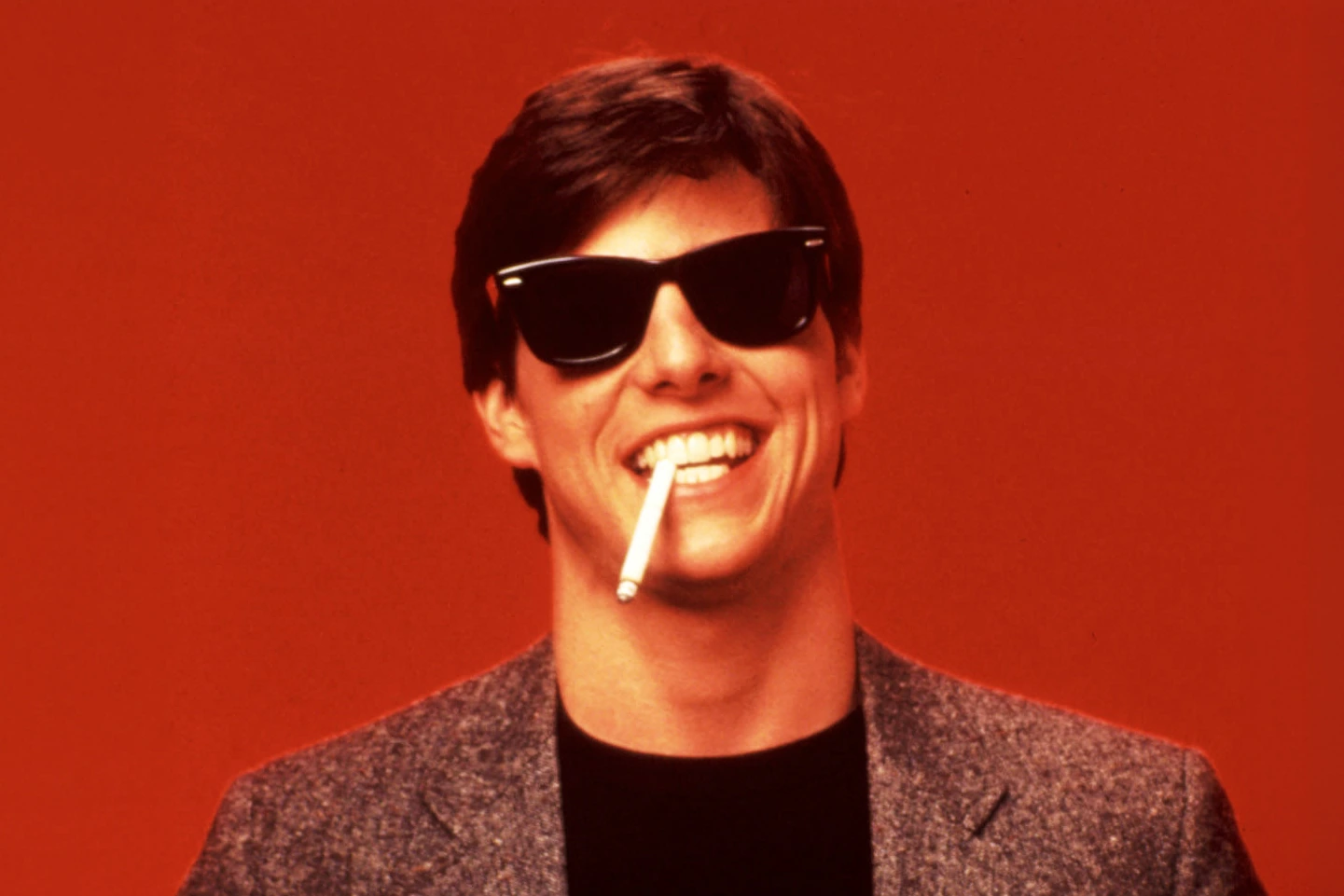
In Risky Business, Tom Cruise plays Joel Goodson, a privileged but anxious student, constantly finding himself assessed: by his parents, by school and the expectations around him. While his parents are away he first hires a sex worker and then turns the house into a brothel. Looking here becomes transactional, bound up with sex, money, exchange and the performance of masculine confidence. It is at this moment he starts wearing a pair of Wayfarer Ray-Bans, hiding his nervous eyes behind them, while presenting himself as someone able to organise desire, money and other people.
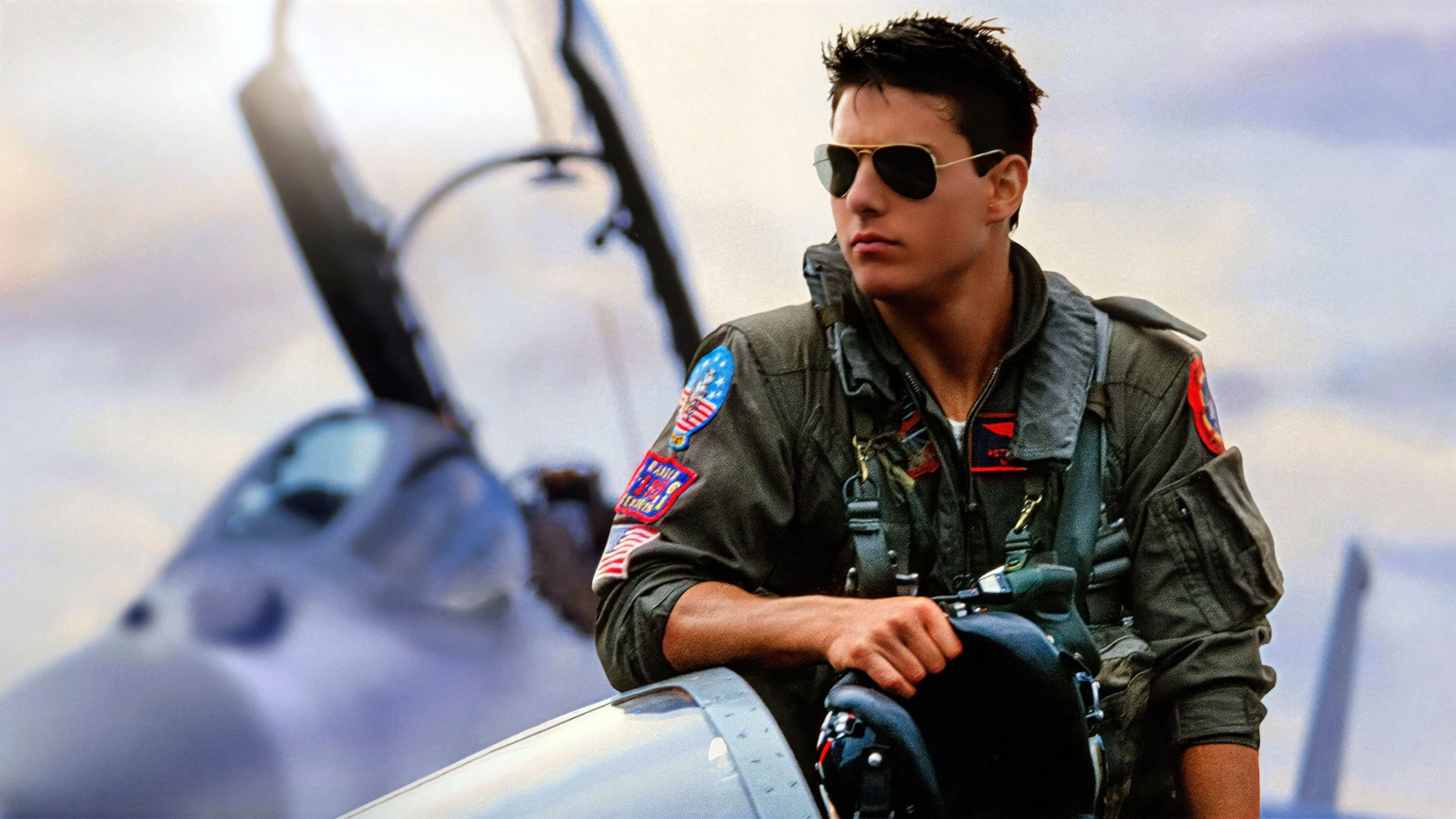
While three years later Tom Cruise again appeared wearing Ray-Bans, only this time it was the much earlier Aviator sunglasses as part of his role in the film Top Gun.
Originally developed by the company for US military pilots to protect them from glare and the sun while flying at high altitude, in the film’s hypermasculine world they became the means by which men were able to look at other men. Though positioned originally as a form of military technology, in the film they also served to enable a form of homoerotic gaze.
Away from cinema, looking was also becoming increasingly technological and institutionalised. For most people CCTV was encountered around them, through cameras on buildings, in ceilings or on poles.
In the UK body worn cameras were first trailed on police officers in Plymouth. Initially worn on the head with the camera sitting above the left ear, they were able to capture an approximation of what the officer saw. As these cameras were developed and became more commonplace their visibility on the officer’s body became integral to earning the publics trust of this new technology.
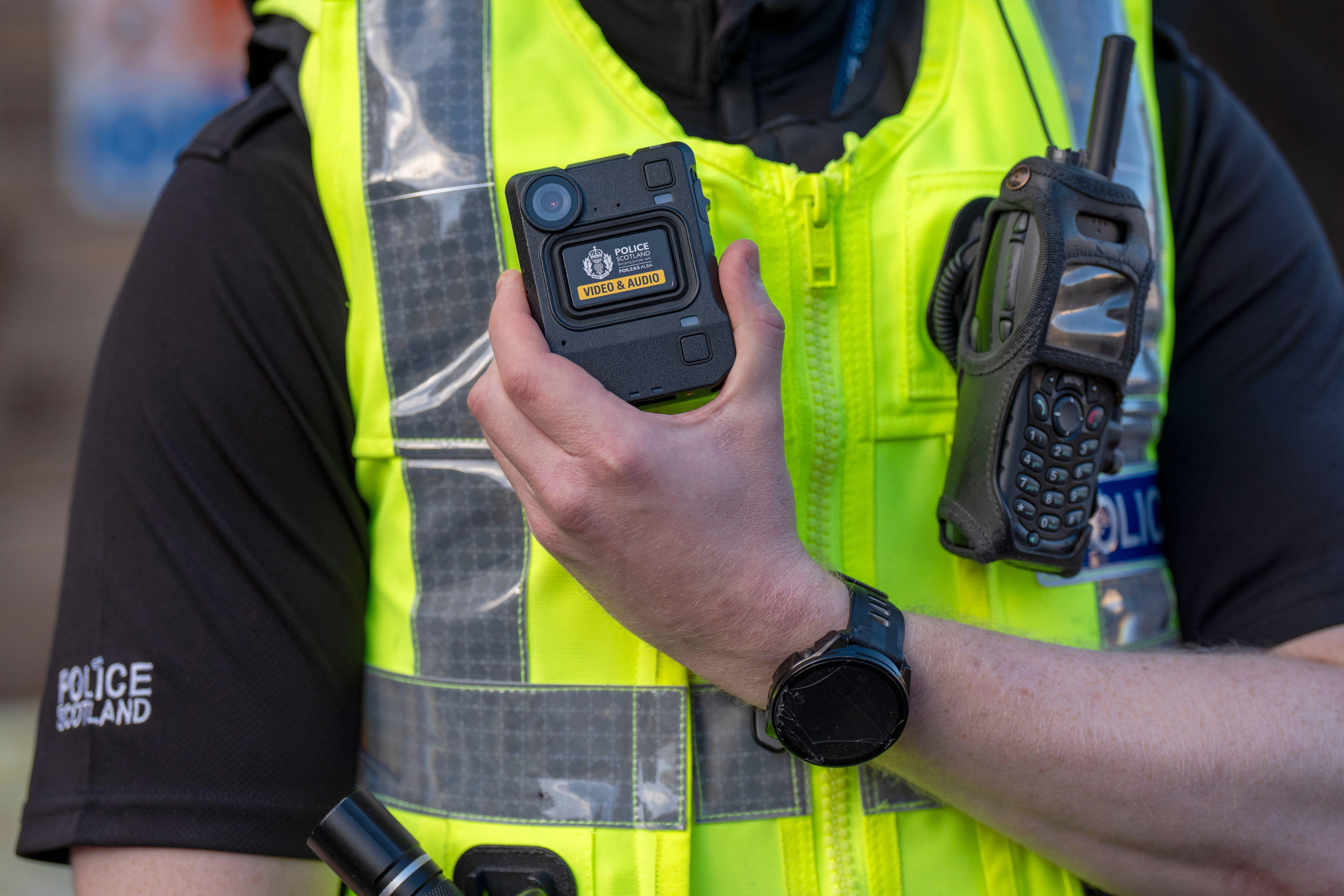
Yet body-worn cameras didn’t stop with law enforcement; they moved into supermarkets, onto public transport, and onto the doorstep.
Sainsbury’s began rolling them out in 2018, while in 2025 Tesco issued them to more than 5,000 home-delivery staff. In each case, their working uniform helps identify the wearer, while the body camera clearly identifies the apparatus. The light on the camera signals the act of recording.
The body-worn camera had moved from state authority to occupational use, and in 2013 it moved again, onto the civilian body with the introduction of Google Glass. For the first time the camera was no longer attached to a uniform, job or institutional role. Yet the highly visible nature of the glasses, with their prism display unit and asymmetrical look, was one reason for them being rejected. They quickly became socially contentious, with users being called “glassholes”. By January 2015, Google stopped selling them to individuals.
In 2023, Meta and Ray-Ban launched the next generation of their smart glasses, now branded Ray-Ban Meta. Unlike Google Glass, the technology was absorbed into the frame, becoming almost invisible. This was acknowledged at the time by Rocco Basilico, Chief Wearables Officer at EssilorLuxottica, which owns Ray-Ban. “The world sees you in a pair of your favourite Wayfarer”, but the wearer knows there is a “powerful universe of tech inside”.
The difference between the body-worn cameras of the police and supermarket workers is stark. While they announce themselves, Meta glasses rely on a small LED in the frame to signal that they are recording. The onus is therefore on those being watched to recognise the glasses and understand what the light means. This is the point where the camera has been absorbed into everyday dress.
Launched in June 2026, Meta Glasses are the latest iteration from the company. They have been positioned as a contemporary fashion product, with Kylie Jenner both designing and endorsing the Starfire frame.
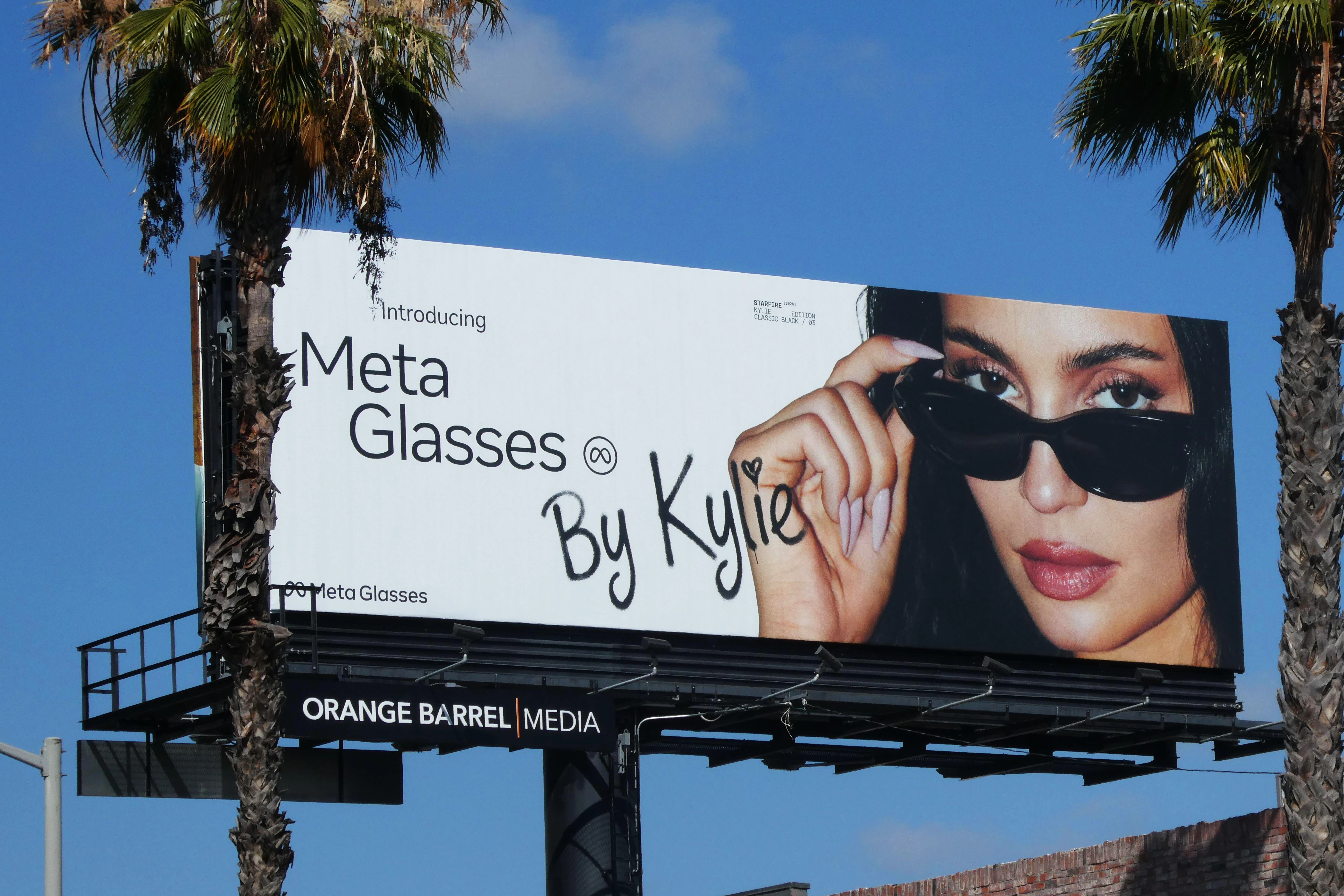
But what happens if we mentally place the same camera and microphones back onto the bodies through which technologically enhanced vision was made familiar: the pilot, policeman, or security officer? How then do we read the use of this technology?
It would be easy to read the use of fashion as a means to make the technology desirable. But what its also doing is positioning away from the earlier visuals cues we used to recognise it and the person watching us.
In Psycho, Risky Business and Top Gun, sunglasses produced three different ways of looking: the authorised gaze, the transactional gaze and the homoerotic gaze. The commonality between them is that men could look while their own eyes remain concealed. The first three describe relationships between people. Meta introduces another participant, and with it a new type of looking: the extractive gaze.
Whilst many are rightly worried about being unknowingly watched, recorded and shared, this concern is focused primarily on the person wearing the glasses. But some AI functions now allow Meta to process what the wearer is seeing or hearing. Over decades through Facebook, Instagram and other platforms, the company has built systems to observe and derive value from our behaviour. Much of what we consciously gave those platforms required us to update a status, upload an image or check in to a location. Smart glasses potentially extend that relationship beyond what we choose to post, share or like, to the things, people and places in front of us when we use Meta AI.
The question is no longer simply who gets to look, but who else might be seeing the world through our eyes.