
The Haunting of McQueen
Updated: Oct 12, 2025
Theatre, memory, and the ghosts that walked his runway

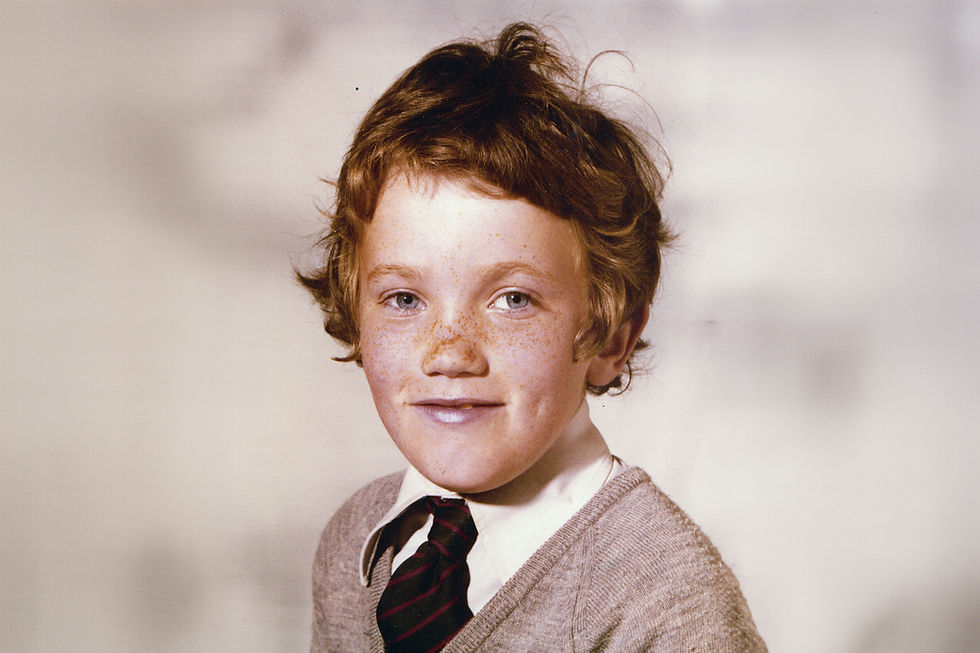
To see yourself turned into a character, rehearsed by someone else and ready to walk out on stage, is its own kind of haunting. House of McQueen opens later next month in New York. It is a new play about Alexander McQueen, his work, and the world around him. Among the cast of characters is me. Not as I am now, but as I was thirty years ago. That other me has been summoned back, inhabited by someone else, and returned to life in performance.
There is a symmetry to it. Before either of us worked in fashion, we both worked in theatre. Lee cut costumes at Angels & Bermans, on productions like Les Misérables and Miss Saigon, while I worked for the Royal Shakespeare Company.
Those experiences never left us. McQueen’s fashion shows were always theatrical. Not only in their staging and his inherent sense of drama, but also in his preoccupations.

Many could be interpreted as hauntings. His early show Taxi Driver echoed both Scorsese’s film and his difficult relationship with his father, who drove a black cab. Highland Rape, presented as a commentary on the Highland Clearances, also carried the weight of his own childhood abuse. These were not neutral themes. They were visitations: fragments of life and history returning to the present, refracted into performance. The women who stumbled down that heather-strewn runway looked like ghosts, figures from the Clearances reappearing in shredded lace and torn tartan, haunting the living with their absence from history.

McQueen understood that fashion was a medium in which ghosts could be summoned. In his A/W 2006 show Widows of Culloden, Kate Moss appeared as a spectral hologram, a vision of beauty and loss conjured through absence. It was theatre as haunting, the past made present.
That was the power of his work: garments became a medium for the past to return, private histories and collective traumas made present on the runway. For McQueen, the personal and the historical were inseparable.
And now, with House of McQueen, that haunting continues, memory stepping once more onto the stage. It feels apt that his story is returning to the theatre, for this is not just a play about fashion but a continuation of the same process: memory turned into narrative, life into performance, the past into presence.
What can retelling his story teach us? That McQueen never left. His ghosts remain, on the runway, on the stage, and in the lives of those who walked beside him.

Comments