
From Spectrographs to Prototypes: The 1999 CD-ROM Revealed Fashion as Process, Not Spectacle
Updated: Oct 12, 2025

At the turn of the millennium, the fashion industry was dominated by fantasy. Most fashion houses relied on celebrities, campaigns, and runway shows to sell their visions. However, Stone Island, under the direction of Paul Harvey, took a different approach. They introduced a CD-ROM titled Systems Research 99–00. This was not just a catalogue or a campaign; it was more like a lab report. It served as an interactive archive of tests, analyses, and prototypes.
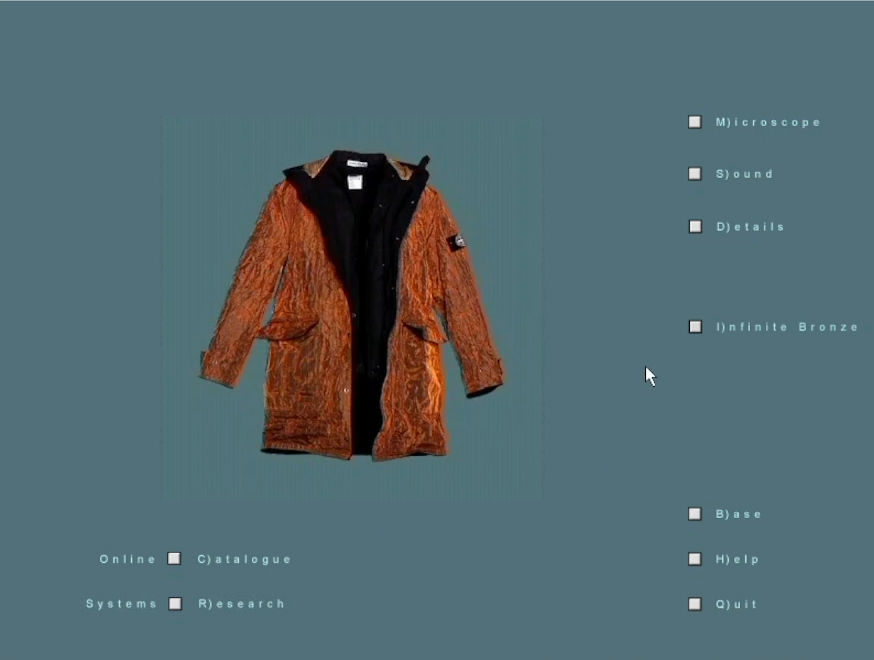
Instead of showcasing models, the CD-ROM presented spectrographs. Styled imagery was replaced with swatches clamped in rigs and jackets annotated like engineering diagrams. At its heart was the Pure Metal Shell Bronze jacket, woven from bronze mesh bonded to cloth. This jacket was designed to oxidise and crease with use. It represented fashion as an experiment, where the garment wore its material transformations as its identity.
The CD-ROMs were initiated, designed, and produced by TheGaabs, in close collaboration with Paul Harvey and the Rivetti family. They oversaw the brand’s communications and advertising from 1996 to 2007. Still-life photography was executed by Marcus Gaab, with video content created by Matthias Schellenberg.
A New Interface
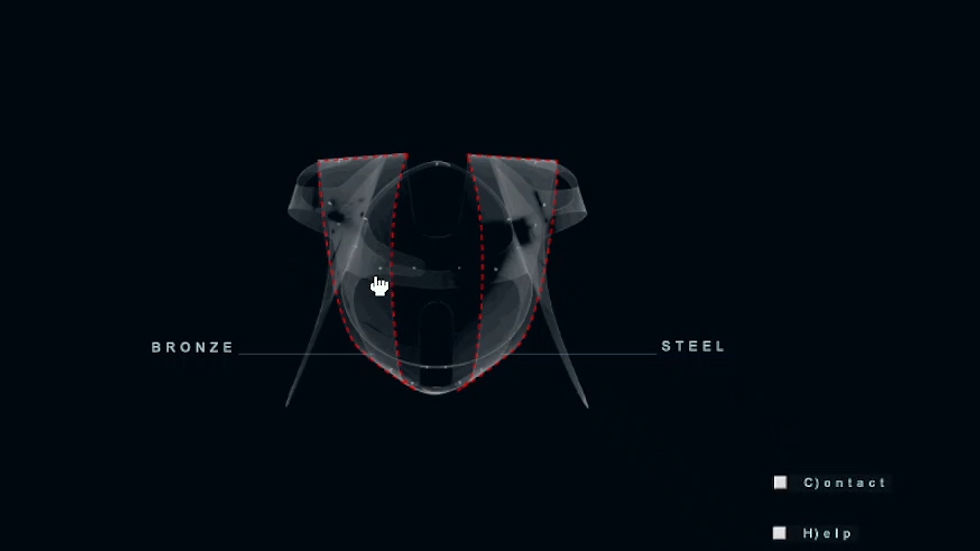
The CD-ROM opens with an interface that defies the late-1990s fashion conventions. There are no runway clips, campaign images, or celebrity models. Instead, viewers are presented with a choice: bronze or steel. Stone Island’s philosophy is declared upfront. The brand is a system to navigate, not a spectacle to consume.
This approach confronts users with choice and structure. It is a database rather than a campaign. To engage with the brand, one must navigate, select, and explore. Stone Island positions itself as a system of knowledge, revealing its essence only through active investigation.
Research and Authenticity
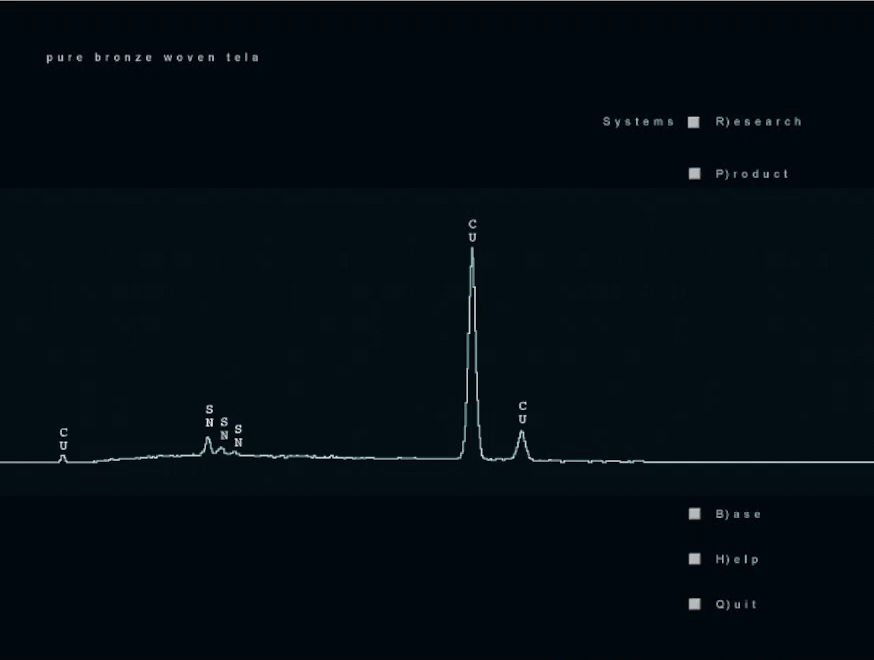
Choosing Bronze leads not to a jacket but to a spectrographic chart. Peaks of copper confirm the authenticity of the material, while smaller traces of sulphur and nitrogen appear across the spectrum. Under Paul Harvey, Stone Island aligned itself with laboratories rather than traditional fashion houses. It presented scientific evidence as the foundation of its identity. The garment is defined not by its appearance but by its elemental materiality.
Material Innovation
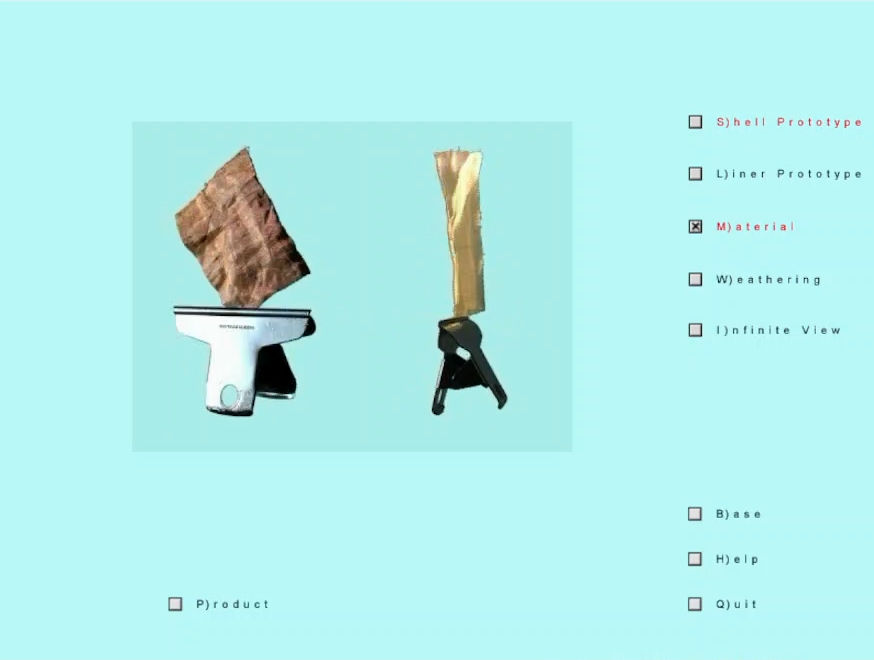
Next, the disc showcases a video of swatches of bronze fabric held in clamps. This view is more associated with industrial testing than fashion display. The textile is presented as a specimen, something to be examined rather than simply admired. The message is clear: innovation begins with fabric. The garment is the outcome of the material, not the other way around.
Oxidisation as Design
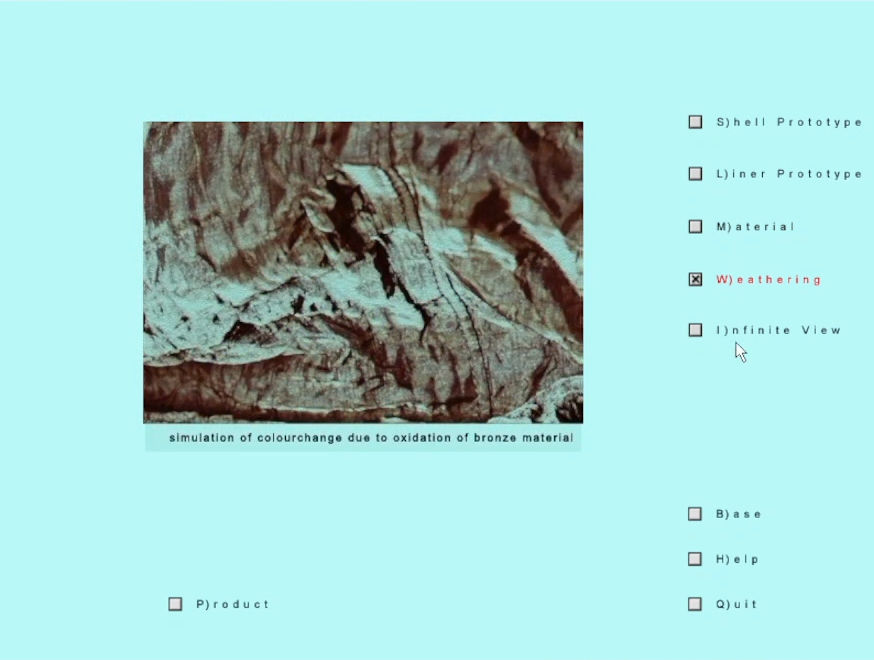
A time-lapse sequence simulates the bronze surface changing as it oxidises. Instead of hiding decay, Stone Island highlights it. Where most fashion imagery suggests garments are timeless, here the inevitability of material change becomes integral to the design itself. Oxidisation, typically seen as a flaw, is repositioned as part of the garment’s life.
Fibre Exploration
The disc then zooms in, moving from the material surface to the fabric’s weave examined under a microscope. Threads and fibres become a landscape of their own. By focusing on structure at this level, the CD-ROM shifts fashion away from surface image towards internal architecture. It reveals the garment as a system of relations at its smallest scale.

Prototyping Process
Before the finished jacket appears, the CD-ROM pauses on prototypes. Jackets are laid flat, annotated, and marked with production notes and tags. Normally, these stages of development are hidden rather than placed at the centre. Here, process is given equal weight to product, flattening the hierarchy between the two. The disc becomes both archive and method, embedding design practice into the brand’s public persona.

Product Reveal
Only after navigating data, swatches, oxidation, fibres, and prototypes does the disc reveal the Pure Metal Shell Bronze jacket. This parka, cut from bronze mesh bonded to cloth, is designed to oxidise and crease with wear. Its surface continues to change over time. The reveal is deliberately deferred. The jacket appears not as a styled image but as the material proof of the experiments that precede it. Its significance lies less in how it looks than in how it has been made visible — as the outcome of research, testing, and process.
Why This Matters
The Stone Island Systems Research 99–00 CD-ROM shows how a brand can communicate through research and material exploration rather than through fashion imagery or spectacle. The journey from menu to data, from swatch to fibre, from prototype to product establishes an entirely different way of presenting fashion. What Stone Island offered here was not just a seasonal campaign but a digital framework: fashion understood as inquiry, with the garment as the outcome of its methodology and experimentation.
Conclusion: The Future of Fashion Communication
As I reflect on the impact of the Systems Research 99–00 CD-ROM, I see a significant shift in how fashion can be presented. This innovative approach challenges the traditional norms of the industry. It invites us to consider the deeper processes behind fashion. By embracing research and materiality, brands can redefine their narratives. This is a call to action for luxury fashion brands, museums, and cultural institutions to explore new ways of engaging with their audiences.
The journey of the Pure Metal Shell Bronze jacket is a testament to the power of material exploration. It reminds us that fashion is not merely about aesthetics; it is about the stories woven into every thread. As we move forward, let us embrace this philosophy and continue to push the boundaries of what fashion can be.
Credits
These CD-ROMs were part of a broader creative transformation of Stone Island. They were initiated, designed, and produced by TheGaabs (then Agentur-E), working closely with Paul Harvey and the Rivetti family, who oversaw the brand’s communications and advertising from 1996 to 2007. Still-life photography was by Marcus Gaab, with video by Matthias Schellenberg.


Comments