
How Men Are Schooled
The tie and the making of masculine order
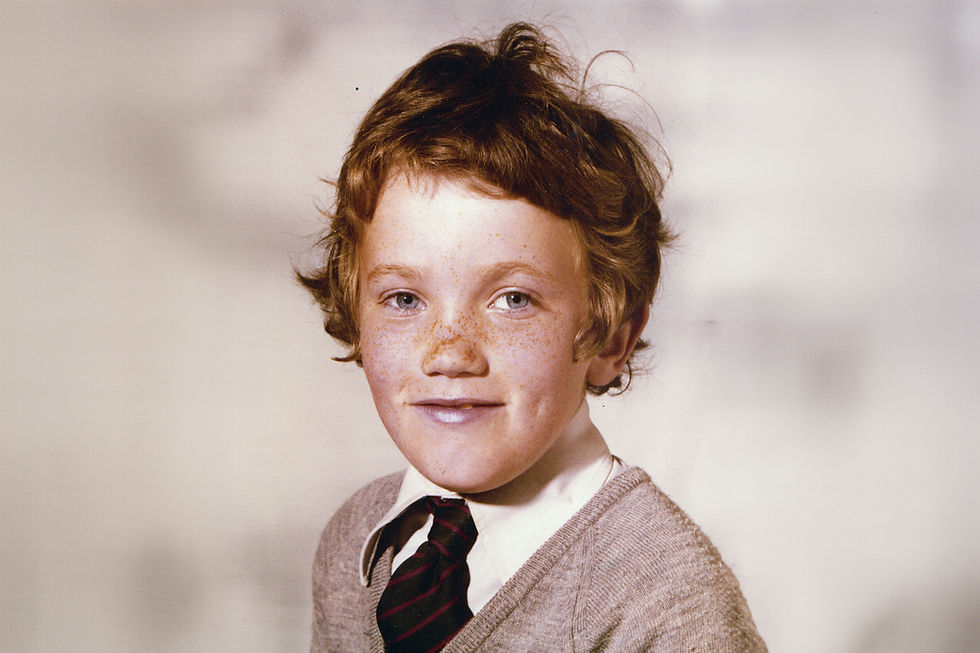
I had to wear a tie when I first went to school. We all did. Later, when I moved to secondary school, I had to wear a different one.
I understood what the other parts of the uniform were for. A jumper kept you warm. A coat was for bad weather. Trousers and a shirt covered the body. But the tie felt different. Even then, it wasn’t obvious what function it served.
It was clear, though, that it mattered. Teachers corrected it. You were told to pull it up, tighten it, make it look right. Other students noticed too. You learned quickly what was acceptable and what wasn’t, not through instruction, but through being seen.

Some wore it tight and short; others wore it loose, hanging low, deliberately off. These differences looked like choice, like attitude. But they never took you outside the system. Even at its most disordered, the tie continued to do its job. It marked you as a subject of the school.
This becomes clearer in Storm, the new short film by Gener8ion and Romain Gavras. Rows of boys stand in blazers and ties, arranged into a single visual order. Yung Lean’s figure appears to break from that order: shirt open, tie loosened, cigarette in hand. But he is not outside it. He is made legible by it. The uniform does not eliminate difference; it organises it. The loosened tie becomes not freedom from the system, but one of the ways the system displays hierarchy, menace and role.

The same logic shaped the school tie. It was specified, not chosen. Its colours and stripes placed you immediately within the school’s order. It belonged to a system of identification, correction and sanction.
That logic does not disappear when school ends. In some workplaces it continues almost unchanged: variation is permitted, but only within limits. Elsewhere the tie disappears, but other garments and codes continue to organise belonging, competence and role.

Yet this is not how menswear is usually described.
Part of the problem is that menswear is still read through the dominant framework of fashion, one that privileges image, novelty, authorship, and visual rupture. Most menswear operates differently. It does not seek to disrupt but to stabilise. In schools, offices and other institutions, it makes bodies legible. When it does that successfully, it disappears.
That is one reason menswear has so often sat awkwardly within fashion research. The most valued objects in fashion discourse are usually the ones that announce themselves most clearly: runway pieces, singular designers, moments of spectacle or rupture. But many of the garments that shape men’s lives most deeply do their work more quietly. They repeat. They regulate. They pass as ordinary.
When those garments are discussed, they are often translated back into the language of style. The school tie becomes nostalgia. The business tie becomes taste. What is structured is softened; what is required is presented as choice.
Menswear’s relative invisibility is evidence of how effectively it operates. Like other forms of infrastructure, it recedes into the background when it works. It organises conduct, distributes authority and structures belonging while passing as neutral.
Menswear systems is my term for that power. Menswear is not merely clothing for men, nor a subdivision of fashion. It is an organised infrastructure of production, regulation, authority and use.
Once you see menswear as a system, the questions change. Not what it looks like, but what it regulates. Not what it expresses, but what it enables.
Recently, the University of Westminster approved a change to my professorial title, from Professor of Fashion Design to Professor of Menswear Systems. The change felt necessary because my work has moved away from menswear as image or authorship, and toward menswear as regulation, recognition, use and authority.

The school tie is a small part of that: a narrow strip of fabric, worn daily and often overlooked. But it makes something visible: clothing can assign role before expression, and teach boys how to be read as men.
In the last few months, I have started wearing a tie again, usually under a V-neck jumper with a tattersall shirt. The reaction has been consistent. People ask if I have a job interview. Others jokingly ask if I have a court appearance. Some say I look like I’m back at school. The tie is not read as neutral.
For years I dressed casually, as most people do in an art school. The tie interrupts that. It makes people pause because it belongs to another system. Interview. Court. School. Office. Places where men are expected to stand correctly, speak properly, and know their place.
In the City, it would pass without comment. In an art school, where almost no one wears a tie, it becomes conspicuous. It looks like a rupture, but really it reveals the system that was already there.
Fifty years after I was first made to wear a school tie, I understand what it was teaching me. Not taste, not style, but order. How to be corrected. How to be read. How to carry authority, or submit to it. And how early boys are taught that lesson.


Comments