
What the System Wanted All Along
Digital ID promises convenience, but what it normalises is permanent readiness for inspection.

Digital systems are beginning to demand what menswear long helped manage: that the body arrive already sorted. In many of the spaces that organise everyday life, clothing has never simply covered the body; it has made the person easier to place. It signals competence, threat, seriousness, respectability, compliance, often before a word is spoken. It grants ease to some and friction to others. Digital ID takes that same logic beyond the garment and embeds it in infrastructure. What once happened through glances, dress codes, and informal judgements is now being rebuilt as a system of verification.
In Exactitudes, I argued that clothing works as a recognition system, helping people place others quickly, often before anything is said. The point was not simply that clothes are judged, but that ease is unevenly distributed. “Ease is granted to those who look right.” That now reads less like an observation about clothing than a description of the world digital systems are trying to build. The promise of digital ID is that it will remove friction. What it really does is make legibility deeper, more continuous, and harder to escape.
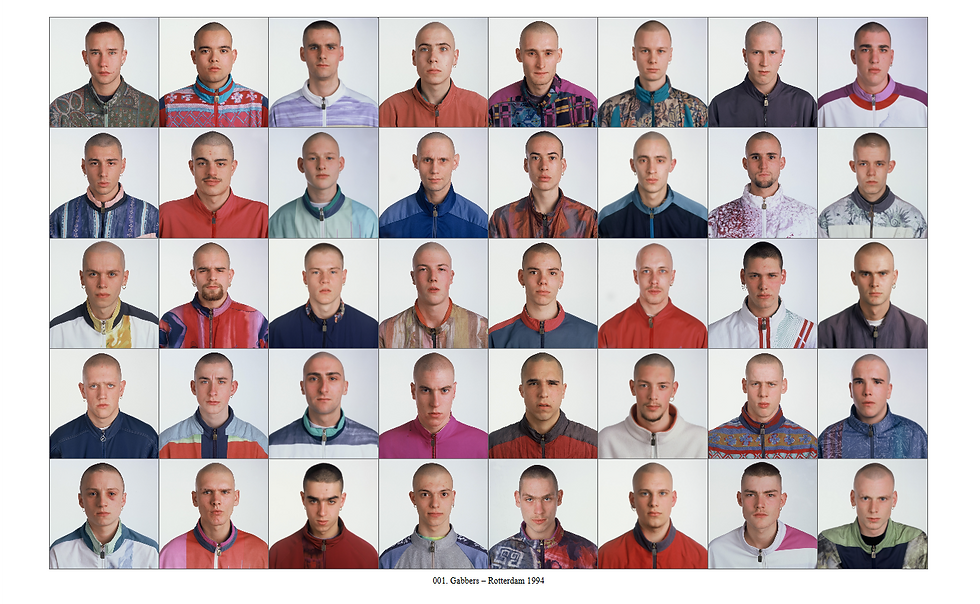
Menswear has long trained us into this logic. Uniforms, school wear, office wear, technical outerwear, workwear, formal dress: all reduce ambiguity and make bodies easier to process.
In Utopia Under Control, writing about dress codes, CCTV, queueing systems and cashless space, I argued that male dress often functions as a low-tech system of anticipatory judgement, helping others decide whether the body in front of them looks compliant, respectable, volatile, or out of place. “When clothing stops sorting bodies, sorting does not disappear, it moves.”

It moves from dress into infrastructure, from the glance to the database, from the bouncer to the verification system, from social reading to administrative processing.
Digital ID is not simply a more efficient way of proving who you are. It embeds judgement deeper into the conditions of access, linking entry to traceability and traceability to control. Because it comes wrapped in the language of convenience, many people will accept it as a technical upgrade. But systems like this are never just about proof. They change when proof is demanded, how often it is demanded, and what happens when you cannot provide it cleanly. That might mean renting a flat, entering a workplace, collecting a parcel, opening an account, crossing a border, or accessing a service. What is being normalised is not just identification, but permanent readiness for inspection.

Older systems of menswear, for all their arbitrariness, still left room for ambiguity. Dress codes could be read, misread, negotiated, bent, resisted, or worked around. A “no tracksuits” door could still be passed in jeans and a shirt. As I wrote in Utopia Under Control, “as long as the clothes read correctly, the body passed.”
Digital ID seeks to close that gap. It does not merely ask that you look right. It asks that your identity be continuously available in the right form, at the right moment. The person is not met, but matched. Not known, but authenticated. What matters is whether the system can resolve you cleanly enough to let you through.
One of the reasons I wrote Holding the Body at a Distance was to think about opacity as a form of protection. In that essay, I argued that the Pet Shop Boys built “a system that allowed them to be seen without being surrendered.” That line matters far beyond pop image-making. It names something essential that digital ID steadily erodes: the ability to appear in public without becoming fully available, to be present without total disclosure, to decide what remains withheld.

For some people, that space was never trivial. It was protection. Gay men, Black men, and others whose bodies have long been met first with suspicion have often had to think carefully about how they appear in public, how much they reveal, and what might happen if they are read in the wrong way. Dress could create distance, buy time, reduce exposure, help someone pass unnoticed or at least less exposed. Digital ID moves in the opposite direction; it treats that ambiguity as failure.
Digital ID treats opacity as a fault. What cannot be instantly resolved begins to look suspicious. Delay is recoded as failure, and any space between appearance and verification is treated as something the system should eliminate. But friction is not always a defect. Sometimes it is what remains of freedom in everyday life: the chance to move without producing an immediate trail, the possibility of entering a room or accessing a service without binding that action to a system that does not forget.
The people most damaged by frictionless systems are those already closest to scrutiny: the poor, the undocumented, people with unstable housing, those whose records do not align neatly, and those whose bodies or identities have always been met first with suspicion.
It does not simply ask to see you. It asks to fix you in a form that can be stored, checked, and recalled on demand. What was once situational becomes repeatable. The old demand to look right becomes a new demand to resolve correctly.

Menswear already taught us that ease was never evenly distributed, that some bodies move with less interruption because they are read as correct before they are known. Digital ID keeps that inequality intact while hardening it into infrastructure. What was once a glance becomes a record. What was once suspicion becomes protocol. What was once a social judgement becomes a system requirement.
The garment once helped the body pass. What digital ID demands is more final than that. It does not want the body interpreted, but resolved. Not socially, not provisionally, but fully, correctly, and on demand.



Comments